Post Falls report says urban renewal districts generated $745 million in value
Two closed Post Falls districts helped create $745.3 million in new taxable value, and $4.4 million a year is now flowing back to local taxing bodies.
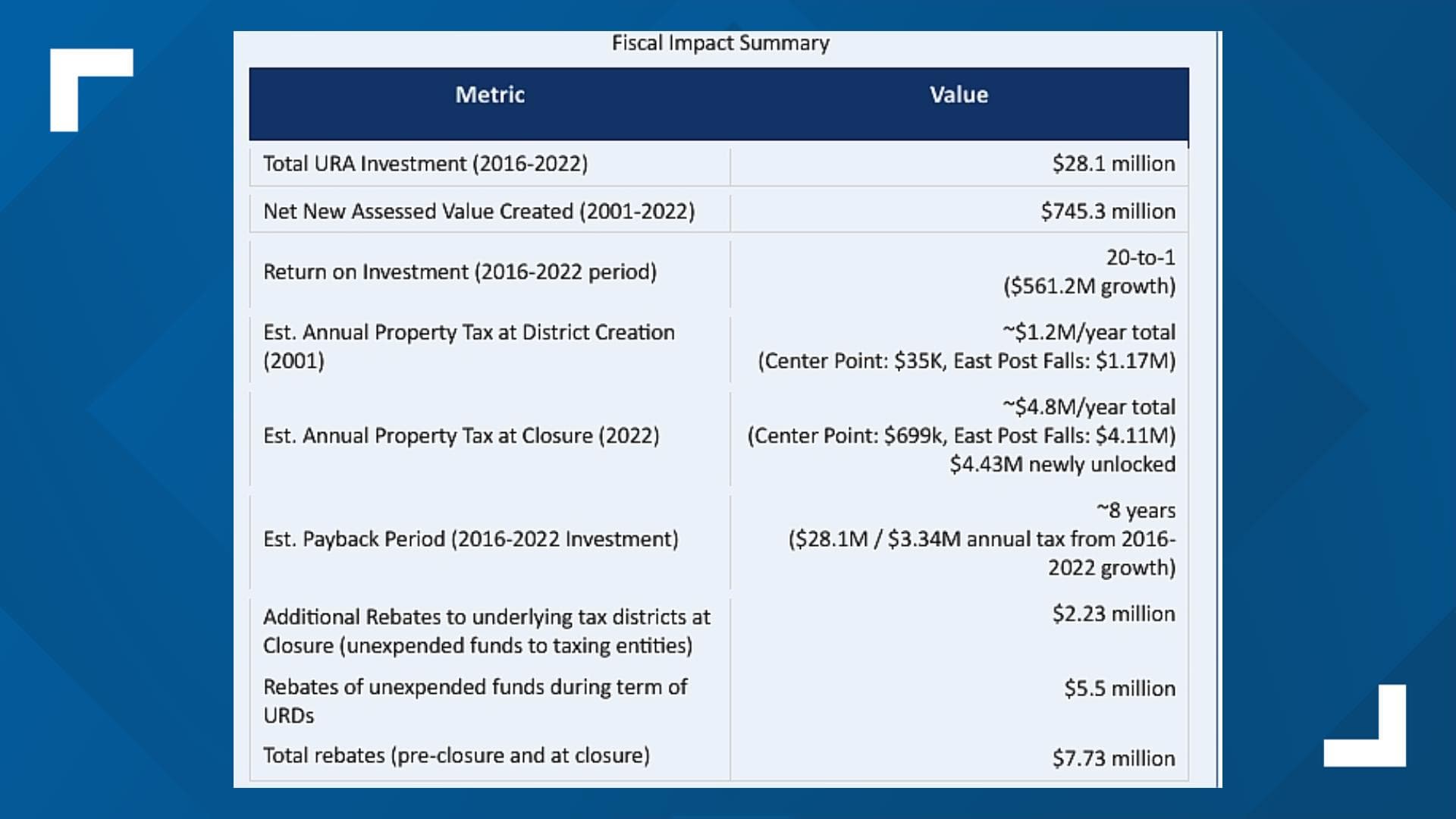
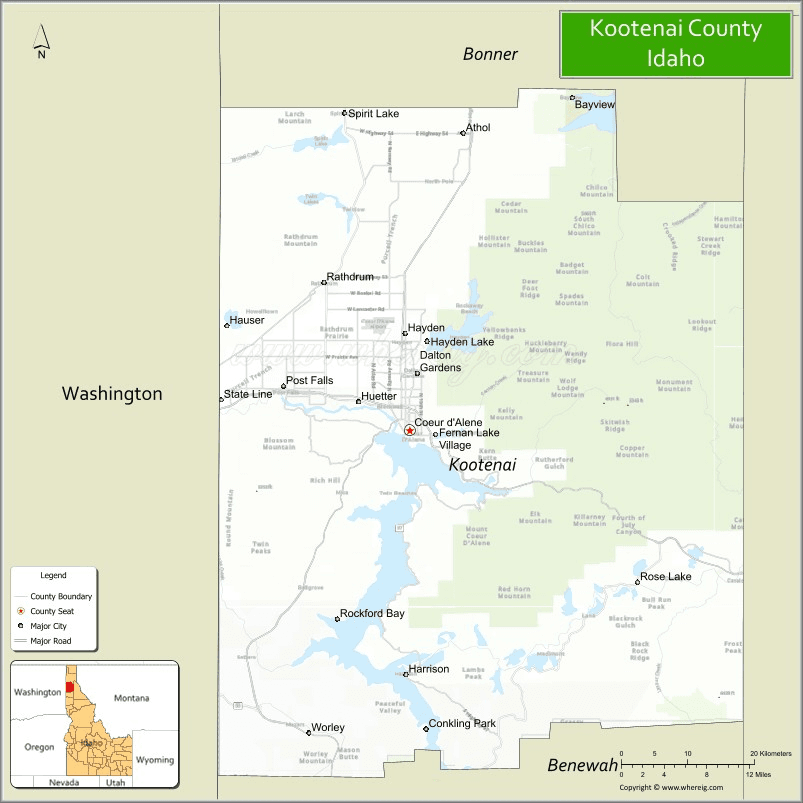
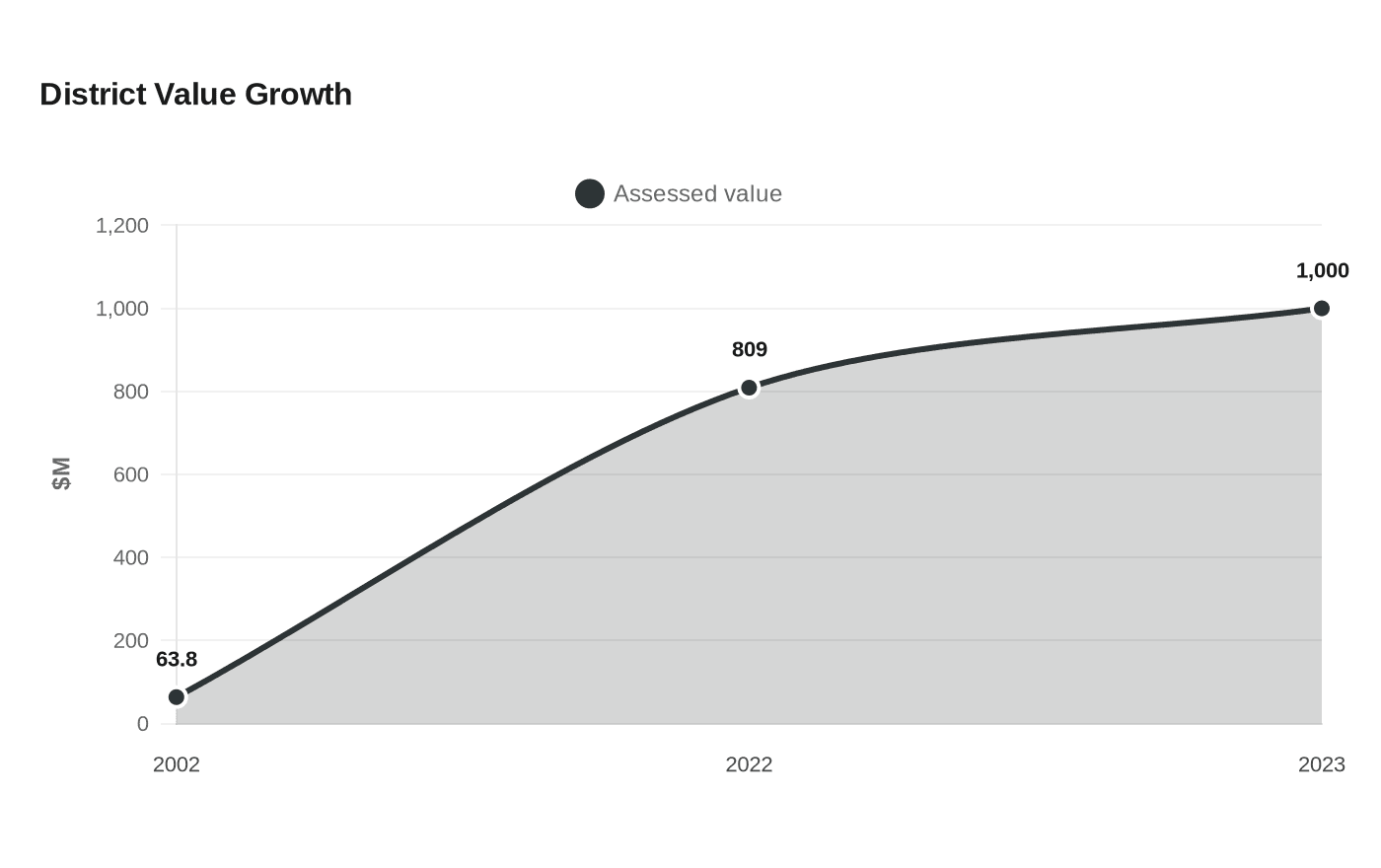
Two closed Post Falls urban renewal districts helped generate more than $745.3 million in new taxable value over two decades, giving city leaders a hard number to defend and neighbors a benchmark for the next development pitch. The Center Point and East Post Falls districts rose from a combined $63.8 million in assessed value when they were created in 2002 to more than $809 million by the time they closed in 2022, then passed $1 billion in 2023. About $4.4 million in annual property tax revenue is now flowing back to the city of Post Falls, Kootenai County, Kootenai Fire & Rescue, North Idaho College and local schools.
The new impact assessment says $28.1 million in public investment between 2016 and 2022, including $19 million in city water, sewer and transportation work, helped unlock the growth. The agency is calling that a 20-to-1 return on public dollars, a claim that will matter in future debates over whether urban renewal should keep front-loading infrastructure in exchange for private development and later tax-base growth. The report also shows the districts were not just about pavement and pipes. Jobs in the district area grew from 1,869 in 2003 to 3,952 in 2024, while the number of employers climbed from 116 to 243 businesses.
Post Falls built the agency for this kind of work. The City Council created the Post Falls Urban Renewal Agency in 1991, and Idaho law requires agencies to file their plans and financial amendments at least yearly with the state’s urban renewal registry. Center Point and East Post Falls were both created in 2002 under the Urban Renewal Act’s disadvantaged border community provisions. East Post Falls had its termination date extended in 2012 so it could close in 2022.
Center Point began as a 287-acre district and later added 48 acres for Stateline Business Park. Its public work helped fund sewer lines, water systems, utilities, streets, sidewalks, drainage and a new water reservoir. A March 2023 job survey in the district found 1,222 jobs among 32 participating businesses, and the district closed with 1,232 jobs and more than 8,400% tax-base growth.
East Post Falls was expanded in 2005 into South, Central and North subdistricts. Its major improvements included traffic changes, redesigned streets and intersections, turnoff ramps from I-90, widened roadways, signalization, pedestrian access, sewer extensions and water distribution upgrades. Employers and projects drawn into the district included the Idaho Department of Labor, Garden Plaza Retirement Home, Spokane Teacher’s Credit Union, Stan-Craft Boat, North Idaho Advanced Care Rehabilitation Hospital, Steel Structures of America and Walmart.
For Post Falls, the larger question is now precedent: whether the districts delivered enough private investment, jobs and tax-base growth to justify the public strategy, and whether the same formula should shape the city’s next round of redevelopment talks.
This article was produced by Prism’s automated news system from verified source data, official records, and press releases, then run through automated quality and moderation checks before publishing. The system is built and supervised by the people who set the standards it runs under. Read our full AI policy.
Know something we missed? Have a correction or additional information?
Submit a Tip