Post Falls woman sues over removal from Coeur d’Alene town hall
Teresa Borrenpohl has sued over being dragged from a Coeur d’Alene town hall, turning a February 2025 confrontation into a test of free speech and public access.
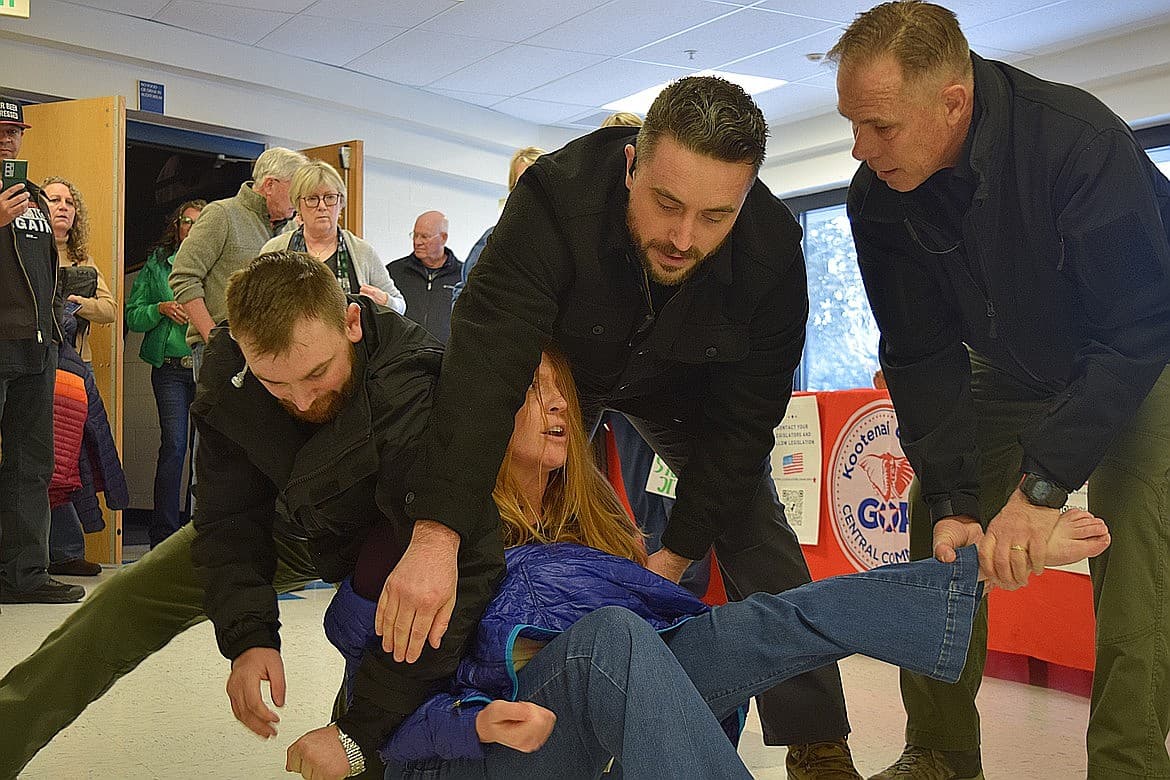
Teresa Borrenpohl of Post Falls filed a federal lawsuit on May 14, 2026, over her removal from a legislative town hall at the Coeur d’Alene High School auditorium, where private security dragged her out after she shouted remarks during the event.
The town hall took place February 22, 2025, and was hosted by the Kootenai County Republican Central Committee. The committee has maintained the gathering was a private event, a distinction that sits at the center of the dispute because Idaho’s open-meeting norms are built around public bodies and public business, not political organizations claiming private control over access and dissent.
The choice of venue also mattered. One account said Coeur d’Alene High School was selected because its auditorium was larger than the local alternative and offered more parking, making it better suited for the crowd that turned out that night. Instead, the event became a flashpoint over who could speak, who could stay, and how far organizers could go when an audience member challenged the proceedings.
Lear Asset Management, also identified in later records as LEAR Asset Management, was involved in Borrenpohl’s removal. Coeur d’Alene prosecutors later dismissed a citation tied to the incident, and the city of Coeur d’Alene revoked the security company’s business license. The Coeur d’Alene Police Department investigated the confrontation as the fallout widened beyond the auditorium and into city and county institutions.

The legal and political consequences have continued to mount. A later Kootenai County jury found security company owner Paul Trouette battered two people who spoke out during the chaotic town hall, but did not find crimes against Borrenpohl herself. Borrenpohl’s lawsuit names the Kootenai County sheriff and others, pushing the case into federal court after more than a year of local investigations, dismissals and public disputes over how the event was handled.
For Kootenai County residents, the case reaches beyond one night in Coeur d’Alene. It puts pressure on local officials, law enforcement and event organizers to define the boundary between keeping order and suppressing dissent when a meeting turns volatile, especially when the line between public forum and private event is being tested in real time.
This article was produced by Prism’s automated news system from verified source data, official records, and press releases, then run through automated quality and moderation checks before publishing. The system is built and supervised by the people who set the standards it runs under. Read our full AI policy.
Did this article answer your question?