St. Vincent de Paul North Idaho quietly aids thousands across Kootenai County
St. Vincent de Paul North Idaho is moving thousands from crisis to stability, with shelter, food and housing help that quietly props up Kootenai County.

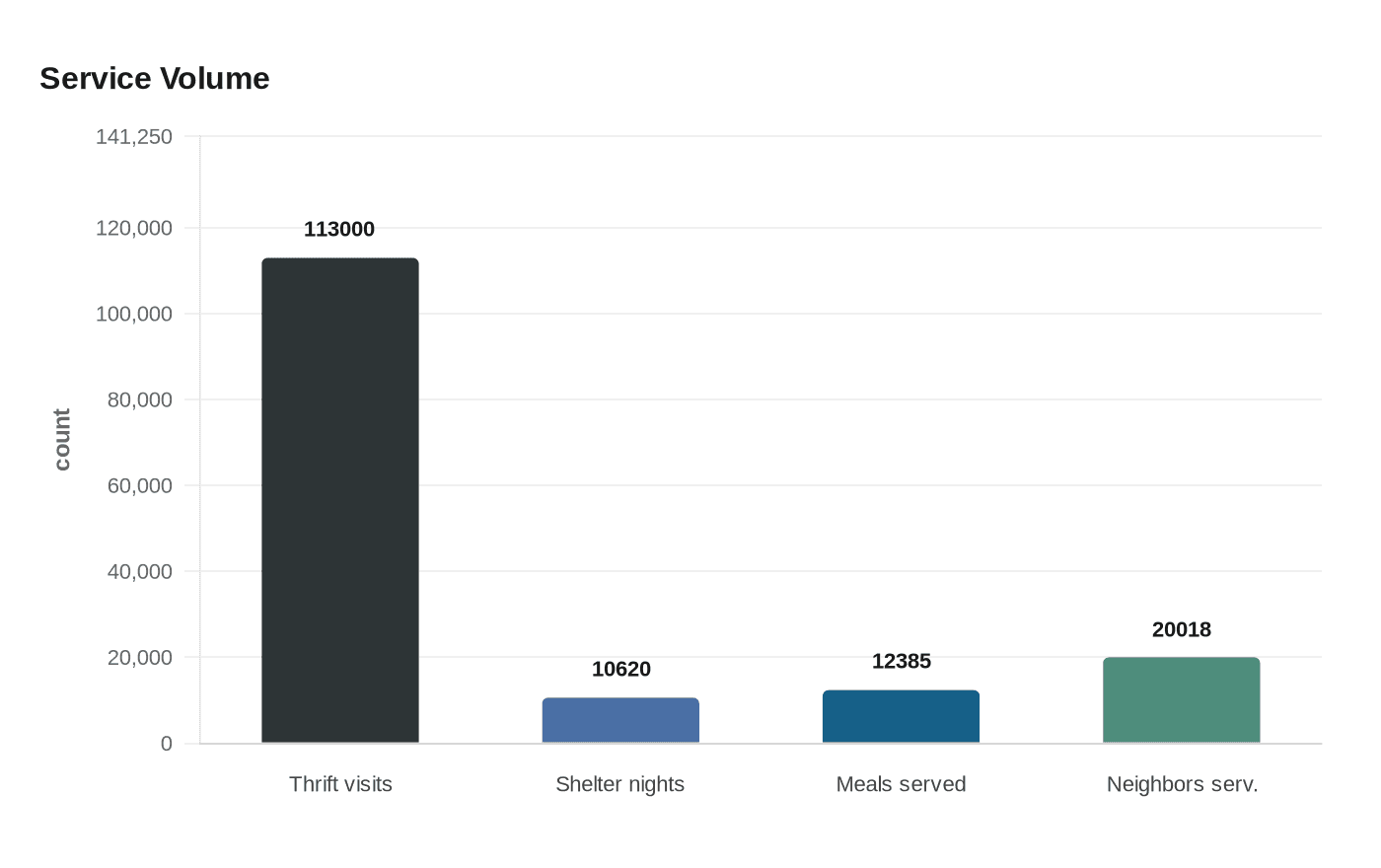
More than 113,000 thrift-store visits, 10,620 nights of shelter and 12,385 meals at Father Bill’s Kitchen show how deeply St. Vincent de Paul North Idaho is embedded in Kootenai County’s daily survival system. The organization also served 20,018 neighbors, placed 272 people in supportive housing, helped 47 veterans with housing assistance or referrals and kept 292 families from being evicted, numbers that make clear this is not just a charity but a working backstop for households under pressure.
A safety net built in plain sight
St. Vincent de Paul North Idaho traces its local origin to 1946, when parishioners at St. Thomas Catholic Church created a clothing closet to serve the poor and homeless. That humble start has grown into a regional operation guided by a simple principle, “Hand Up - Not Hand Out,” and a mission to help individuals and families in North Idaho “enrich, fortify and rebuild their lives with dignity.”
That language matters because it reflects how the organization works now. It is not only responding to emergencies, it is trying to keep crises from becoming long-term damage. In a county where housing costs, food insecurity and unstable work can quickly collide, that approach has made St. Vincent de Paul a central part of the county’s hidden economic safety net.
The group is also marking an 80th anniversary campaign, a reminder that its growth has mirrored the region’s own change. What began as a clothing closet has become one of the largest homeless and social service agencies in North Idaho.
Where help begins
For many people, the first stop is the HELP Center, which the nonprofit describes as the entry point for most self-sufficiency programs. From there, residents can connect to rental assistance, utility assistance, food, ID cards, payee services and dozens of other services listed by GuideStar. The organization says it offers 70 other services as well, a breadth that helps explain why it is often the place people turn when they need several kinds of help at once.
St. Vincent de Paul North Idaho says it operates the largest men’s emergency shelter in Kootenai County, and the Coeur d’Alene Press has reported that the shelter includes 50 beds. Once guests are in shelter, they can stay up to 90 days while working with a case manager on permanent housing or income. A 2024 GuideStar profile said the nonprofit sheltered 216 individuals and that 86 percent transitioned to permanent housing within 90 days, with 186 people securing stable housing.
That pathway also includes food. Father Bill’s Kitchen serves dinner to more than 100 people every night Monday through Friday, according to the nonprofit’s website, and another directory entry describes it as the county’s only dining hall for the hungry and homeless providing nutritious meals five days a week. During cold weather, the Winter Warming Center opens when temperatures fall below 33 degrees, usually from November through the end of February, and can keep guests for up to 90 days while case managers help them pursue permanent housing or income.
Housing support that reaches beyond shelter
The organization’s housing work extends far past a bed for the night. St. Vincent de Paul North Idaho says it owns, operates or manages 329 supportive housing units, a major footprint in a county where finding an affordable place to live has become increasingly difficult. It also provides shower and laundry hygiene facilities, basic needs support, workforce help and child nutrition services, including administration of USDA Child and Adult Care Food Program benefits for daycare providers.
Trinity Group Homes merged with St. Vincent de Paul of Coeur d’Alene in October 2015 and now operates seven semi-independent group homes in Kootenai County. That adds another layer to the agency’s reach, especially for people with mental illness and others who need structured support while trying to live more independently.
The housing numbers show how broad that response has become. In the past year, the nonprofit says it placed 272 people in supportive housing, helped 47 veterans with housing assistance or referrals, and prevented 292 families from being evicted. It also says it invested $6.7 million in neighbors, with sources of support totaling $6.9 million. Those figures point to a system designed not only to absorb crisis, but to keep people from falling deeper into it.
The work behind the work
A large part of that effort runs through St. Vincent de Paul’s thrift stores, which the organization says help fund services and also create jobs. Last year, the stores drew more than 113,000 customer visits and provided 55 jobs, many of them to tenants and shelter guests. That matters in a county where even a modest paycheck can be the difference between staying housed and falling behind.
The organization says it has about 65 staff members, along with directors, volunteers and partners. That workforce supports the wide range of services now attached to the St. Vincent de Paul name, from food and clothing to case management, housing referrals and emergency shelter. The scale makes it clear why the group has become a practical resource for working families as much as for people already in crisis.
Why Kootenai County keeps leaning on it
The need is being driven by a housing market that has become harder to enter and harder to stay in. A 2024 Coeur d’Alene Press housing report said 80 percent of the occupations surveyed in Kootenai County could not afford a home here, and it placed the county’s 2023 Area Median Income at $93,500. The same report said about 90 homes were listed below the affordability threshold, including 42 manufactured homes on rented property.
A housing study from the Housing North Idaho coalition found that local and statewide home prices were among the fastest increasing in the country, which helps explain why a service network like this has become so critical. When rent rises faster than wages, families can burn through savings just trying to stay current. When that happens, help with utilities, food, shelter, transportation paperwork or a job opening can be the difference between temporary trouble and a long eviction spiral.
That is why St. Vincent de Paul North Idaho’s recognition as Coeur d’Alene Chamber Nonprofit of the Year in 2024 feels less like a ceremonial honor and more like a civic acknowledgment. The organization has become woven into the county’s response to hunger, homelessness, veteran needs, child nutrition, and the slow, grinding pressure of housing insecurity.
One client put that human reality into a single line: “I was desperate. But I was met with nothing but love.” In Kootenai County, that love is backed by beds, meals, housing units, thrift-store jobs and a system built to keep people from slipping through the cracks.
This article was produced by Prism’s automated news system from verified source data, official records, and press releases, then run through automated quality and moderation checks before publishing. The system is built and supervised by the people who set the standards it runs under. Read our full AI policy.
Did this article answer your question?