TSA Pay Promise Eases Airport Lines, but Delays Linger for Travelers
With 500+ TSA officers having quit and a record 44-day DHS shutdown finally prompting federal paychecks Monday, Spokane-area spring travelers still need an extra hour at security.

Over 500 TSA officers resigned after the federal government stopped paying them in February, and nearly 12.4 percent of the remaining workforce did not show up last Friday alone — the worst single-day callout rate since the Department of Homeland Security's funding lapsed 44 days ago. Paychecks began arriving Monday at some airports, easing lines at scattered checkpoints, but the disruption is far from resolved.
For Kootenai County residents catching flights through Spokane International Airport, the headline is cautiously reassuring: GEG operated more smoothly during the shutdown than major hubs like JFK, Atlanta's Hartsfield-Jackson and Houston's airports, where callout rates climbed as high as 45 percent. Spokane was not among the 14-plus airports where the Trump administration deployed Immigration and Customs Enforcement officers to supplement skeleton TSA crews, according to the Spokesman-Review.
The underlying crisis traces to February 14, when DHS funding lapsed and roughly 50,000 TSA officers began working without pay. Some stayed home. The nationwide callout rate, normally around 2 percent, averaged 6 percent throughout the shutdown and peaked at 12.4 percent last Friday, with roughly 3,560 officers absent in a single day. More than 500 resigned outright. By Sunday, DHS reported a slight dip in the absentee rate after President Donald Trump signed an executive order Friday directing the department to pay its workforce immediately. TSA said paychecks were arriving "as early as Monday."
The 44-day DHS shutdown eclipsed last fall's 43-day government-wide closure, the previous record. Federal officials warned it could take days or weeks before security lines return fully to normal, because staffing and scheduling shortfalls do not reverse overnight.
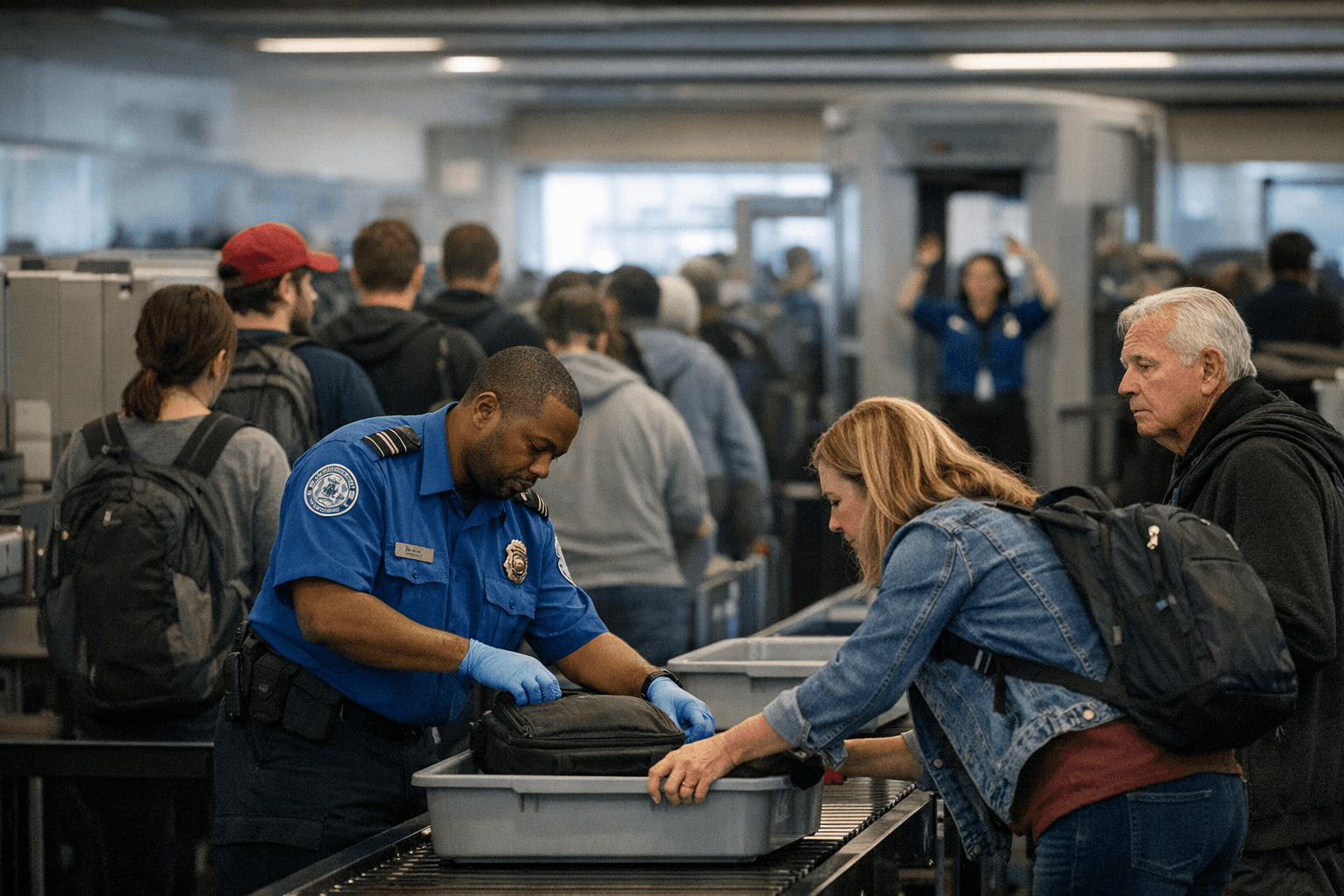
The timing compounds the pressure. Spring break travel is already underway nationwide, with Passover and Easter arrivals pushing passenger volumes higher into early April. GEG, which serves more than 30 counties across the Inland Northwest including Coeur d'Alene and the broader North Idaho corridor, is not fully shielded from the ripple effects. A traveler delayed for three hours at a connecting hub still misses a Coeur d'Alene check-in, regardless of how orderly GEG's own checkpoint looks that morning.
Shutdown advisories recommend arriving 30 to 60 minutes earlier than normal for departing flights. At GEG, where peak security waits can historically stretch to 46 minutes on Thursday mornings, that buffer matters most mid-week. TSA PreCheck holders at the Spokane terminal typically clear in under five minutes, though PreCheck lanes operate only during peak morning hours. Checking TSA's My TSA app before leaving for the airport surfaces real-time checkpoint conditions.
North Idaho hotels, tour operators and conference organizers who depend on reliable passenger flow through GEG and connecting hubs have their own reasons to monitor the recovery. The clearest signal of full stabilization will come when the national callout rate retreats to its pre-shutdown baseline of 2 percent — a number DHS has not yet confirmed.
This article was produced by Prism’s automated news system from verified source data, official records, and press releases, then run through automated quality and moderation checks before publishing. The system is built and supervised by the people who set the standards it runs under. Read our full AI policy.
Did this article answer your question?