Colorado River Indian Tribes Alert Residents to Available Cooling Options
With Parker spring heat already registering as "very hot," CRIT's Manataba Messenger posted cooling options March 26 for tribal members and La Paz County residents.
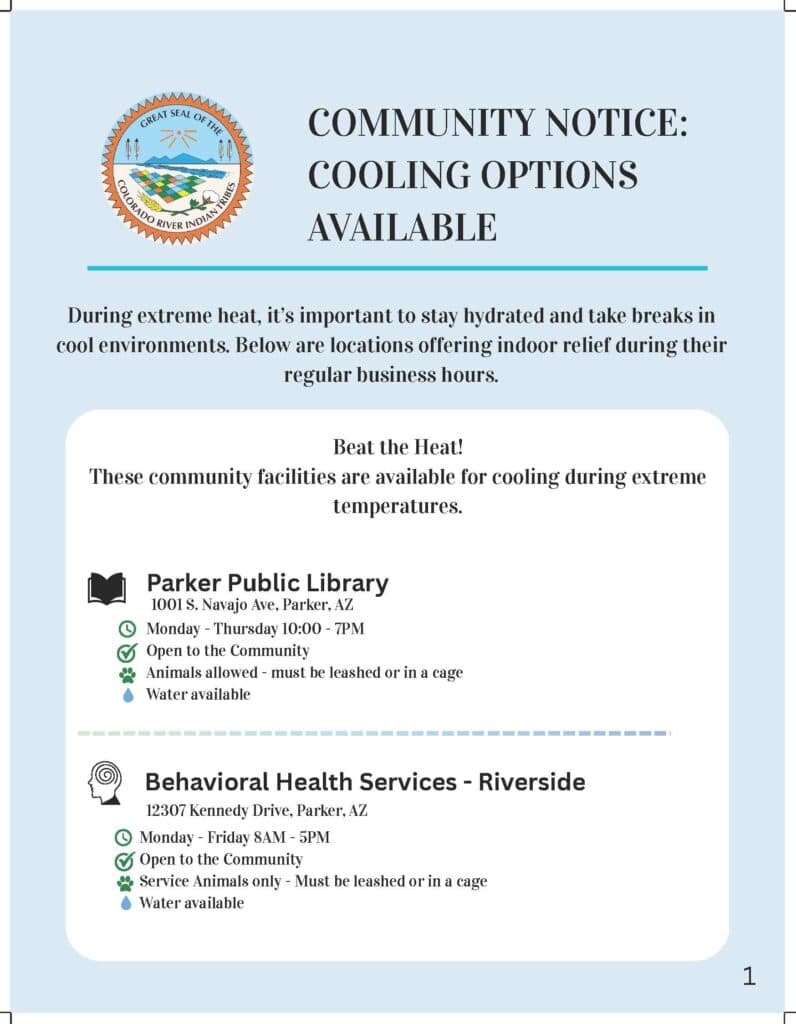
La Paz County sits inside one of the most heat-exposed corridors in the continental United States, and the Colorado River Indian Tribes did not wait for summer to act. On March 26, the tribe published a "Cooling Options Available" notice through the Manataba Messenger, its official public-announcement channel, alerting tribal members and Parker-area residents to available heat-relief resources while forecasters were already describing current conditions as "very hot" and cautioning that air quality had reached levels unhealthy for sensitive groups.
For anyone who needs relief now, a cluster of facilities in and around Parker has previously served as CRIT's designated cooling network. The CRIT Library at 26600 Mohave Road is open to the public Monday through Friday from 8 a.m. to 5 p.m., with a closure from noon to 1 p.m. Water is available on site. CRIT Behavioral Health Services at 12307 Kennedy Drive has operated as a weekday cooling site during prior heat events; service animals are permitted. The Parker Public Library at 1001 S. Navajo Avenue runs Monday through Thursday from 10 a.m. to 7 p.m. and also keeps water available. BlueWater Resort and Casino at 11300 Resort Drive, CRIT Fire Station 80 at 1819 S. Mohave Road, and the Parker Community Center at 1115 W. 12th Street have all been part of the cooling station network in previous seasons, each with weekday daytime hours.
To confirm which locations are open this season and whether eligibility rules or hours have changed, call the Colorado River Indian Tribes at (928) 669-9211 or check the Manataba Messenger directly. Residents without internet access can call the tribal offices or walk into any cooling site for printed guidance.
The March timing is deliberate. Spring temperatures along the lower Colorado River escalate quickly, and four groups are consistently at highest risk when heat accumulates: adults over 65, infants and young children, people managing heart disease or diabetes, and residents without reliable air conditioning, including those experiencing homelessness. Outdoor workers on construction sites and agricultural operations across the river corridor face compounding exposure during midday peak hours.
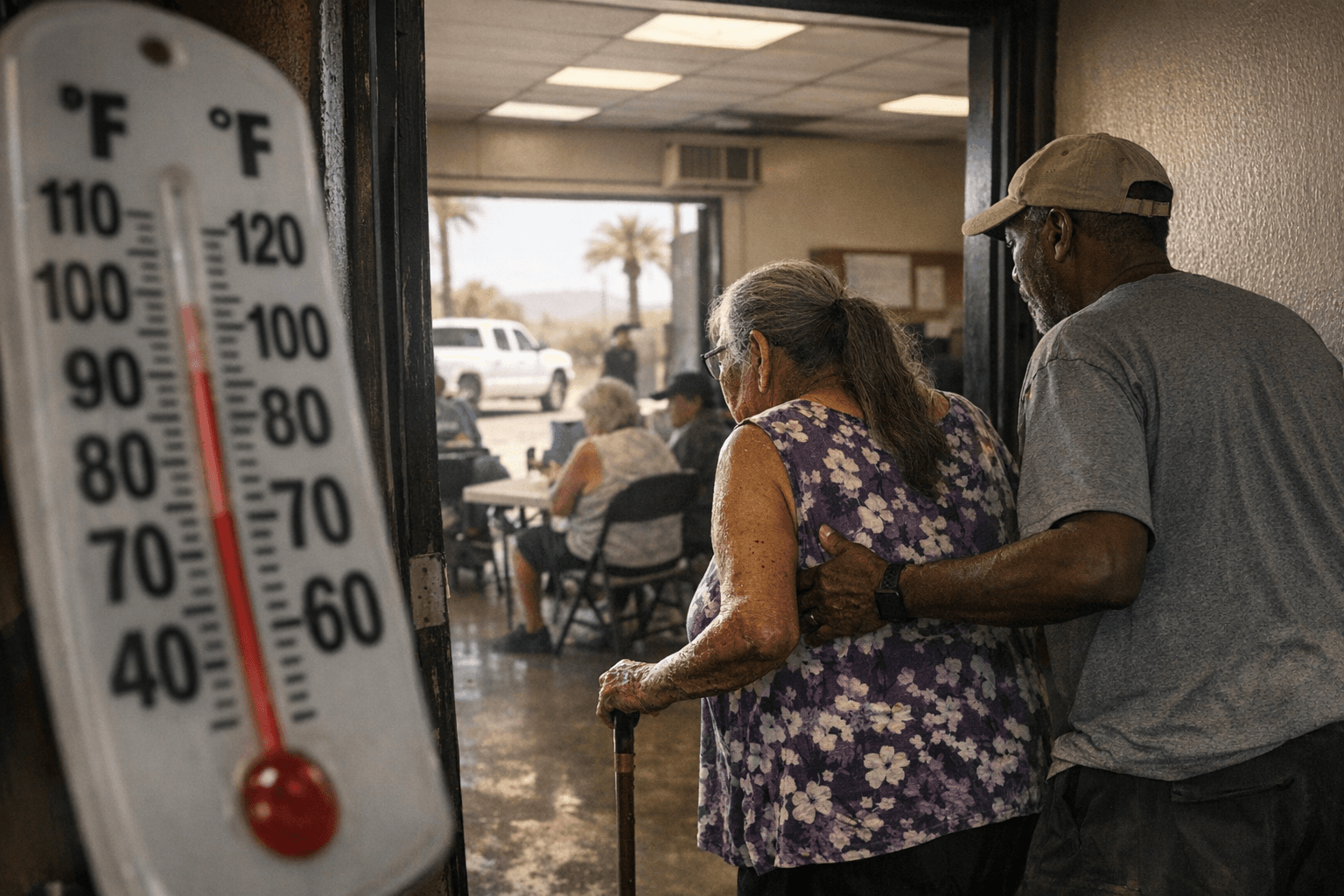
Recognizing the difference between heat exhaustion and heat stroke can determine whether a call to a neighbor is enough or a call to 911 is required. Heat exhaustion presents as heavy sweating, weakness, cold or pale skin, and a fast but weak pulse; moving to a cool space and drinking water addresses it. Heat stroke is a medical emergency: body temperature above 103 degrees, hot red skin that may be dry or damp, a rapid strong pulse, and possible loss of consciousness. If those symptoms appear, call 911 immediately.
The Manataba Messenger also carries utility assistance information through the season, including programs that can offset power bills for eligible households. The March 26 post appeared alongside notices about a utilities payment portal launch and broadband updates, reflecting a broader CRIT push to connect residents with services before peak heat takes hold.
This article was produced by Prism’s automated news system from verified source data, official records, and press releases, then run through automated quality and moderation checks before publishing. The system is built and supervised by the people who set the standards it runs under. Read our full AI policy.
Did this article answer your question?