CRIT issues river condition update as Colorado River concerns grow
CRIT’s April 10 river update comes as Lake Powell inflow forecasts collapse and basin storage stays low, raising the stakes for Parker-area boating, irrigation and access.
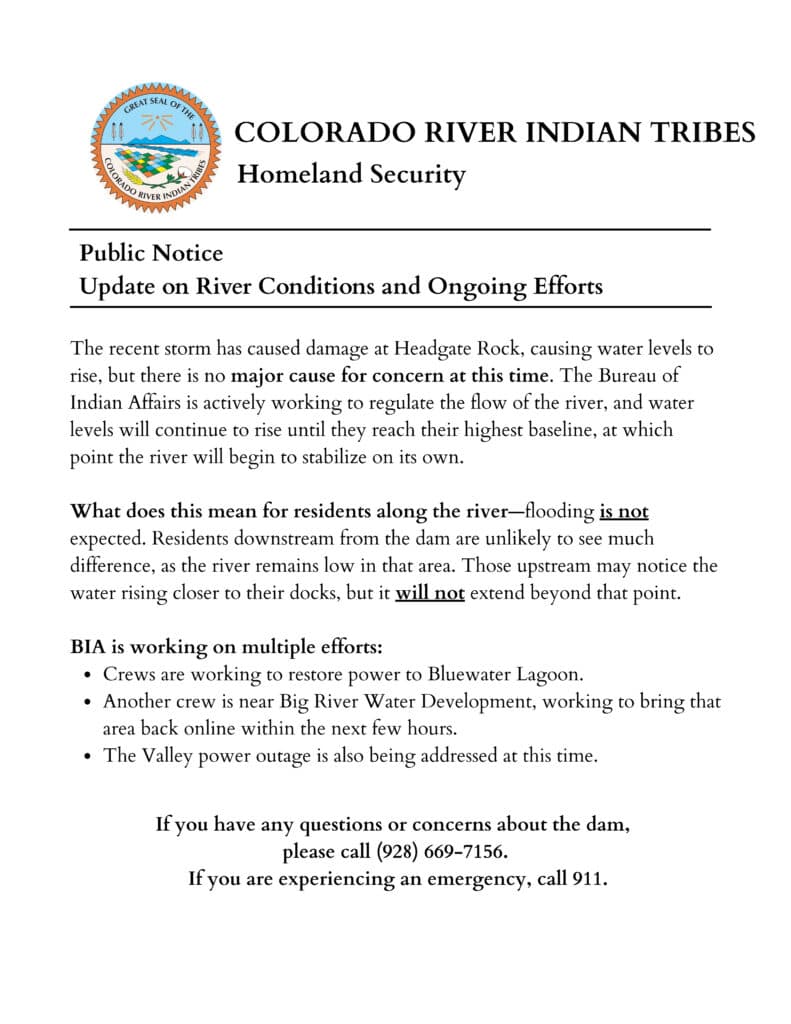
A brief river-condition update from the Colorado River Indian Tribes landed at a moment when every shift on the Colorado River matters to Parker, the CRIT reservation and the rest of La Paz County. With releases from Hoover, Davis and Parker dams driving lower-river conditions, the notice had immediate implications for boating, shoreline access, irrigation timing and safety along the river corridor.
CRIT Manataba Messenger posted the “Update on River Condition” on April 10, following an April 6 Basin Brief that said adapting to reduced water availability was becoming increasingly necessary as Colorado River supplies grew less reliable. In a river community, that is not abstract policy language. It reflects the daily reality that water levels can change the way people launch boats, reach the bank, move water for farms and plan work near the shoreline.
The larger basin picture is worse than a routine spring fluctuation. On April 8, the Colorado Basin River Forecast Center said only 1.4 million acre-feet of Colorado River water was expected to reach Lake Powell through July, less than a quarter of normal and down sharply from a 2.3 million acre-foot projection a month earlier after a March heat wave accelerated snowmelt. A Colorado research summary released April 15 said Lake Powell and Lake Mead were about 24 percent and 33 percent full, underscoring how thin storage remains across the system.

That strain matters in western Arizona because the Lower Colorado River Basin remained in a Tier 1 shortage, and the 2007 Shortage-Sharing Guidelines and the Drought Contingency Plan are set to expire at the end of 2026. CRIT said in its April 7 Basin Brief that thousands of public comments had already been submitted on the federal government’s proposed post-2026 water management plan, and that the debate reflects competing priorities among states, water agencies and Tribal Nations over how shortages should be handled.
For CRIT, the river is not just a policy line on a chart. The tribe’s water rights, agricultural operations and community life are tied to conditions on the Colorado, and the same water system also shapes recreation and daily access for residents in and around Parker. The April 10 update fits into a spring when even a short notice can signal whether river use, irrigation and shoreline travel will be stable or whether the next change will come from the next dam release, the next shortage decision, or the next round of basin negotiations.
This article was produced by Prism’s automated news system from verified source data, official records, and press releases, then run through automated quality and moderation checks before publishing. The system is built and supervised by the people who set the standards it runs under. Read our full AI policy.
Did this article answer your question?