CRIT launches new fish and game website for outdoor updates
CRIT launched a new Fish and Game website that centralizes permits, maps, rules and notices, including a $60 camping fee update and a Texas screwworm alert.
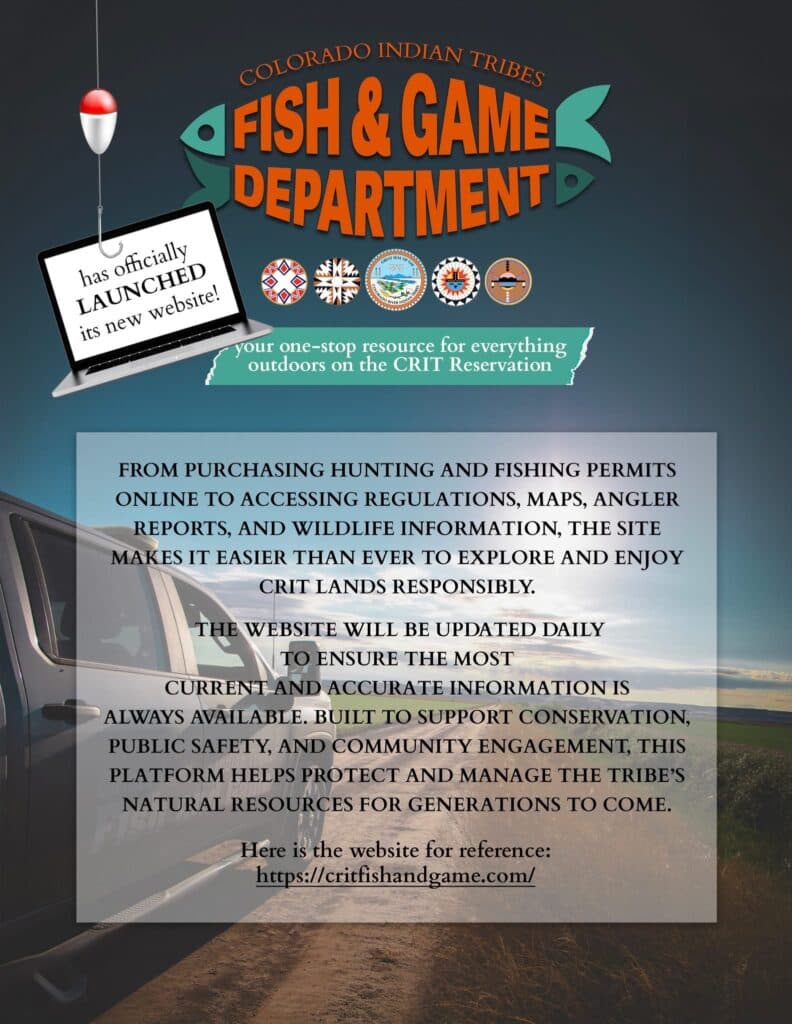
Colorado River Indian Tribes Fish and Game launched a new website that puts hunting, fishing, camping and off-highway vehicle information in one place for Parker-area users heading onto reservation land. The site gives La Paz County residents and CRIT members one official stop for rules, permits, maps and contact information before they launch a boat, check a season or head out for a camp.
The new site includes About Us, Resources, Maps, Hunt, Fish and OHV permits, and Contact Us pages. Its homepage already carried two time-sensitive notices: a camping-fee increase on CRIT lands to $60 effective January 1, 2026, and an alert about a New World screwworm case in Texas.

The first chief game warden was Luke Patch Sr. in the early 1950s, when he helped create the Range Riders, originally organized for livestock control. After Patch retired in 1981, Stanford Ameelyenah was hired that year. David Martinez served as chief game warden from 1994 to 2010, Carl Harper Jr. held the post from 2012 until his death on February 14, 2018, and Josephine Tahbo was hired and appointed by Tribal Council on November 30, 2018.
Fish and Game protects human life and property, enforces tribal laws, deters criminal activity, and conserves, enhances and restores wildlife resources and habitats for current and future generations. The website now lets users check the rules that govern where and how people can travel, fish and hunt on the Colorado River Indian Reservation.
CRIT’s 2026 regulations allow all fish except protected species to be taken from January 1, 2026 through December 31, 2026, subject to permit requirements. The rules also require fish possessed or transported to have identifying parts attached so species and size can be checked. Earlier CRIT regulations set special bag and size limits for waters including Moovalya Pond, Ahakhave Tribal Preserve, Deer Lake, 12 Mile Lake and No Name Lake.
The razorback sucker is native only to large rivers in the Colorado River basin, and the new site also highlights native-fish information and catch-report tools. CRIT has about 4,277 active members and is made up of the Mohave, Chemehuevi, Hopi and Navajo tribes, with Parker as the main community on the reservation.
This article was produced by Prism’s automated news system from verified source data, official records, and press releases, then run through automated quality and moderation checks before publishing. The system is built and supervised by the people who set the standards it runs under. Read our full AI policy.
Did this article answer your question?