CRIT leaders show federal official aging irrigation system, water losses in Parker
CRIT leaders took a federal water official to leaking canals and farms in Parker, pressing for repairs before post-2026 Colorado River rules are set.
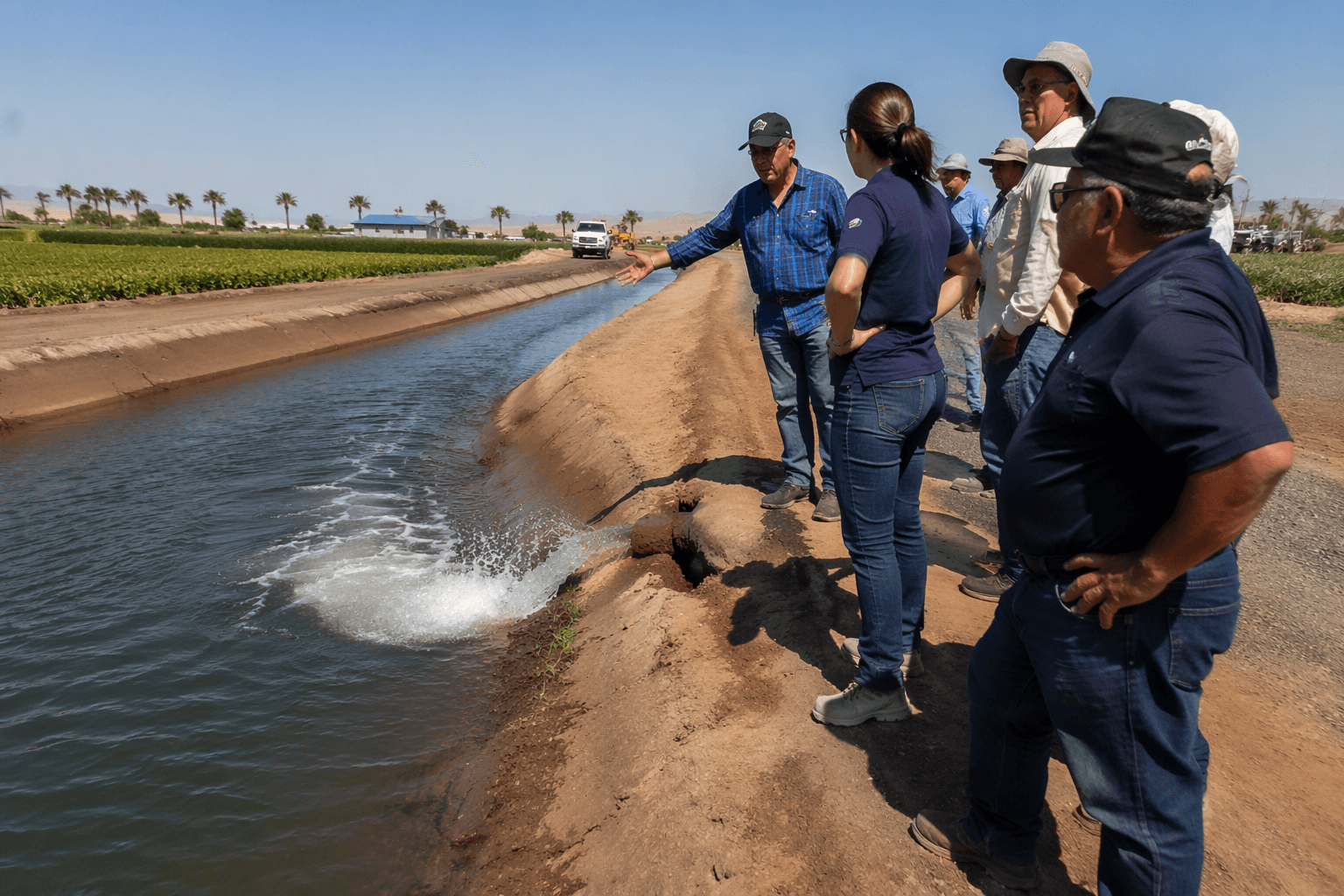
Andrea Travnicek, the Interior Department’s assistant secretary for water and science, spent June 29 on the Colorado River Indian Reservation in Parker with Chairwoman Amelia Flores and CRIT leaders who wanted her to see how aging irrigation infrastructure is affecting water use, farm output and daily life. The tour moved from Aha Quin Resort to the reservation’s canals, then to Amat Kuhwely Farms and the Tribal Council Chambers, putting the Bureau of Indian Affairs’ long-running maintenance problems in front of one of the federal officials who will help shape the next round of Colorado River decisions.
At the canal system, Travnicek saw the practical cost of a network that stretches across about 240 miles of canals and 152 miles of drains on a reservation that is about 45 miles long, 12 miles wide, with roughly 114 linear miles of Colorado River shoreline. CRIT leaders said water can drain back to the Colorado River before the tribe can fully reuse it, cutting conservation efficiency even though CRIT holds senior rights tied to the March 3, 1865 priority date. That lost water can flow back into the river system and become available to downstream junior users, a problem that carries added weight as basin states and federal agencies move toward post-2026 operating rules.
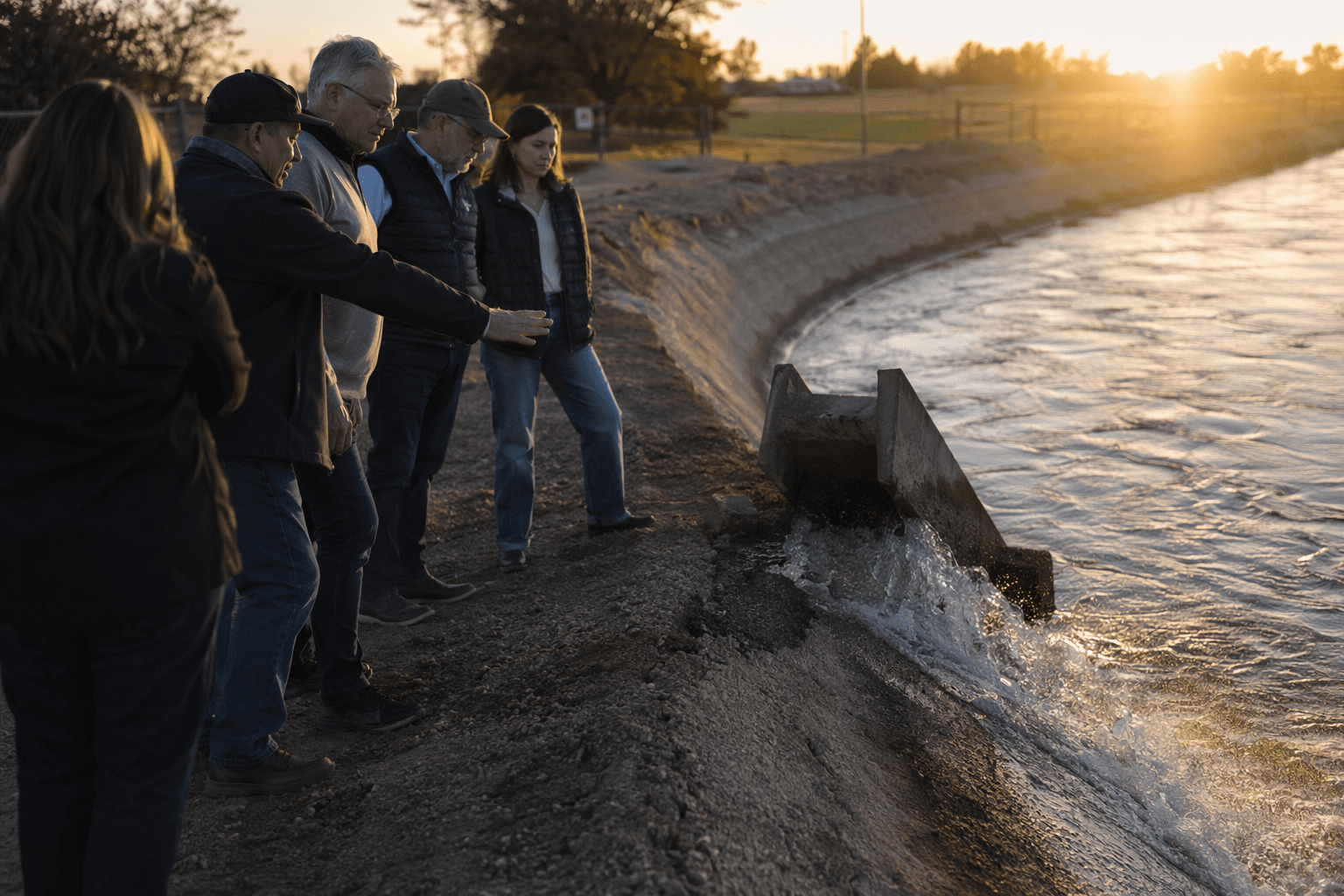
The stop at Amat Kuhwely Farms brought the discussion down to crop rows and machinery. CRIT farms manager Joshua Moore, along with local farmers John Nelson and Ciesto Leivas Jr., described the burden of keeping fields productive while the Bureau of Indian Affairs has struggled to maintain the irrigation system that serves tribal agriculture. Moore, deputy attorney general Travis Nez, lead water attorney John Bezdek, water resources director Dillon Esquerra and Fish and Game wildlife manager Alexander Kalinowski joined Flores and Travnicek during the visit, underscoring how tightly water, law, wildlife and farming are linked on the reservation.
Travnicek said she would take the concerns back to BIA leadership in Washington after hearing the tribe’s frustration firsthand. The timing mattered: in June, Travnicek told senators the Colorado River Basin was in its 27th year of historic drought, and CRIT is trying to protect water that is both a legal entitlement and the basis for agriculture, culture and economic survival. The tribe’s irrigation system and water rights sit at the center of that fight, with a reported entitlement of 719,248 acre-feet a year across Arizona and California.
The visit also came as CRIT pushes to modernize. The Bureau of Reclamation has awarded the tribe $1.1 million to assess the Colorado River Indian Irrigation Project, and an earlier WaterSMART project planned to line 3,985 feet of the earthen 73-19L-1 canal with a geosynthetic membrane and shotcrete. CRIT has also rebranded CRIT Farms as Amat Kuhwely and said the effort would bring more than $23.7 million in new investment over two years, making repairs to the irrigation system a direct issue for Parker-area farm jobs and the tribe’s ability to use its own water efficiently.
This article was produced by Prism’s automated news system from verified source data, official records, and press releases, then run through automated quality and moderation checks before publishing. The system is built and supervised by the people who set the standards it runs under. Read our full AI policy.
Did this article answer your question?


