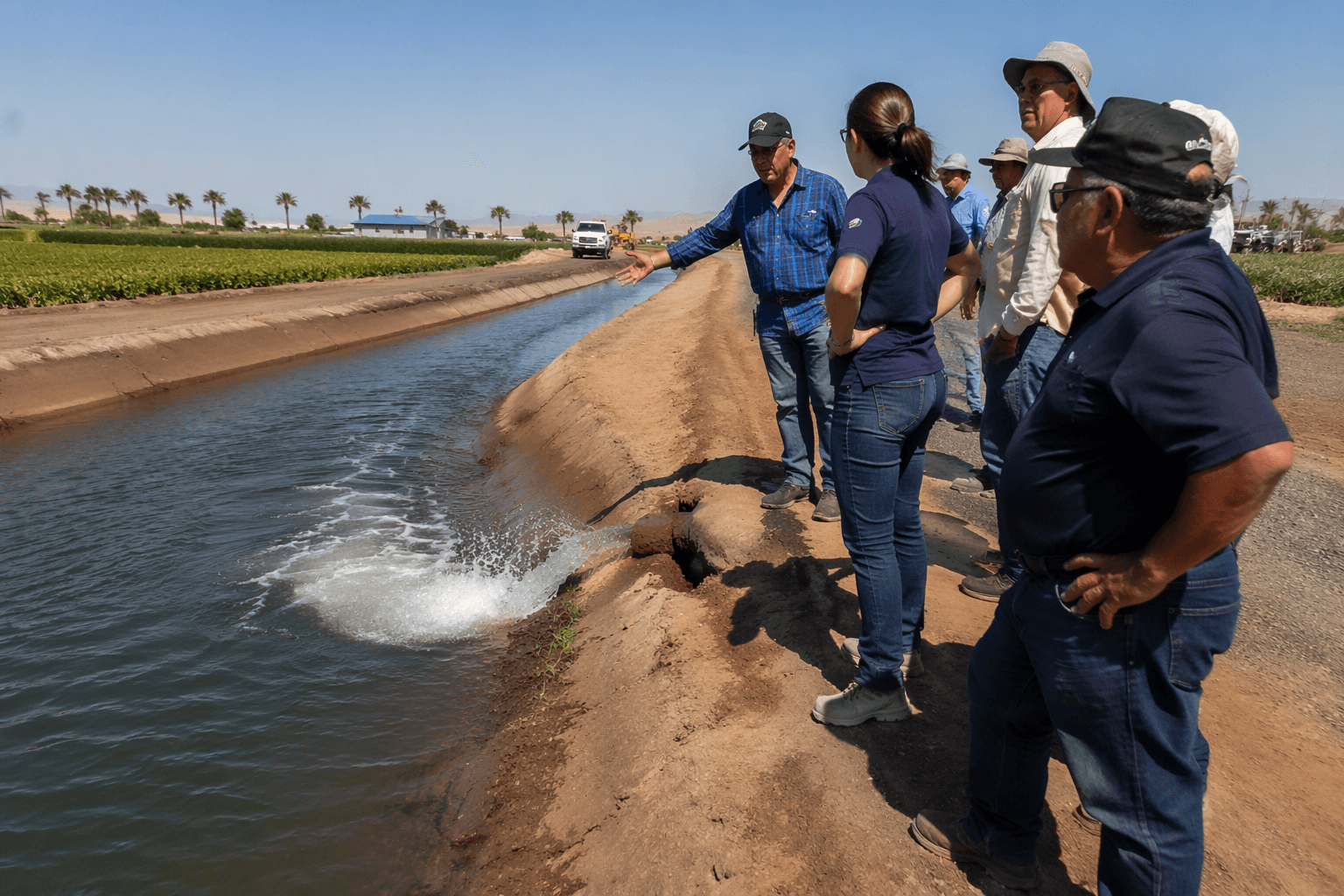
CRIT signs water-resiliency agreements in Parker, boosting tribal control
CRIT gained a new legal path to lease, exchange and store Colorado River water in Parker. The change could shape shortages, farming and growth in La Paz County.
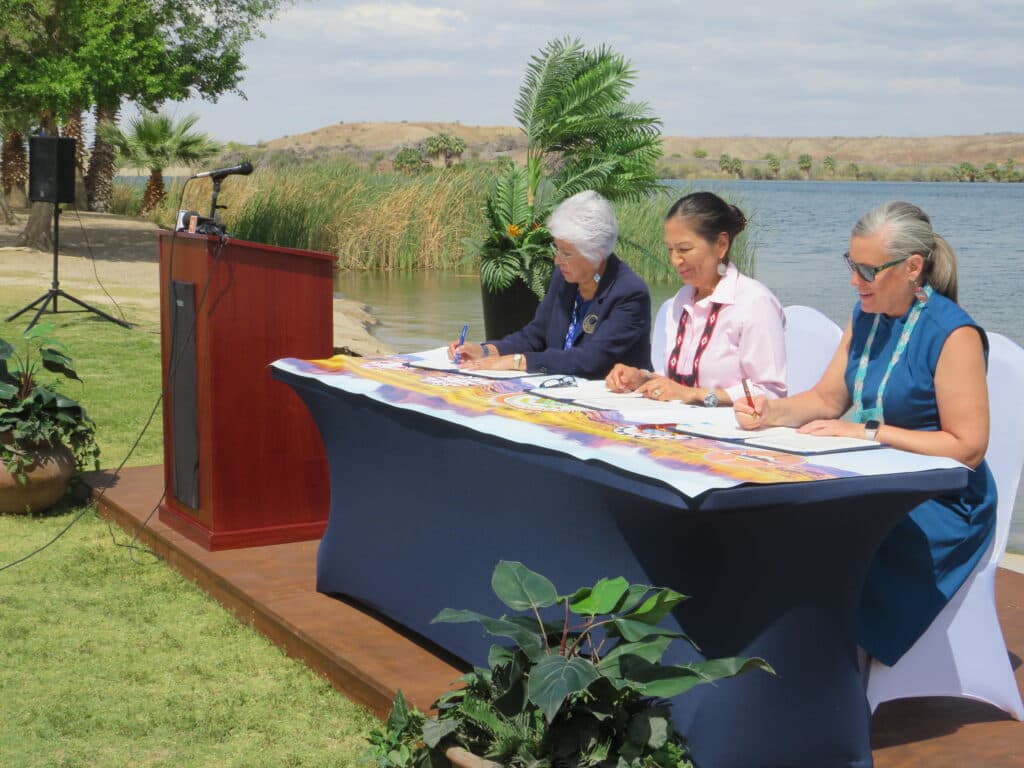
Colorado River Indian Tribes gained a new foothold over one of the Southwest’s most contested resources in Parker, where state, federal and tribal leaders signed agreements that let CRIT start using a new legal tool for its Colorado River water. The shift matters in La Paz County because Parker sits inside the region’s ongoing shortage fight, and the agreements could affect how water is counted, conserved and, eventually, used for farms and future development.
The April 26 ceremony at BlueWater Resort on the CRIT reservation brought together Chairwoman Amelia Flores, Gov. Katie Hobbs, U.S. Sen. Mark Kelly, Interior Secretary Deb Haaland, Bureau of Reclamation Commissioner Camille Calimlim Touton and Arizona Department of Water Resources Director Tom Buschatzke. The agreements were required under the Colorado River Indian Tribes Water Resiliency Act, the law Kelly introduced on Dec. 2, 2021. It passed the Senate on Dec. 19, 2022, cleared the House 397-12 on Dec. 21, 2022 and became Public Law 117-343 on Jan. 5, 2023.
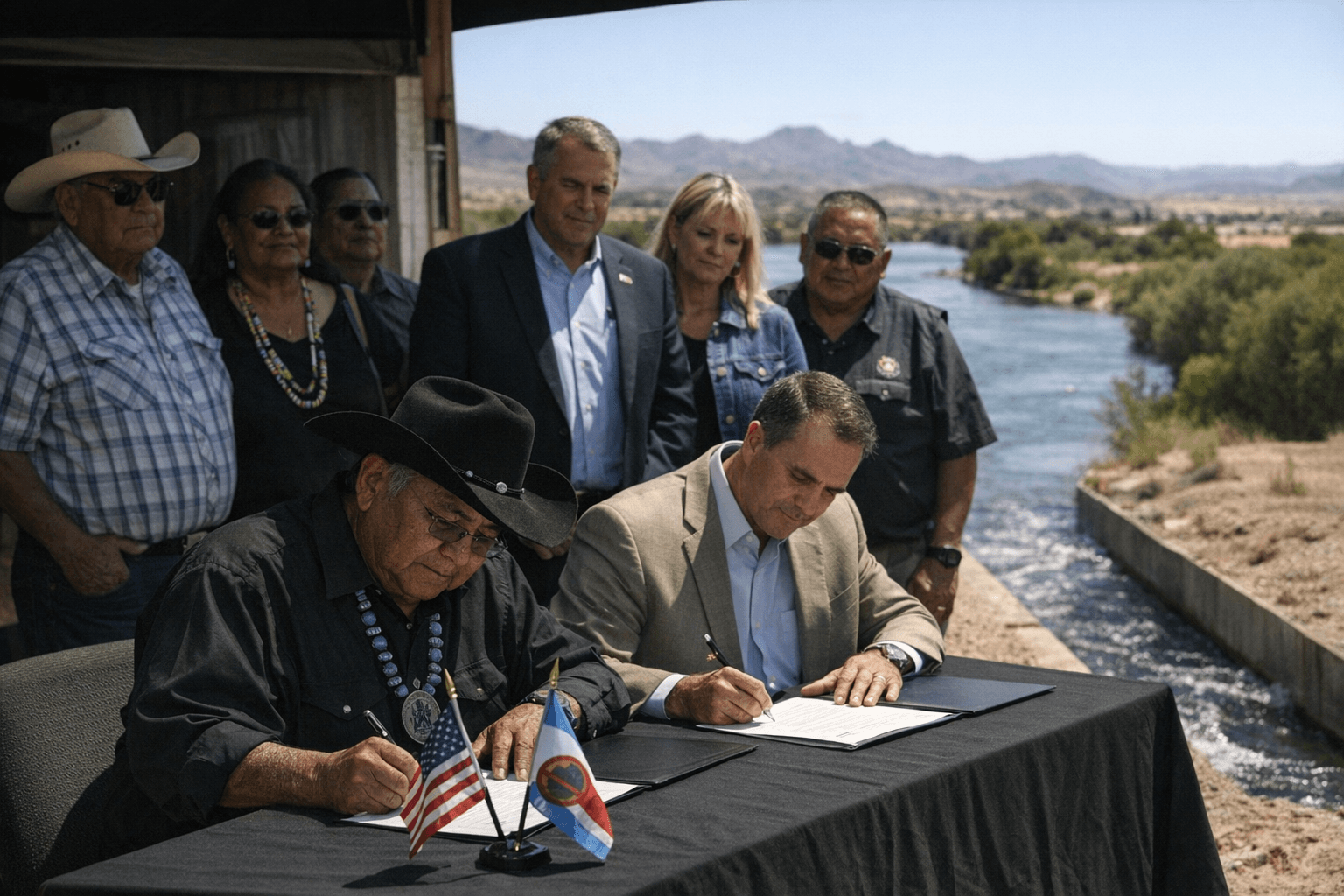
Under that law, CRIT can enter lease, exchange and storage agreements, along with agreements for conserved water, and the Interior secretary can approve them. The act defines conserved water agreements to include system conservation and storage in Lake Mead. Before this framework, CRIT did not have that express authority. Now the tribe has a direct statutory path to negotiate how part of its Arizona Colorado River entitlement can be leased, exchanged or stored, while the secretary retains approval power. Any lease can run no longer than 100 years, and off-reservation use must stay in Arizona’s Lower Basin, not Navajo, Apache or Cochise counties.
CRIT is made up of the Mohave, Chemehuevi, Hopi and Navajo tribes, and its reservation runs along the Colorado River in both Arizona and California. Interior said the Bureau of Indian Affairs and Bureau of Reclamation are implementing the law with CRIT to establish water conservation and leasing agreements aimed at drought mitigation in the Lower Colorado River Basin. The department also said the new authority gives the tribe, for the first time, the ability to lease, exchange or store part of its Arizona Colorado River entitlement.
For Parker-area residents, farmers and planners, that means the tribe is no longer just a stakeholder watching river decisions from the sidelines. CRIT is now positioned as a central decision-maker in how scarce Colorado River water is accounted for, conserved and potentially moved, a shift that could shape the reliability of supplies in La Paz County as shortages continue to tighten across the basin.
This article was produced by Prism’s automated news system from verified source data, official records, and press releases, then run through automated quality and moderation checks before publishing. The system is built and supervised by the people who set the standards it runs under. Read our full AI policy.
Did this article answer your question?