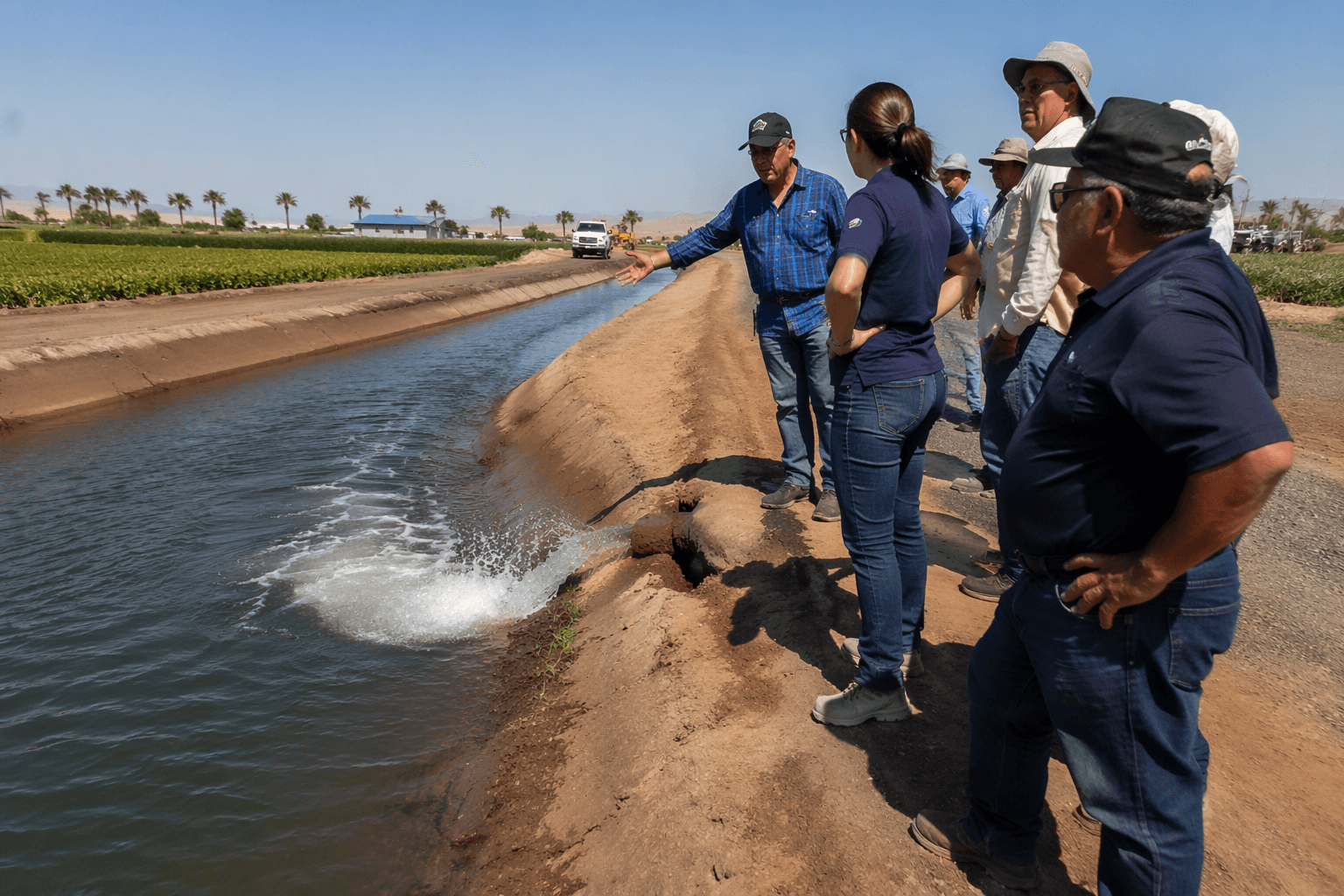
Hobbs visits CRIT, hears tribe’s concerns on water and agriculture
Hobbs met CRIT leaders in Parker as the tribe pressed water and farm concerns tied to 719,248 acre-feet of Colorado River rights.
CRIT’s meeting with Gov. Katie Hobbs put Parker and the Colorado River Indian Reservation at the center of Arizona’s water politics, where tribal farms, state policy and drought planning overlap. The governor visited the reservation on March 26 and met with Chairwoman Amelia Flores and CRIT Farms Manager Joshua Moore, a visit that underscored how much La Paz County depends on decisions made around the river.
The Colorado River Indian Tribes said the reservation stretches across nearly 300,000 acres on both the Arizona and California sides of the Colorado River and is home to four distinct nations, Mohave, Chemehuevi, Hopi and Navajo. The tribe says it has about 4,277 active members, and agriculture remains central to both its economy and its identity. In that setting, a governor’s visit was more than a courtesy call. It was a direct briefing on the people who manage the land, the farms and the water that keeps them going.
Joshua Moore’s presence mattered because CRIT’s farm operation sits at the heart of the tribe’s leverage in water negotiations. CRIT says it holds rights to 719,248 acre-feet per year of Lower Colorado River water, the largest tribal water-rights position in Arizona, and that the water has historically gone mainly to irrigation on tribal lands in Arizona and California. For Parker, that means the reservation is not just a neighbor on the river. It is one of the region’s most consequential decision-makers on water security and farm production.
The visit also fit into a longer policy timeline already underway. CRIT said Chairwoman Flores was preparing to speak to the U.S. Senate in support of legislation that would let the tribe help Arizona with Colorado River water for drought relief while preserving the river and strengthening tribal sovereignty. The tribe’s 2022 Colorado River Indian Tribes Water Resiliency Act was designed to allow lease, exchange and storage agreements for water allocated to the tribe, giving CRIT more flexibility in basin-wide negotiations.
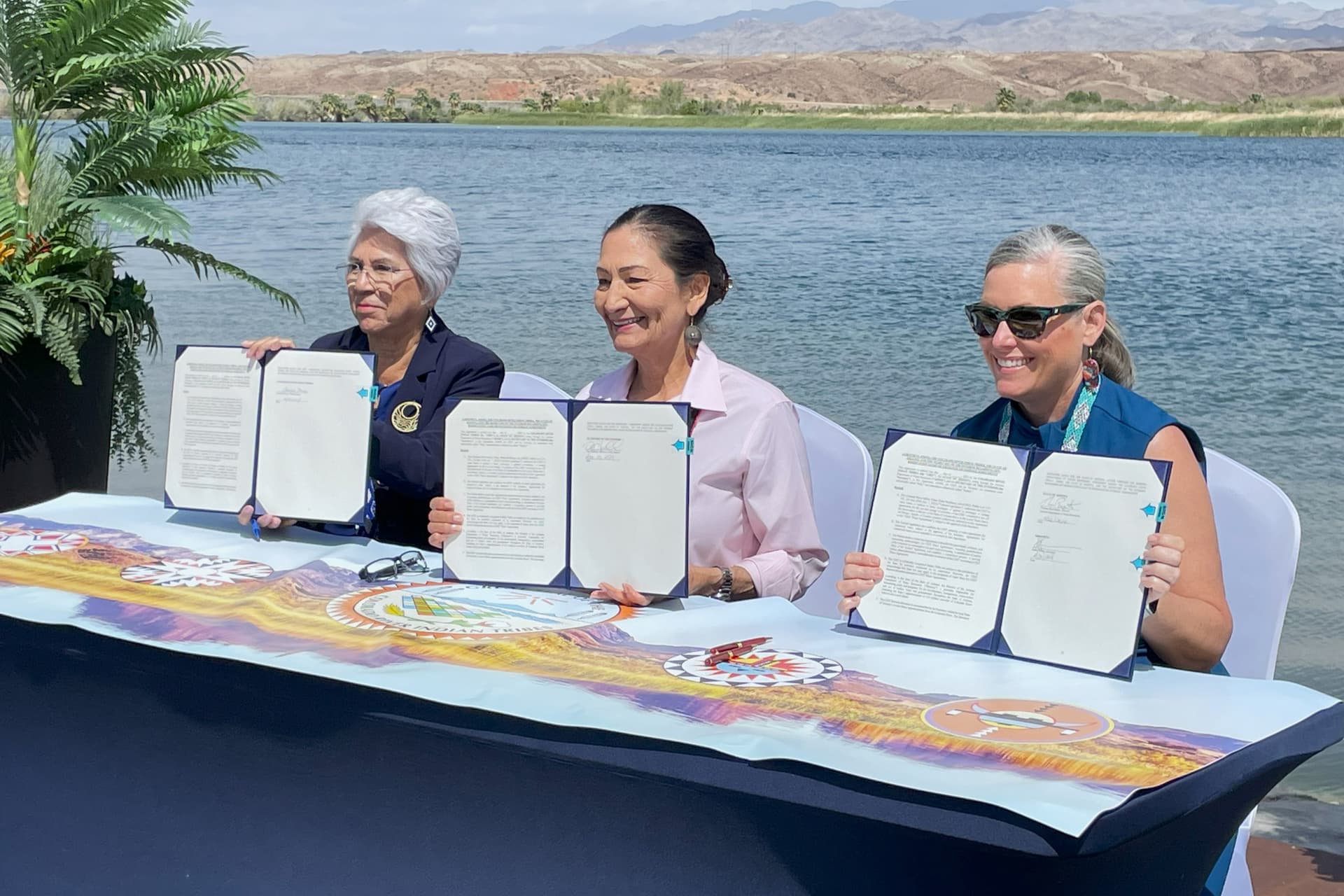
That approach is not new. CRIT signed a System Conservation Agreement with Arizona and the U.S. Bureau of Reclamation in 2019 to help with drought relief, and in 2024 the reservation hosted a signing ceremony involving CRIT, Hobbs and Interior Secretary Deb Haaland. Those steps show a growing relationship between the state and the tribe, built around conservation, water leasing and long-term management.
The broader basin picture makes CRIT’s role even larger. A basin-wide analysis says 22 tribal nations hold rights to about 3.2 million acre-feet of Colorado River water annually, roughly a quarter of the river basin’s average annual supply. In that context, Hobbs’ stop in Parker was a reminder that what happens on the reservation reaches far beyond La Paz County, shaping Arizona’s water future and the bargaining power of tribes that sit at the front line of drought planning.
This article was produced by Prism’s automated news system from verified source data, official records, and press releases, then run through automated quality and moderation checks before publishing. The system is built and supervised by the people who set the standards it runs under. Read our full AI policy.
Did this article answer your question?