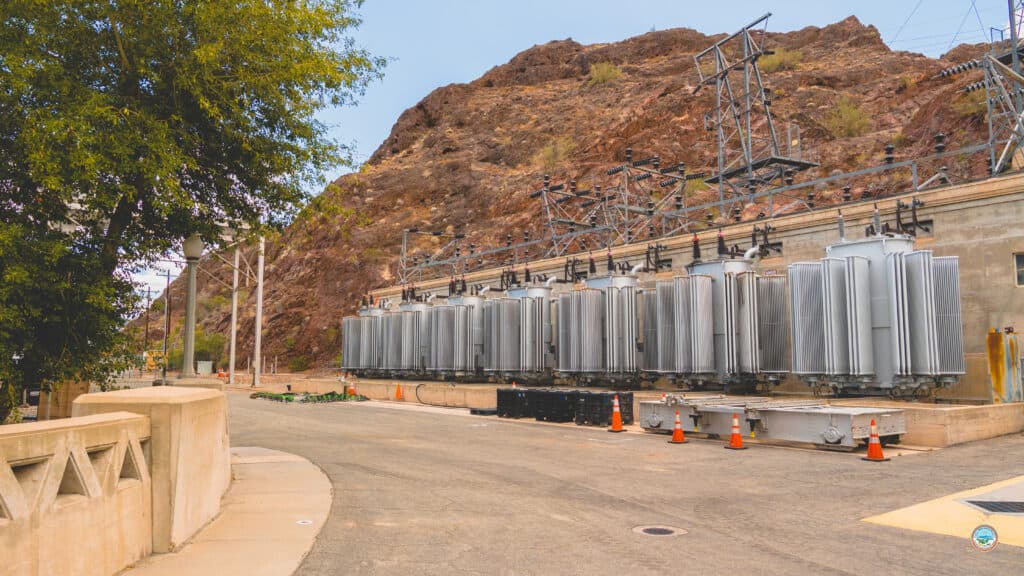
Local leaders tour Parker water facility amid Colorado River concerns
A Parker tour of the Metropolitan Water District facility showed how 1930s river infrastructure still shapes water control, jobs and risk in La Paz County.
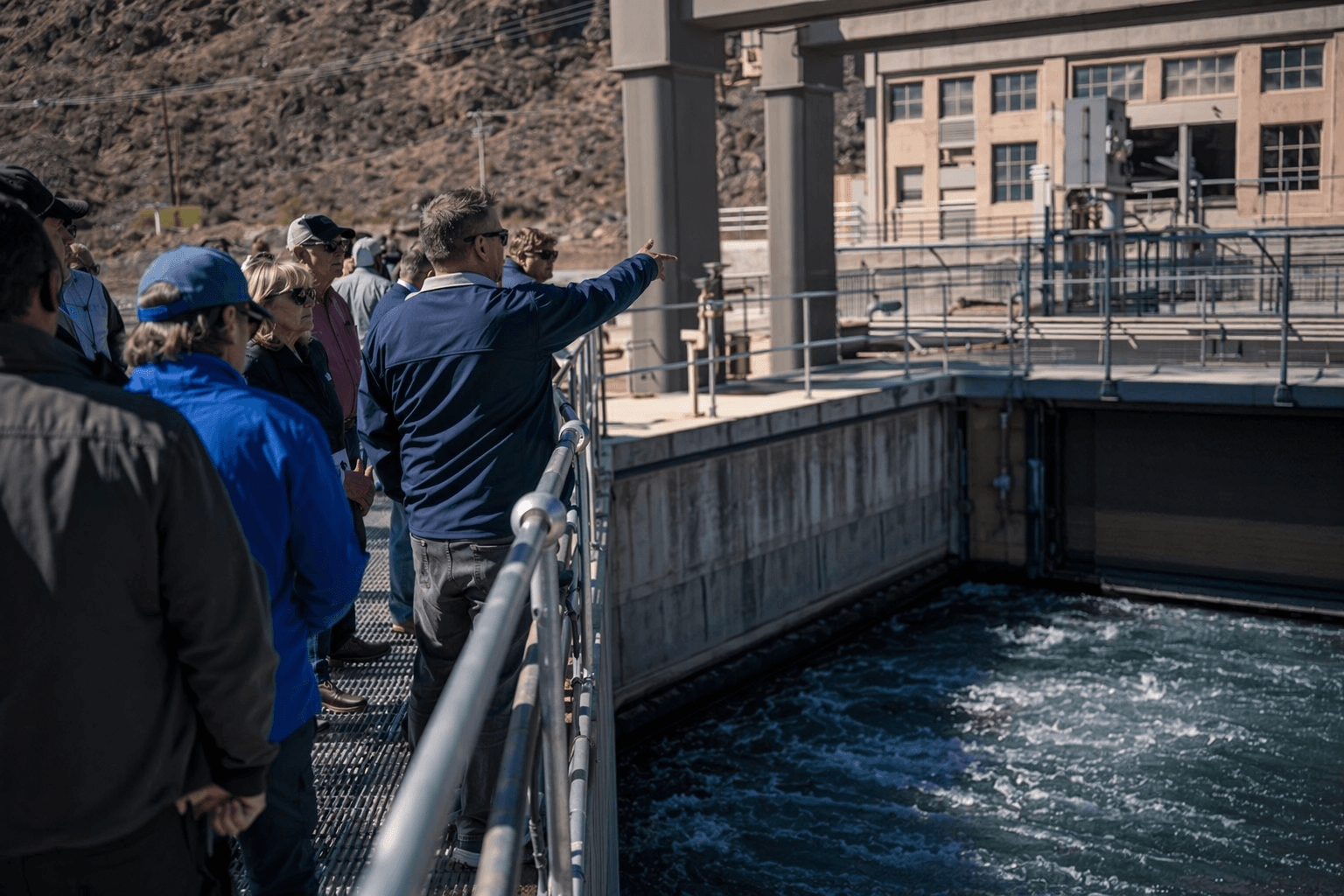
The Metropolitan Water District facility in Parker became a classroom for Colorado River power and water control when CRIT Media, Lake Havasu business owners, Parker Area Chamber of Commerce representatives and local law-enforcement personnel toured the site on May 8. The visit centered on how water is stored and managed along the river system, a question that reaches far beyond the plant gates in a county where irrigation, municipal supply and tribal planning all depend on the next move upstream.
Parker sits inside one of the most important stretches of Colorado River infrastructure in the Southwest. The Colorado River Indian Tribes reservation straddles the river from five miles north of Parker to 50 miles south and covers more than 264,000 acres. The original town site was surveyed and laid out in 1908, and by 1914 only 600 acres of Indian-owned land were being irrigated, while inadequate drainage was already waterlogging much of it. Water has never been an abstract issue here. It has been the town’s organizing force.
The system visitors saw grew out of Parker Dam and the Colorado River Aqueduct. Parker Dam was authorized by the Rivers and Harbors Act on Aug. 30, 1935, and built by the Bureau of Reclamation from 1934 to 1938. The dam created Lake Havasu 155 miles below Hoover Dam on the Colorado River. It rises 85 feet above the river, extends 235 feet down to bedrock and contains about 380,000 cubic yards of concrete. The Colorado River Aqueduct was constructed between 1933 and 1941 to carry that water west.
Metropolitan’s role in that history is not symbolic. The district contributed half the cost to build the dam’s power plant and receives 50 percent of the power generated. The Parker-Davis Project also relied partly on funds advanced by the Metropolitan Water District of Southern California, and the district receives half the capacity and energy from four generating units tied to Parker Dam. In practical terms, Parker is linked to a regional water-and-power machine that reaches across state lines and into federal operations.
That is why the local presence matters. Gina Chavez, identified as a Metropolitan Water District water pump mechanic, grew up in Parker and was born and raised there, with roots on MWD property. Her connection underscored how the facility is woven into local employment as well as water delivery. The tour suggested that Parker is more than a place that hosts critical infrastructure. It is also a place where trust, access and daily knowledge shape how that infrastructure is understood, even if the biggest decisions still run through Metropolitan, the Bureau of Reclamation and the wider Colorado River system.
This article was produced by Prism’s automated news system from verified source data, official records, and press releases, then run through automated quality and moderation checks before publishing. The system is built and supervised by the people who set the standards it runs under. Read our full AI policy.
Did this article answer your question?