College Hill grew around church, school and cemetery in 1836
College Hill began as a planned 1836 settlement built around faith, learning and burial ground. Its church, school and cemetery still shape Oxford-area memory today.
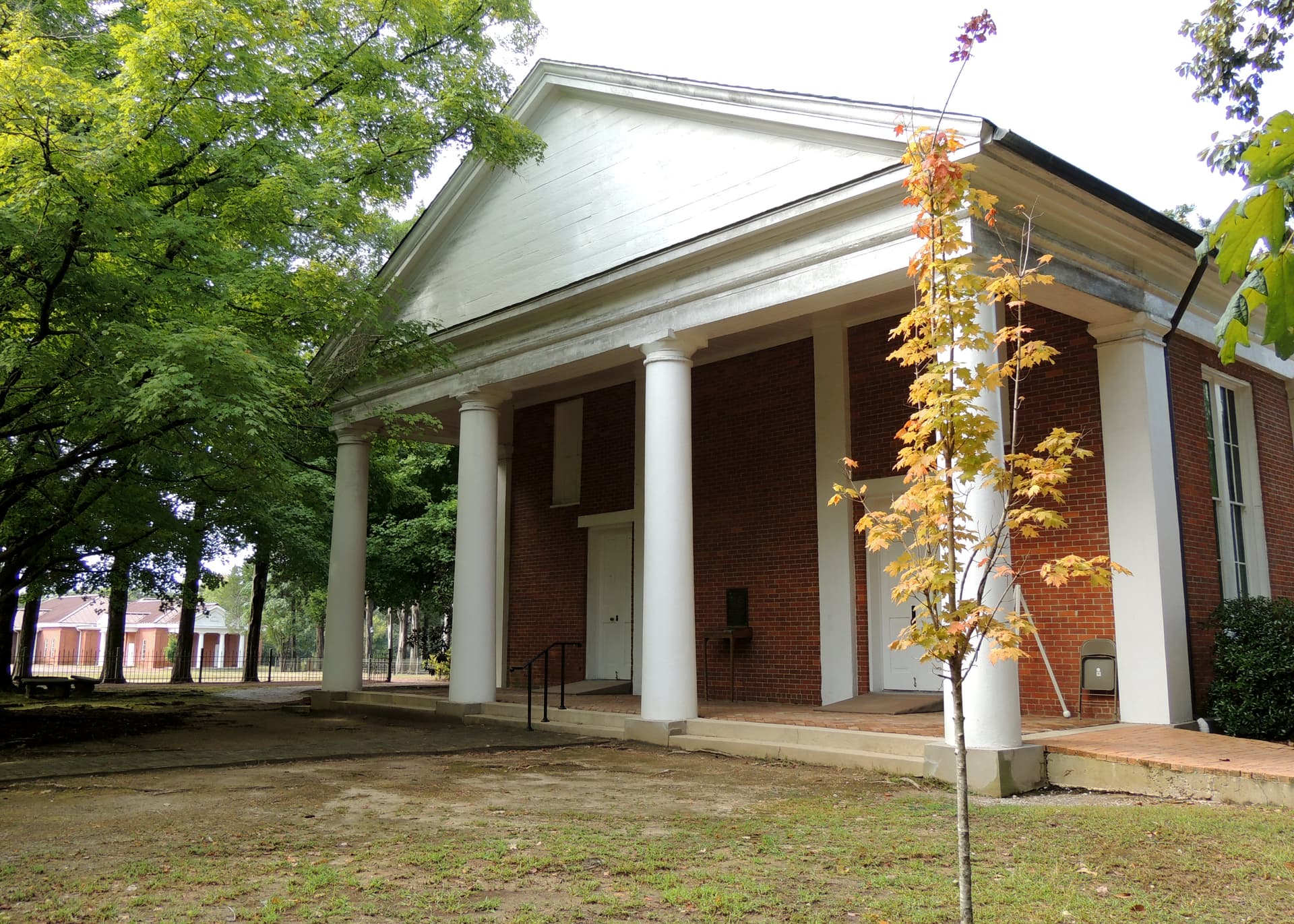
College Hill was not a random crossroads that grew by chance. In 1836, Goodloe Warren Buford donated land for a Presbyterian church, a cemetery and a school, setting out a settlement model that still defines this corner of Lafayette County and the Oxford vicinage.
A settlement planned around worship and learning
The earliest history of College Hill shows how frontier communities took shape through institutions that created stability. The congregation at College Hill Presbyterian Church was organized in 1835, and the broader community was founded the next year around land Buford set aside for worship, education and burial. That is why College Hill still reads as a deliberate place rather than a loose cluster of buildings.
The church building itself became one of the clearest landmarks in north Mississippi. It was completed in 1846 at a total cost of $2,809.75, and it was built with bricks fired on the site. The result was a structure rooted physically in the same ground that shaped the community’s identity.
The church carries the deepest layers of memory
College Hill Presbyterian Church is listed on the National Register of Historic Places, and it remains one of the area’s most recognizable historic sites just outside Oxford. The Lafayette County Historical and Genealogical Society describes it as the oldest Presbyterian structure in north Mississippi, which helps explain why it has remained a touchstone for local families, church members and visitors alike.
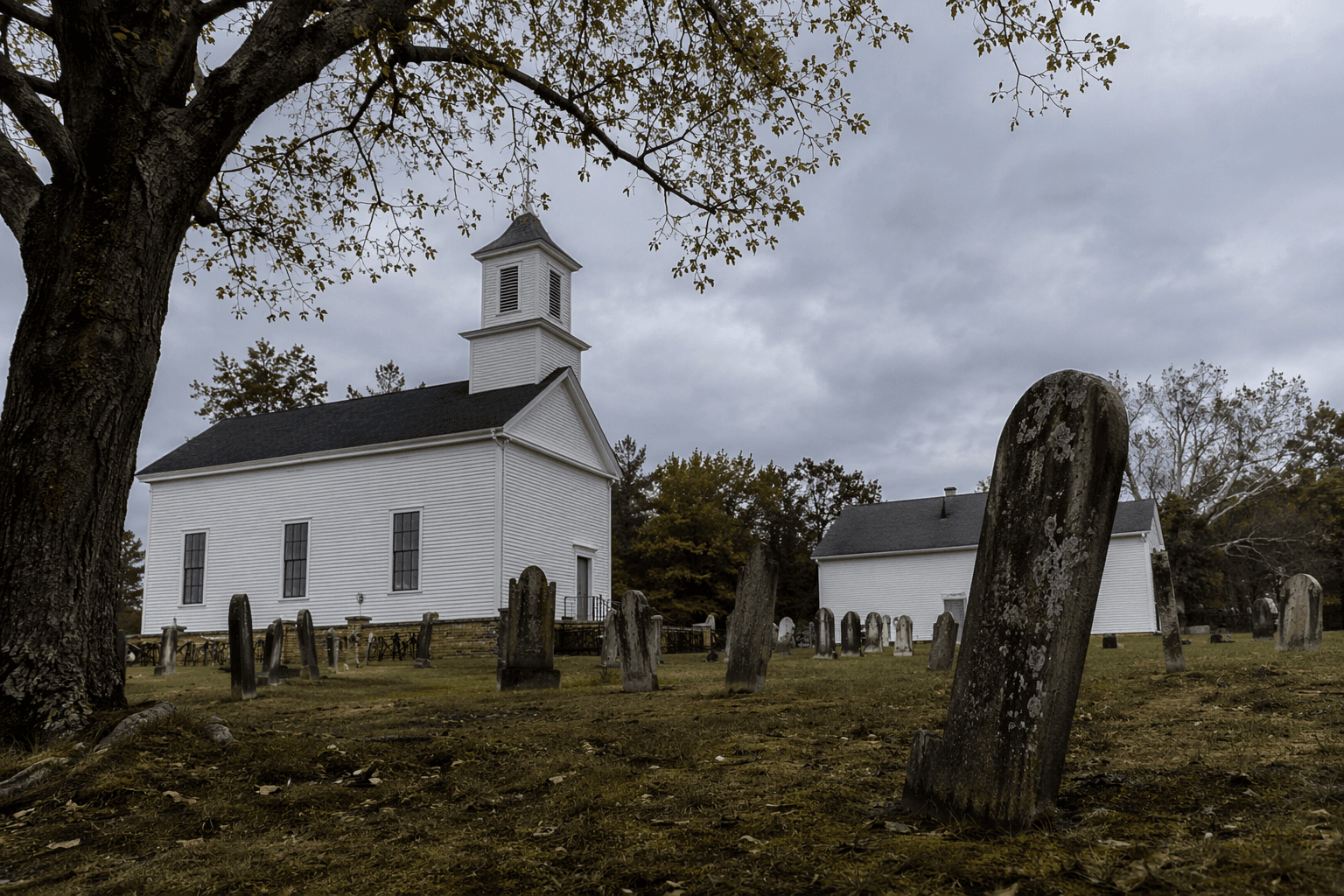
Its grounds hold more than worship history. During the Civil War, Union troops under Generals Ulysses S. Grant and William Tecumseh Sherman camped there, and a historical marker says about 30,000 Union troops occupied the church and vicinity in December 1862. The cemetery adds another layer of history, with unmarked Union soldiers’ graves, slave burial sites and Confederate soldiers’ graves all on the same property. That mix makes the site a visible record of how war, slavery and memory intersected in Lafayette County.
The church also connects College Hill to a broader cultural history. William Faulkner was married there in 1929, a fact that keeps the building linked not only to local faith life but also to the literary legacy that draws so many people to Oxford. In that sense, the church serves as both a sacred place and a civic landmark.
Fire changed the sanctuary, but not the congregation
A major break came in August 2022, when the church sanctuary burned. Even then, the congregation did not disappear from the landscape. Services continued in the Fellowship Hall, and plans were made to rebuild the sanctuary using as much of the original material as insurance and current building codes will allow.
That continuity matters in practical terms as well as symbolic ones. College Hill Presbyterian Church’s community center served as a voting precinct in 2026, which means the site is still used for ordinary civic life, not only for preservation or tourism. The building remains part of how people move through public life in this part of Lafayette County.
The school made College Hill an educational place
The school history at College Hill is just as important as the church history. The former Male and Female Academy was later acquired by the county and renamed Lafayette Agricultural High School, showing how the site evolved with changing public needs. A brick school building was constructed in 1931, after the earlier wood-framed building burned in 1933.
The school reopened in 1934 for grades 1 through 7 and stayed open until 1957. Another layer of local history says Lafayette County Agricultural High School educated boarding students from 1913 to 1933 before the dormitory fire, which shows how the campus once functioned as a fuller educational center than the later grade-school version. College Hill School was designated a Mississippi Landmark in 2018, the highest form of recognition the state gives to historic properties, and that designation gives the site the strongest protection against changes that could damage its historic character.
Why College Hill still shapes Lafayette County
College Hill still matters because it shows how Lafayette County was built around durable institutions, not just geography. Church, school and cemetery created a shared center for worship, learning, burial and community identity, and those functions still shape the way the place is remembered and used today.
The church grounds, the cemetery and the school site make that history visible on the land itself. Families, church members and voters still encounter the same place names and structures that have anchored College Hill since the 1830s, and that continuity gives the community a rare kind of permanence in a county whose story is often told through Oxford’s growth. In College Hill, the old settlement model is still present in the everyday map of Lafayette County.
This article was produced by Prism’s automated news system from verified source data, official records, and press releases, then run through automated quality and moderation checks before publishing. The system is built and supervised by the people who set the standards it runs under. Read our full AI policy.
Did this article answer your question?