Foxfire Ranch launches multimedia project on Black land legacy
Foxfire Ranch turned its 80-acre Hollowell homestead into a digital altar, tying Waterford to Mississippi’s wider Black land-loss history.
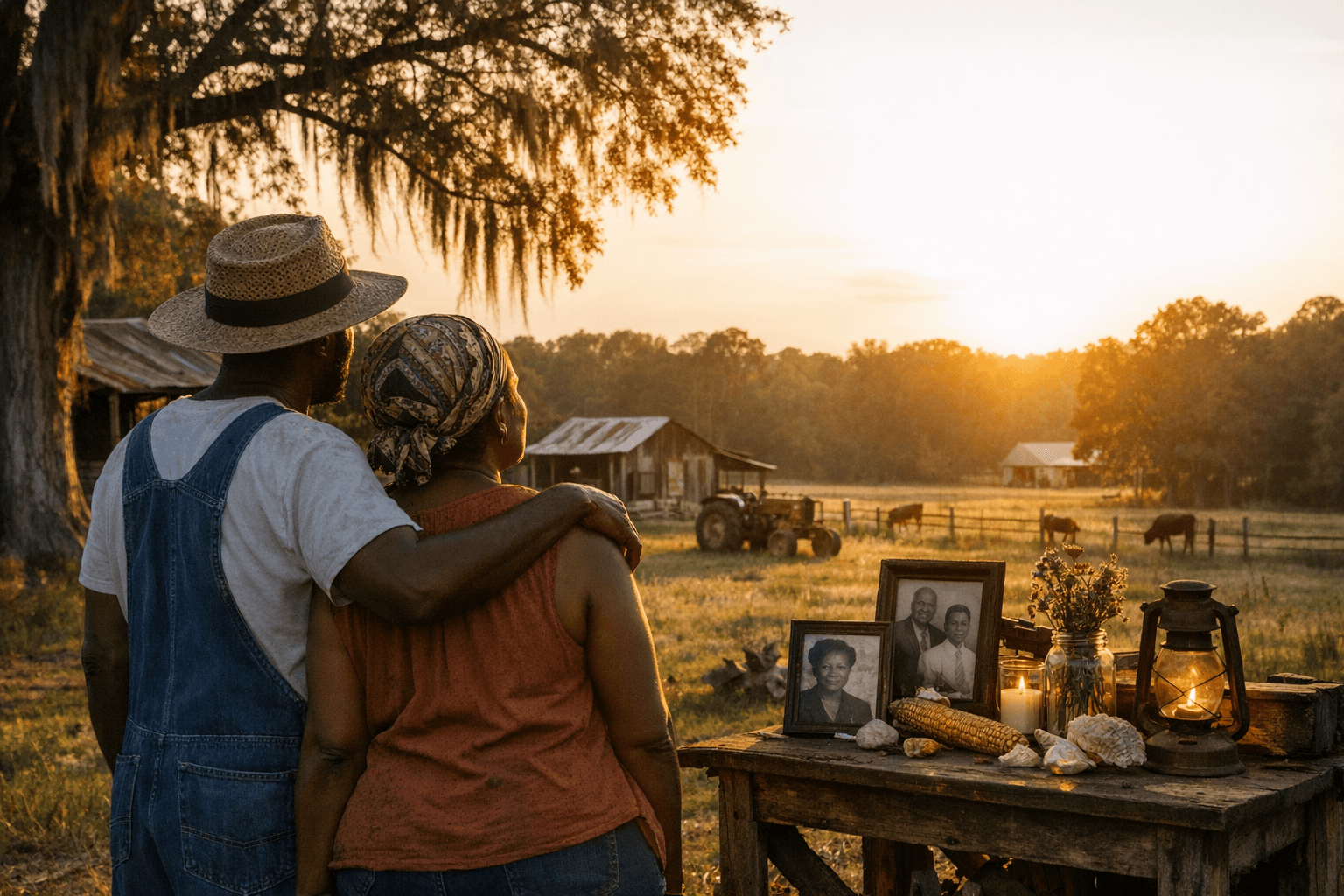
Foxfire Ranch in Waterford has opened We Are the Promised Land to the public after eight years of development, putting the Hollowell family’s 80 acres at the center of a multimedia look at Black land stewardship in Lafayette County. The project went live on April 24 and stretches well beyond a standard local launch, linking one North Mississippi farm to a much larger story of inheritance, labor and survival.
Built with Annette Hollowell and producer free feral, the project gathers audio, photography, video, poetry, journals, essays and behind-the-scenes material into one digital presentation. Sound design came from Muthi Reed and Cedric Wilson, with Wilson also mixing each piece. Alleyha Dannett of Ancient Future Fourest created the virtual altar, while Jasmine B Johnson and Jai Williams shot the photographs that help frame the work. The project also acknowledges the Center for the Study of Southern Culture at the University of Mississippi, the Yoknapatawpha Arts Council and the Mississippi Presenters’ Network.
Foxfire Ranch describes itself as a fourth-generation, Black-owned farm and cultural sanctuary in northern Mississippi, and the family story reaches back to Dark Corner in the 1870s. The ranch says Albert Hollowell bought the 80-acre parcel in 1919 after filing an intention to buy in 1918, a detail that gives the site unusual weight in a state where Black land ownership has been steadily eroded for generations. What remains on that ground is not just property, but a working archive of family life, music and memory.
For nearly two decades, Foxfire Ranch has served as a music and event space, and Annette Hollowell has said she wants it to be a hub for artists and organizers from across the South and beyond. That ambition is reflected in the project’s structure, which was designed to be experienced digitally as well as culturally. A public online sharing session is scheduled for April 29, giving audiences a chance to meet members of the creative team and learn how the work came together.
The larger stakes are hard to miss. Mississippi had 2.2 million acres of Black-owned land in 1910, scholars estimate Black agricultural land ownership fell by nearly 90% by 1997, and the present compounded value of that lost land has been estimated at about $326 billion. Against that backdrop, We Are the Promised Land reads as both a family story and a civic one, placing Lafayette County inside a statewide reckoning over ownership, heirs’ property vulnerability and the preservation of Black cultural memory.
This article was produced by Prism’s automated news system from verified source data, official records, and press releases, then run through automated quality and moderation checks before publishing. The system is built and supervised by the people who set the standards it runs under. Read our full AI policy.
Did this article answer your question?