Invasive Silver Carp Threaten Mississippi Delta Ecology and Economy
Silver carp have permanently altered how people use water across the Mississippi Delta, threatening duck hunting, fishing tournaments, and property values alike.

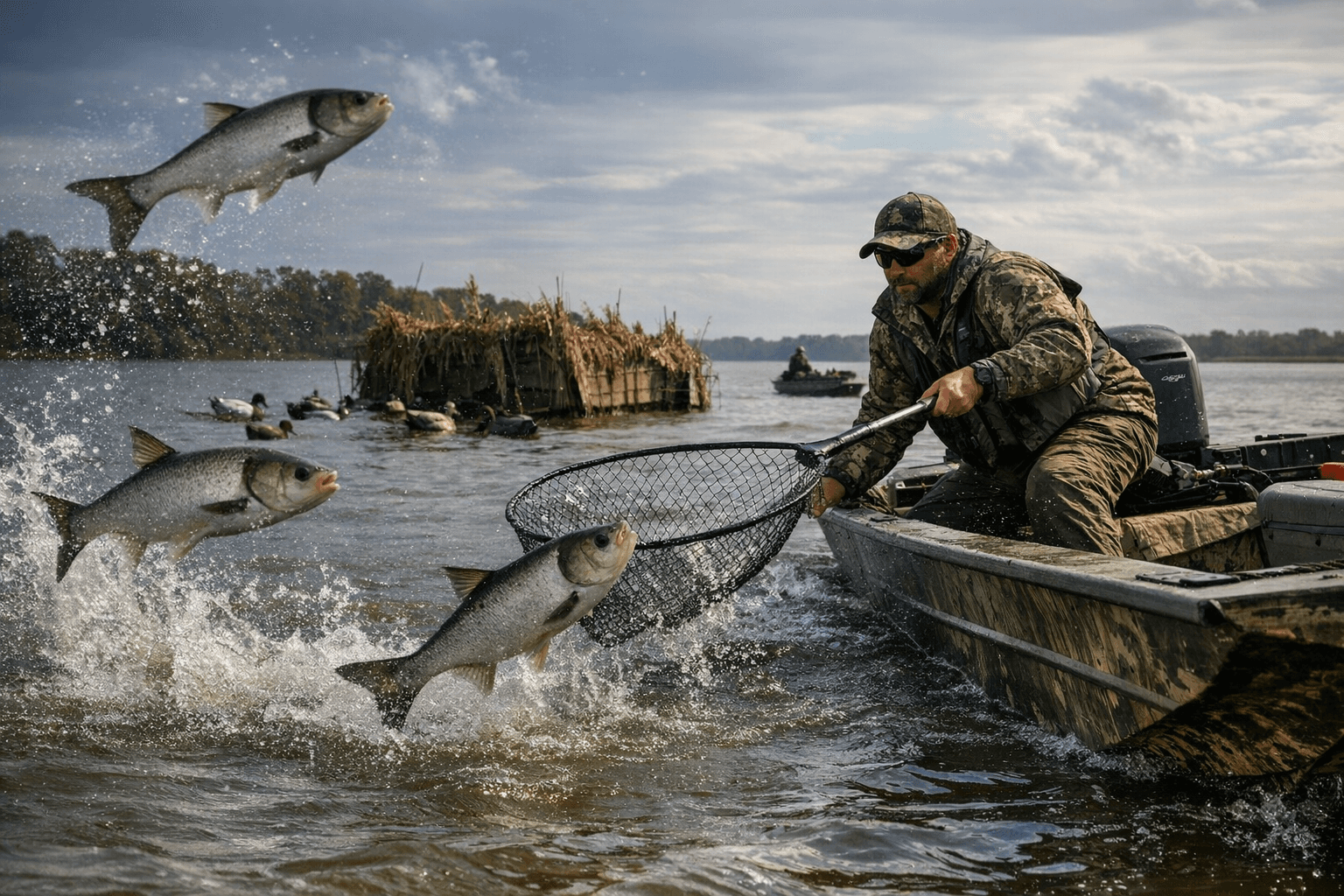
Silver carp have done something few invasive species manage: they have reordered an entire region's relationship with its most essential resource. A guest column published in the Oxford Eagle on March 12 laid out the scale of that disruption, drawing on Delta Wildlife's assessment to argue that the fish now reaches into nearly every corner of economic and daily life in the Mississippi Delta.
The column's framing is direct: "In the Mississippi Delta, water means life. Rivers irrigate crops, lakes support property values, backwaters fuel duck hunting, and weekend fishing tournaments support small-town economies." That foundational dependence is precisely what makes the silver carp invasion so consequential. As the column states, "the problem was never just ecological — it was practical. The invasion did not simply introduce a new species into the Mississippi River system; it changed how people use water."
The list of affected sectors runs wide. Silver carp now influence boating safety, tourism revenue, real estate perception, fisheries management budgets, commercial fishing jobs, and community identity. Each of those categories represents a pressure point in a regional economy built around water access, and the fish has embedded itself in all of them simultaneously.
Delta Wildlife's position, as reported in the column, leaves little room for optimism about reversal. The organization considers silver carp expansion "one of the most significant long-term conservation issues currently affecting the Mississippi Delta" and grounds that judgment in a stark conclusion: the problem is causing permanent rather than temporary damage. Because carp populations are now established throughout connected waterways, Delta Wildlife argues that management must shift its goal from elimination to suppression and population reduction.
That distinction matters practically. The column states plainly that "silver carp will remain part of the Mississippi Delta aquatic system, and the determining factor for the region's future is not presence versus absence but degree of control." Delta Wildlife emphasizes that no single technique will resolve the issue and that management must operate continuously and adaptively, rather than through any one-time intervention.
The jurisdictional complexity compounds the challenge. Connected aquatic systems cross property and political boundaries, meaning no individual agency or stakeholder group can manage the problem alone. Cooperative management across those lines is, according to Delta Wildlife, a requirement rather than an option. At the same time, the organization acknowledges that agriculture, recreation, and wildlife management cannot be put on hold indefinitely: solutions must allow normal water use to continue while reducing biological and economic damage.
What the column does not yet provide is quantitative weight behind those claims. No population estimates, mapped spread data, economic loss figures, or boating injury counts appear in the published piece. Delta Wildlife's assessments carry institutional credibility, but the full economic toll on fishing tournament revenues, commercial fishing employment, or property valuations across the Delta remains to be documented with hard numbers.
This article was produced by Prism’s automated news system from verified source data, official records, and press releases, then run through automated quality and moderation checks before publishing. The system is built and supervised by the people who set the standards it runs under. Read our full AI policy.
Did this article answer your question?