Lafayette County firefighters train to handle carbon dioxide hazards
Two Lafayette County firefighters trained in Jackson on an odorless gas that can kill in confined spaces before victims know it is there.
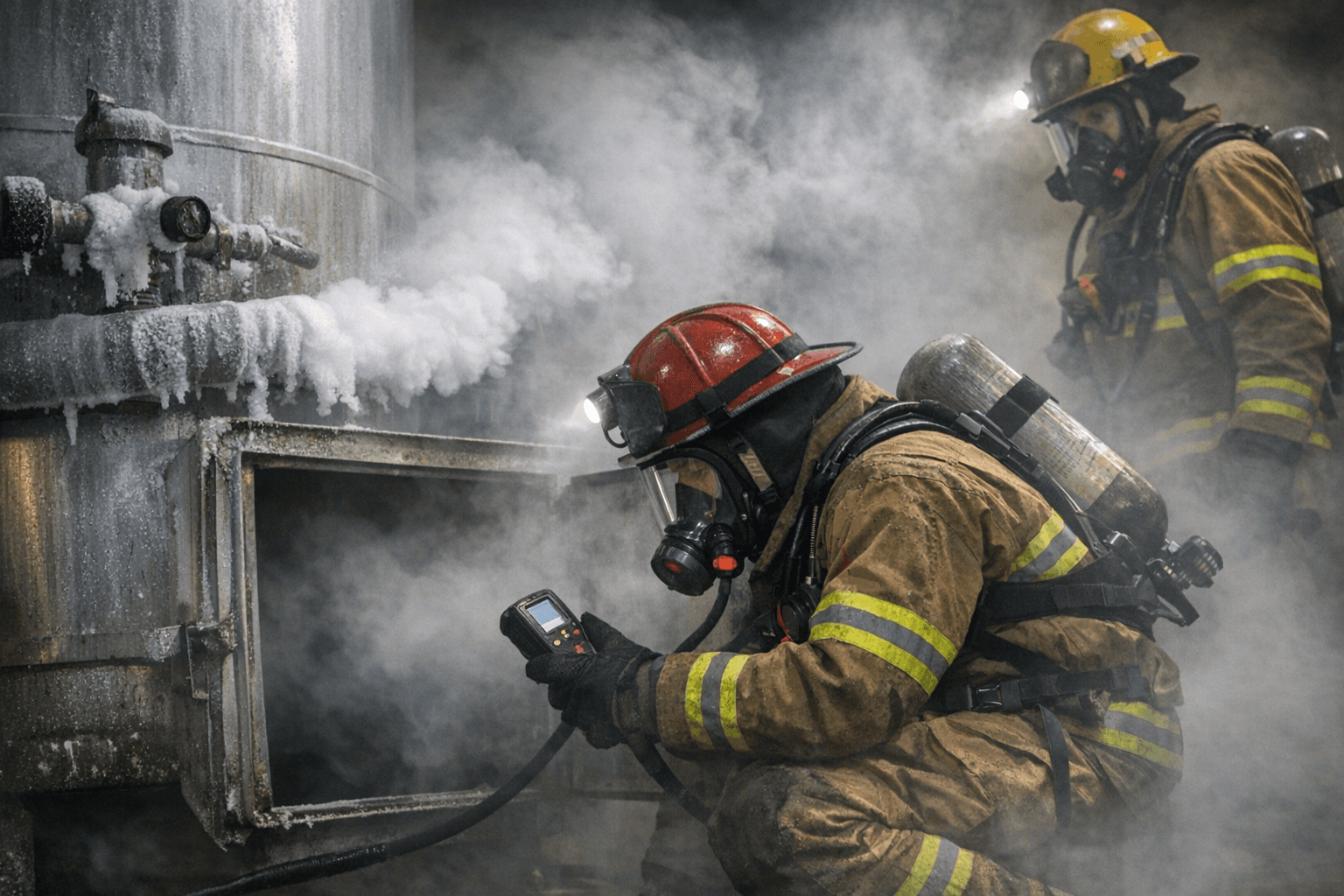
Two Lafayette County firefighters, Emil Anderson and Justin Parker, spent last month at the Mississippi State Fire Academy in Jackson learning how to handle carbon dioxide hazards that can turn a routine call into a life-threatening rescue. The training matters because carbon dioxide is invisible, odorless and, in the wrong space, capable of knocking people unconscious before anyone realizes the air has gone bad.
That danger is most serious in confined spaces, the kind of places OSHA says include tanks, vessels, silos, storage bins, hoppers, vaults, pits, manholes, tunnels, equipment housings, ductwork and pipelines. Federal safety guidance says carbon dioxide is heavier than air and can settle low in those spaces, where it can push out oxygen. CDC and NIOSH guidance warns that an oxygen-deficient atmosphere can lead to unconsciousness and death.
For Lafayette County, the training lands at a time when the fire service is handling more calls and more kinds of calls than it did a generation ago. The Lafayette County Fire Department responded to 2,711 calls in 2024, its busiest year since at least 2007. That total included 727 medical calls, 43 building fires, 25 forest, woods or wildland fires, 116 wrecks with injuries and six watercraft rescues. In 2007, the department handled about 350 calls.
The department itself has grown to match that load. The Lafayette County Volunteer Fire Department was chartered March 30, 1977, and the county now has 15 fire stations staffed by a mix of paid and volunteer members. Central Station is also expanding by more than 4,200 square feet, with eight bedrooms, new full bathrooms and seven administrative offices, a sign that the county is investing in the capacity to respond around the clock.
That is the practical answer for readers wondering what specialized carbon dioxide training changes when a call comes in here. Firefighters can now recognize the hazard earlier, treat a suspicious space as an oxygen problem rather than a routine emergency, and use proper detection and protection equipment before someone is overcome. At the Mississippi State Fire Academy, a division of the Mississippi Insurance Department, that kind of hands-on instruction is built to go beyond minimum training standards and prepare crews for hazardous materials, rescue and incident command.
In a growing county where a single call can involve a home, a business, a utility space or an industrial site, that preparation can mean the difference between a controlled response and a deadly one.
This article was produced by Prism’s automated news system from verified source data, official records, and press releases, then run through automated quality and moderation checks before publishing. The system is built and supervised by the people who set the standards it runs under. Read our full AI policy.
Did this article answer your question?