Lafayette County, Oxford Compile Key Contacts for Ice Storm Recovery
Lafayette County's final debris pickup deadline is April 20 — miss it and removal becomes your responsibility, while MDOT state highway cleanup won't begin until April 28.
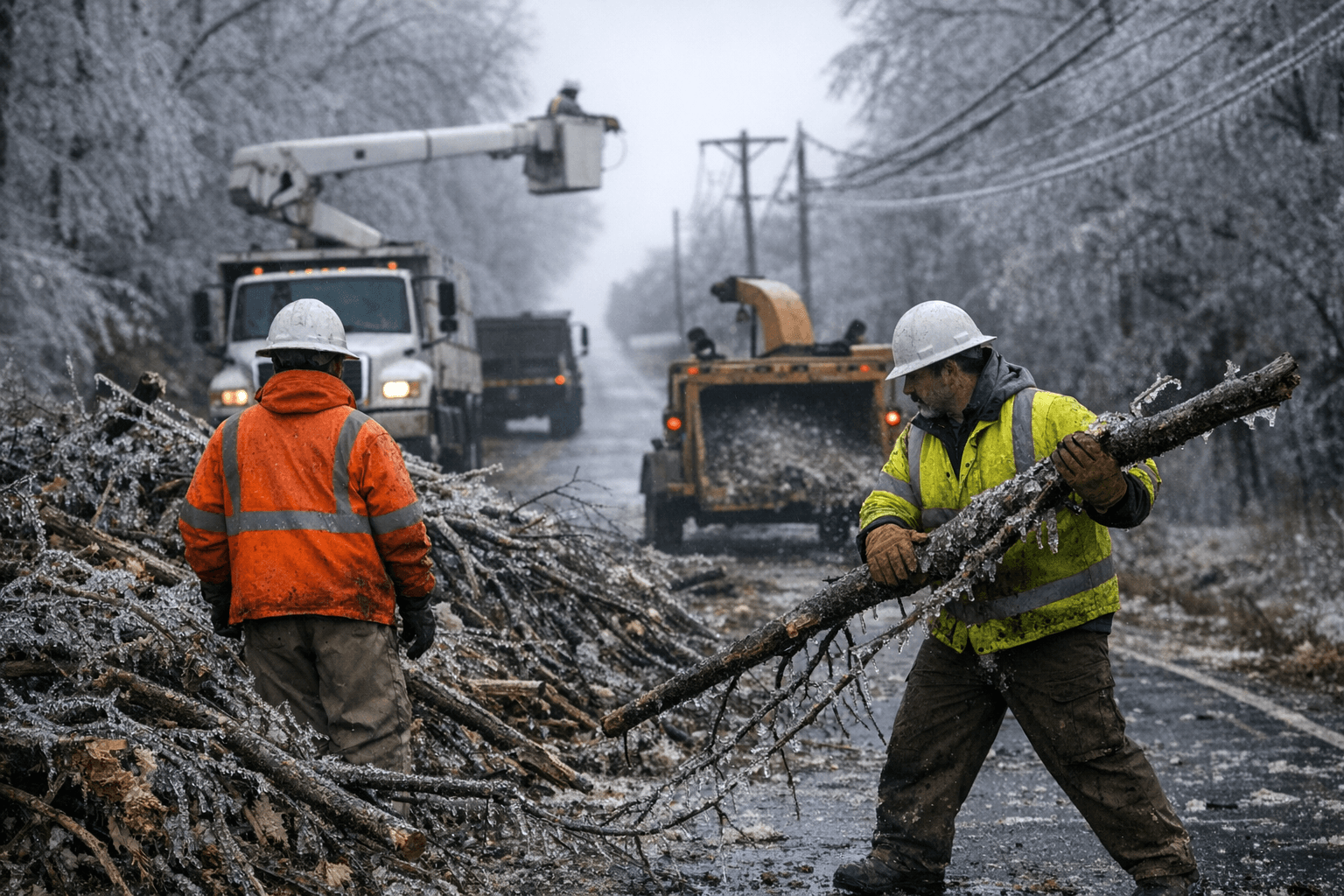
Winter Storm Fern hit Lafayette County and Oxford the weekend of January 23-27, 2026, knocking out power to more than 33,000 residents, snapping thousands of trees, and triggering a cleanup operation that has already surpassed $20 million in cost. More than ten weeks later, the finish line is finally visible — but only for households that act now. The county's final debris collection pass has a hard cutoff of April 20. Anything left curbside after crews make their last sweep becomes the property owner's problem, permanently.
Here is where to go, who to call, and what to have ready before the deadlines close.
Know Your Road Before You Call
The single most common delay in getting service after the storm is residents reporting problems to the wrong agency. Three separate entities own the roads in Lafayette County, and each has its own contractor, timeline, and contact point.
- County roads: The Lafayette County Board of Supervisors declared a local state of emergency and hired Looks Great Services to handle debris removal. The company has deployed roughly 100 trucks, moving three to four hundred loads per day to a temporary staging site in Abbeville. As of mid-March, Looks Great had completed approximately 85 percent of its first pass along county roads. Contact the county through lafayettems.com or the Board of Supervisors office at 300 North Lamar Blvd., Oxford.
- City of Oxford streets: Oxford operates a parallel cleanup contract, also with Looks Great Services, collecting debris independently from county operations and transporting it to its own section of the Abbeville site. Mark Levy, the city's Director of Special Projects, confirmed that crews have already made at least one pass through roughly 90 percent of city limits, hitting more than 7,000 locations. Track street-pass schedules at oxfordms.com or the city's official social media channels. Residents do not need to call the city to report curbside debris; crews are traveling every street.
- State highways: The Mississippi Department of Transportation is the last piece of the puzzle. MDOT spent weeks completing debris assessments and securing certified debris monitoring consultants as required by FEMA before it could advertise cleanup contracts. Bids open April 17; work on state highways in the Lafayette-Panola District 2 project area is scheduled to begin April 28. Check MDOT's projects portal for lane closure notices and contractor assignments.
The April 20 Deadline: What Goes Out and What Gets Left
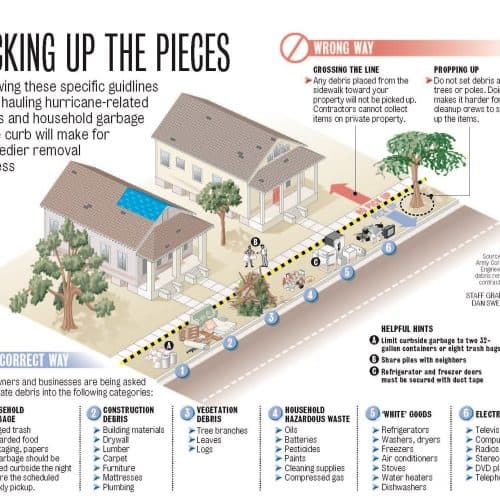
Lafayette County officials have announced the final pass for storm debris collection, asking residents to have all debris from the ice storm placed at the curb or roadside by April 20. Residents are asked to separate debris into distinct piles. Branches and yard waste must be kept apart from construction-related materials such as damaged fencing, siding, or sheds; mixed piles will not be collected. Debris containing household garbage, paint cans, or non-storm-related yard waste will also be left behind.
Storm-damaged outbuildings, sheds, and fences are eligible for pickup — but only if separated from vegetative debris. Run regular household garbage on its normal schedule through Lafayette County Solid Waste (300 N. Lamar Blvd., Suite 103; phone 662-236-2535), which has maintained standard routes throughout the recovery period.
Primary Emergency and Government Contacts
The Lafayette County Emergency Management Agency (EMA) is responsible for preparedness, mitigation, response, and recovery activities before, during, and after an emergency or disaster. The EMA coordinates the direction of county government operations in response to emergencies. Reach the EMA at its offices at 300 North Lamar Blvd., Suite 212, Oxford, MS 38655. The EMA is the first call for questions about sheltering, volunteer check-in coordination, burn restrictions, and debris collection policy changes.
For ongoing public-safety hazards, blocked roads, or welfare checks, contact the Lafayette County Sheriff's Office through official dispatch channels rather than social media. Logging a call through proper channels creates a documented service request that can be tracked and escalated — a social media post cannot.
The Oxford Police Department handles law-enforcement matters inside city limits. Both agencies maintain active social media accounts that push real-time traffic and safety updates, particularly useful during road closures tied to cleanup operations.
FEMA Public Assistance and Disaster Aid
FEMA Public Assistance has been approved for Lafayette County for all categories (A-G). FEMA's Public Assistance program reimburses local and state government agencies for the costs of emergency response, debris removal, and restoration of disaster-damaged public facilities and infrastructure. Certain nonprofit organizations and houses of worship may also be eligible for assistance.
For individual households, apply or check application status at DisasterAssistance.gov. The FEMA Helpline operates at 800-621-3362 (TTY 800-462-7585), 7 a.m. to 10 p.m. daily. Keep your application number on hand: any legitimate FEMA representative who contacts you will have it. Anyone who claims to represent FEMA but cannot produce your application number should not be trusted.
For SBA disaster loan information, call 800-659-2955 (TTY 800-877-8339) or visit SBA.gov/disaster.
Contractor Scams: A Real and Documented Gap
Severe storms often bring an influx of "storm chasers," unlicensed operators offering quick, inexpensive tree removal. The Lafayette County Master Gardeners flagged this risk specifically for the post-Fern recovery period. City officials also urged residents hiring cleanup contractors, particularly those from out of town, to verify that the contractors are properly licensed before hiring them.
Before signing any contract:
- Confirm the contractor employs a certified arborist and carries liability insurance. Without coverage, you could be held liable for injuries or property damage on your own property.
- Get multiple written estimates detailing the full scope of work.
- Never pay the full cost upfront. A reasonable deposit is acceptable; full prepayment before work begins is a warning sign.
- Ask for local references and verify recent completed jobs.
- Report suspected fraud to the National Disaster Fraud Hotline at 866-720-5721.
Volunteers and Community Support
Only days after the storm passed, groups of volunteers began coordinating donations, handing out survival supplies, and clearing debris from roadways and homes. Those volunteers included LovePacks, More than A Meal, Commodores Care, the North Central Mississippi Realtor Board, Ole Miss students, faculty, and staff, and members of several local and regional churches.
Since January 29, the Second Responders set up 18 relief stations across Lafayette County, from Taylor and Tula to Paris, Denmark, and Abbeville. Samaritan's Purse has also been active in the region, coordinating volunteer debris and tree work for affected homeowners. No prior skills are required to volunteer; check county nonprofit calendars and the chamber of commerce page for current distribution event dates.
Volunteer organizations with heavy equipment capable of tree debris removal on private roads are encouraged to contact the county administrator directly at kvictor@lafayettecoms.com. The Lafayette County Board of Supervisors has specifically sought equipment-ready partners to address debris on private roads not covered by the county's standard cleanup contract.
Food, Utilities, and Short-Term Housing Help
Local food-assistance organizations continue operating distribution events in the aftermath of the storm. The Pantry and affiliated nonprofits list upcoming distribution dates through county calendars and local nonprofit coalition pages. For utility-payment assistance or short-term housing help, contact local nonprofit emergency casework teams; some programs have income eligibility caps, so bring documentation of household size and monthly income when applying.
Confirm clinic hours before traveling: some medical facilities in the region have recently adjusted staffing or locations. Call the main hospital line or check the clinic's own website rather than relying on third-party listings.
Your Recovery Checklist
- Separate storm debris into distinct piles curbside: vegetative material in one pile, storm-damaged structures in another. Remove any household garbage or paint cans.
- If you have not filed a FEMA application, visit DisasterAssistance.gov or call 800-621-3362.
- Report contractor fraud to 866-720-5721.
Today:
- Verify all debris is properly sorted and placed curbside ahead of the county's final pass.
- If on a county road with uncollected debris, contact the Lafayette County EMA or Solid Waste (662-236-2535).
Before April 17:
- All county and city debris must be curbside. After crews pass your area, uncollected material stays with you.
Before April 20:
- MDOT state-highway cleanup begins. Expect lane closures along state routes in Lafayette and Panola counties. Monitor MDOT's projects portal for specific corridor schedules.
By April 28:
The $20 million price tag on Lafayette County's cleanup, the more than one million cubic yards already hauled to Abbeville, and the three-agency jurisdictional map make this one of the most complex local recovery operations in recent memory. Getting to the right agency with the right information on the right deadline separates a resolved problem from one that lingers for months.
This article was produced by Prism’s automated news system from verified source data, official records, and press releases, then run through automated quality and moderation checks before publishing. The system is built and supervised by the people who set the standards it runs under. Read our full AI policy.
Did this article answer your question?