Lafayette County society preserves history, family records for local researchers
Oxford’s genealogy room is a working archive for family trees, cemetery checks, land clues and old county records. Its digital museum adds maps, photos and an old-map overlay.
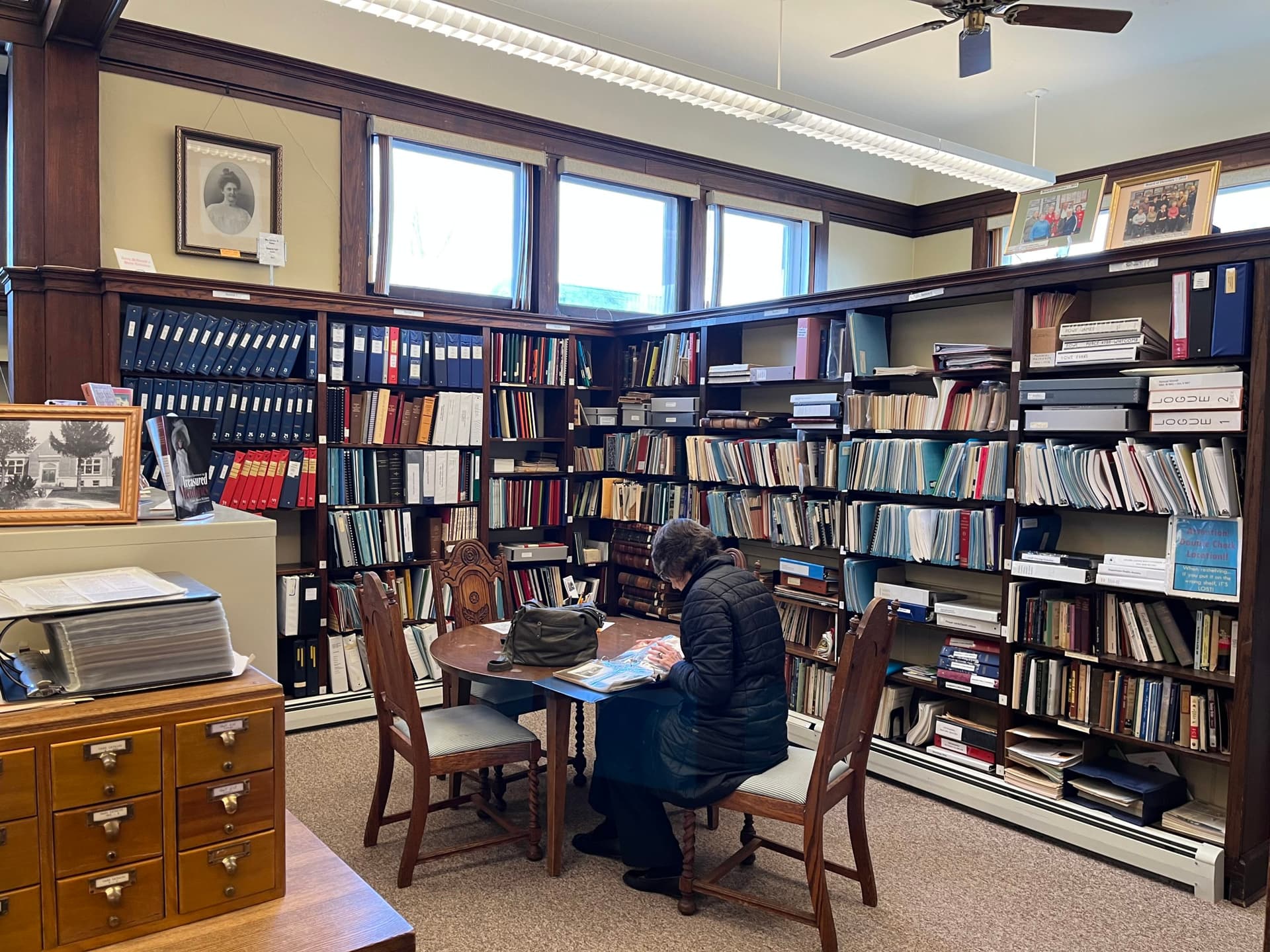
On the second floor of the Lafayette County & Oxford Public Library in Oxford, volunteers run a Genealogy Room where residents dig into family lines, land questions, cemetery records, and the paper trail that shaped Lafayette County. The Lafayette County Historical and Genealogical Society serves as the volunteer-run research hub there.
A working research room in the middle of Oxford
The society is a nonprofit 501(c)(3) organization based at 401 Bramlett Blvd. in Oxford, inside the library’s Genealogy Room on the second floor. Volunteers staff the room most afternoons and Friday morning for anyone trying to connect a surname to a place, a burial ground, or a marriage record. The society began in Oxford in 1967 as the Skipwith Society and was renamed in 2010, giving it a long institutional history of its own.
Its mission is to collect, preserve, and share information about Lafayette County, Mississippi, its history, and its people. The society has been recognized with awards and grants for its research into the county’s history and families.
What researchers can actually find there
The Genealogy Room is built around the kinds of sources people need when a family story has gone beyond memory and into proof. Its holdings include several thousand books, pictures, maps, videos, stories, obituary files, cemetery records, and hundreds of rolls of microfilm and microfiche. It also holds extensive Civil War material, including the 128-volume War of the Rebellion set, Mississippi maps, family history folders, military records, migration records, and legal-case indices for Lafayette County.
One of the most useful collections for local researchers is the county marriage material. It has nearly 10,000 marriage licenses, receipts, and returns, a collection that can help connect a surname to a date, a minister, a location, and often a wider family network. A practical search usually begins with a surname or a place, then moves through obituaries, cemetery records, and marriage documents before turning to maps and legal indices to confirm where a family lived and how it moved through the county.
Researchers use the room to identify which cemetery a relative is buried in, whether a farm name appears in a legal record, how a church community formed, or which family names appear again and again in the same part of Lafayette County.
Why Lafayette County’s early history still shapes the search
Lafayette County was organized by the Mississippi Legislature on February 9, 1836, out of Chickasaw cession lands. Oxford was selected as county seat on June 22, 1836, and incorporated in 1837, while the University of Mississippi opened in Oxford in 1848 after being chartered in 1844.
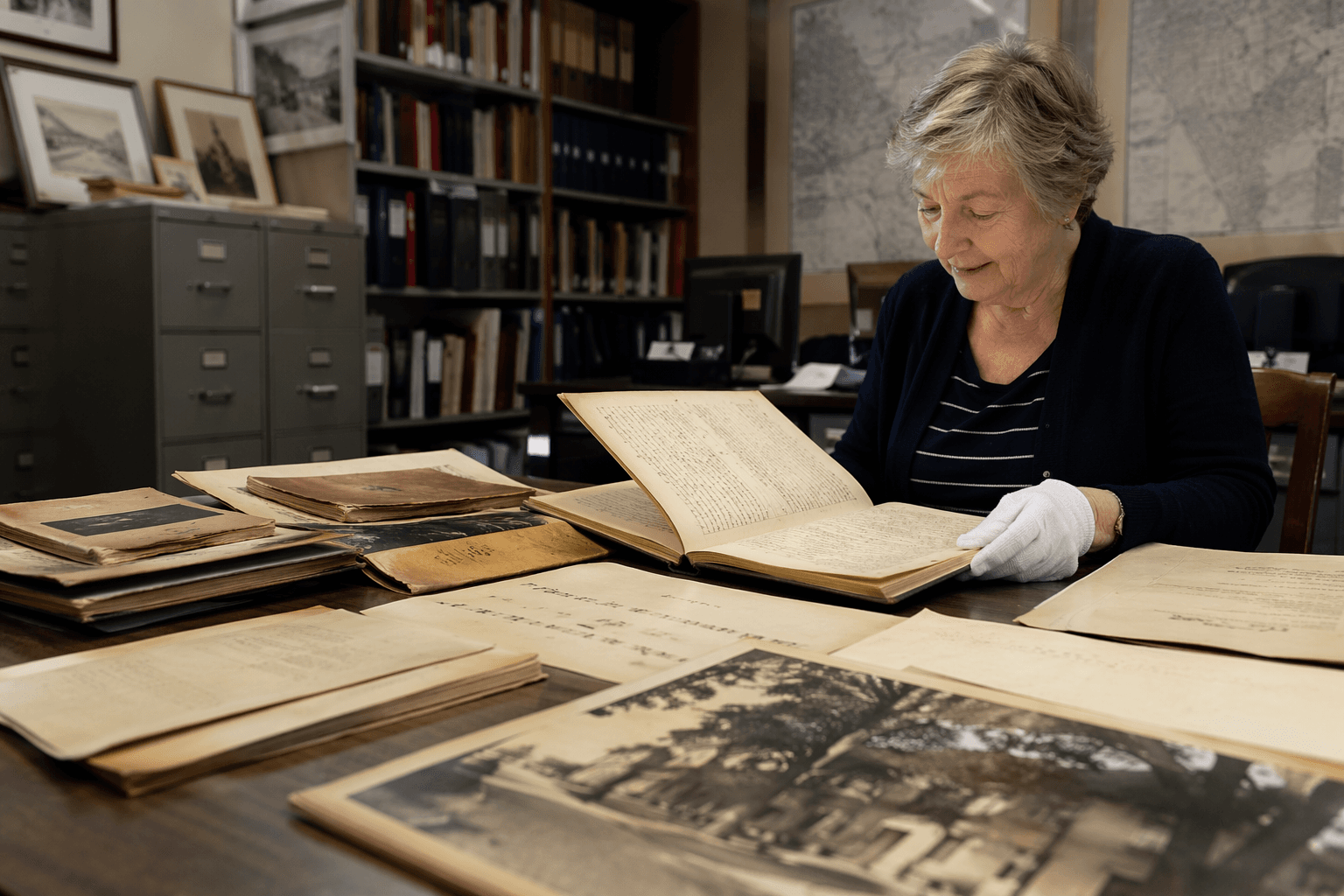
Lafayette County had 55,813 residents in the 2020 census, and the Census Bureau estimated 59,597 residents as of July 1, 2025. In 1840, by contrast, the county had 3,689 free people and 2,842 enslaved people. Family history research here often crosses into slavery-era records, migration patterns, and postwar reconstruction of family lines.
Union troops burned the courthouse on August 22, 1864, leaving charred brick walls behind. Surviving marriage records, military files, maps, and family folders fill gaps left by destroyed county records.
African American family history has a defined place in the archive
The society’s work reaches beyond general genealogy into the specific task of documenting African American community history in Lafayette County. Its African American History Project grew out of a 1993 Mississippi Humanities Council grant awarded to Susie Marshall for a project on changes in African-American family life in Oxford, Lafayette County, and Mississippi. From that grant, Marshall and others formed a working group to chronicle the African American community in the county.
The archive lets descendants trace names, places, and kinship lines in a county where the historical record is deeply tied to both enslavement and emancipation.
Digital tools that extend the paper trail
The society has also built a digital museum that preserves historic maps, photographs, stories, videos, and documents for the Oxford-Lafayette County community. One of its most useful features is an old-map overlay tool, which lets users compare historic land patterns with the county as it looks today. Users can locate an old home site, understand a vanished road, or connect a family surname to a changing landscape.
The digital museum preserves the same kinds of material the society keeps in the library room in a format that reaches beyond the second floor at Bramlett Boulevard. The society also produces publications and holds quarterly meetings with presentations on history or genealogical research. The society is supported by donations, member dues, and publication sales.
This article was produced by Prism’s automated news system from verified source data, official records, and press releases, then run through automated quality and moderation checks before publishing. The system is built and supervised by the people who set the standards it runs under. Read our full AI policy.
Did this article answer your question?