Max D. Hipp Industrial Park remains Lafayette County anchor for jobs and industry
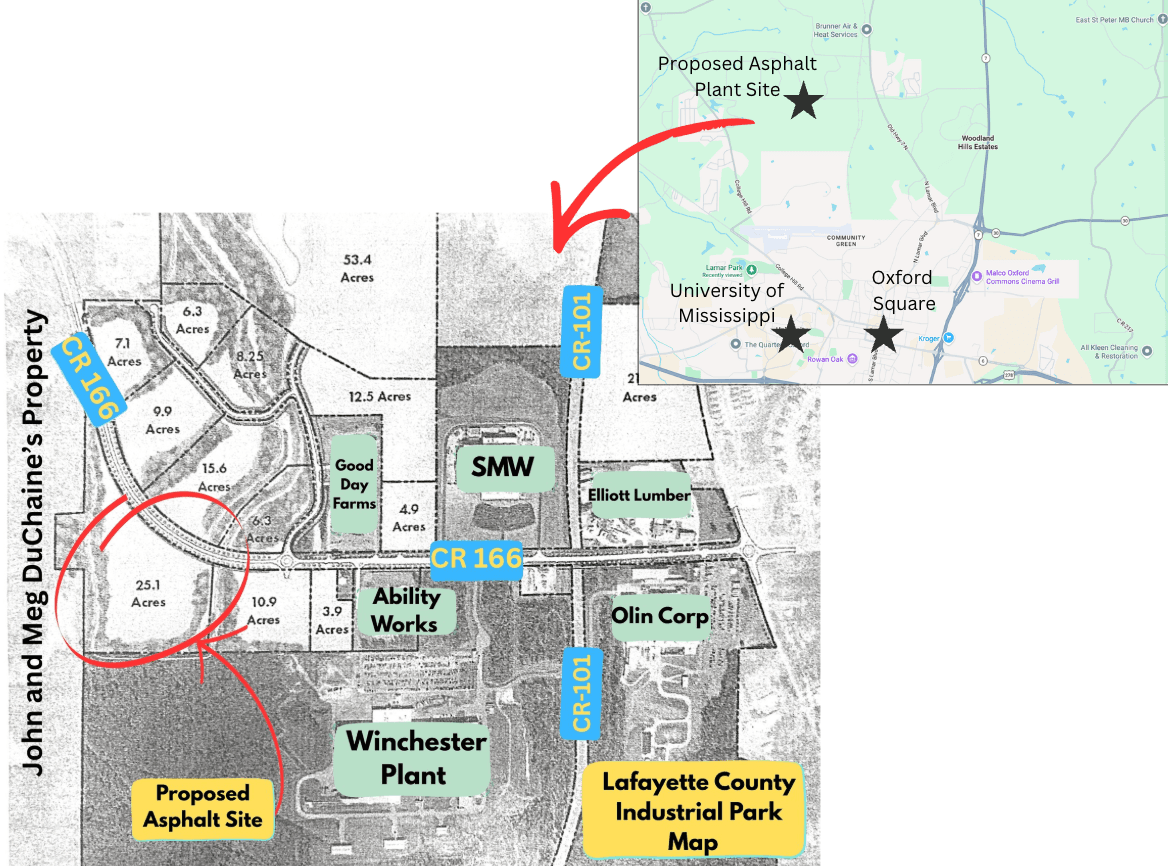
Lafayette County’s Max D. Hipp Industrial Park sits off County Road 166 near Oxford as the county’s principal industrial site, with roughly 250 acres historically set aside for industrial use and infrastructure that includes water, sewer, road access and high speed fiber. First certified as fiber ready in 2016, the park has hosted manufacturing and distribution firms, supported local investments including a 2018 $4 million expansion that added 25 jobs, and continues to be the county’s preferred location for heavier industrial activity and related permitting decisions.

The Max D. Hipp Industrial Park serves as Lafayette County’s primary concentrated industrial zone, and local planners and economic development leaders use the site to steer heavier industrial uses away from residential and rural areas. The park’s location off County Road 166, also known as Pat Patterson Parkway, and its several hundred acres of county managed land give Lafayette County a definable site to market to prospective employers and to channel infrastructure investments.
A critical turning point for the park came in 2016 when the site was certified as fiber ready by a major carrier. That designation signaled a competitive advantage for attracting modern manufacturing and logistics firms that rely on reliable connectivity for inventory management, automation and remote monitoring. County officials have emphasized that the park is served by road access, water and sewer capacity, and high speed fiber, all of which reduce initial build out costs for new tenants and shorten the time from lease signing to production or distribution activity.
The park has produced tangible local economic results. Over the past decade it has hosted a mix of manufacturers and distribution operations, and local announcements have included expansions and new investments. In 2018 a local facility invested approximately $4 million and added about 25 jobs, illustrating how the park translates infrastructure readiness into employment and payroll in Lafayette County. Economic development stakeholders, including the Oxford Lafayette Economic Development Foundation and the Lafayette County Board of Supervisors, continue to point to the park as central to recruitment efforts.
Recent county planning conversations in 2025 again referenced the industrial park as the appropriate locus for heavier industrial projects, as officials and developers seek sites that can accommodate intensive operations without encroaching on residential neighborhoods. Project specific permitting and lease approvals remain subject to county and state review, which determines final site readiness and environmental controls for individual projects.
For local residents, the park matters in two ways. First, it is a primary channel for job creating investments that can broaden employment options in manufacturing and logistics. Second, it serves as a land use tool that concentrates industrial infrastructure while protecting other parts of the county from heavier industrial encroachment. As supply chain resilience and digital connectivity become increasingly important in site selection, the park’s combination of acreage and fiber readiness keeps Lafayette County competitive for the next wave of industrial projects.
Know something we missed? Have a correction or additional information?
Submit a Tip