Ole Miss Strengthens Football Operations With Five New Hires
Ole Miss announced the hiring of five staff members to bolster football operations, bringing back several former Rebels and adding experienced external talent. The moves matter to Lafayette County because they ramp up scouting, roster management, and NIL planning as the transfer portal opens, with implications for local economic activity and student athlete welfare.

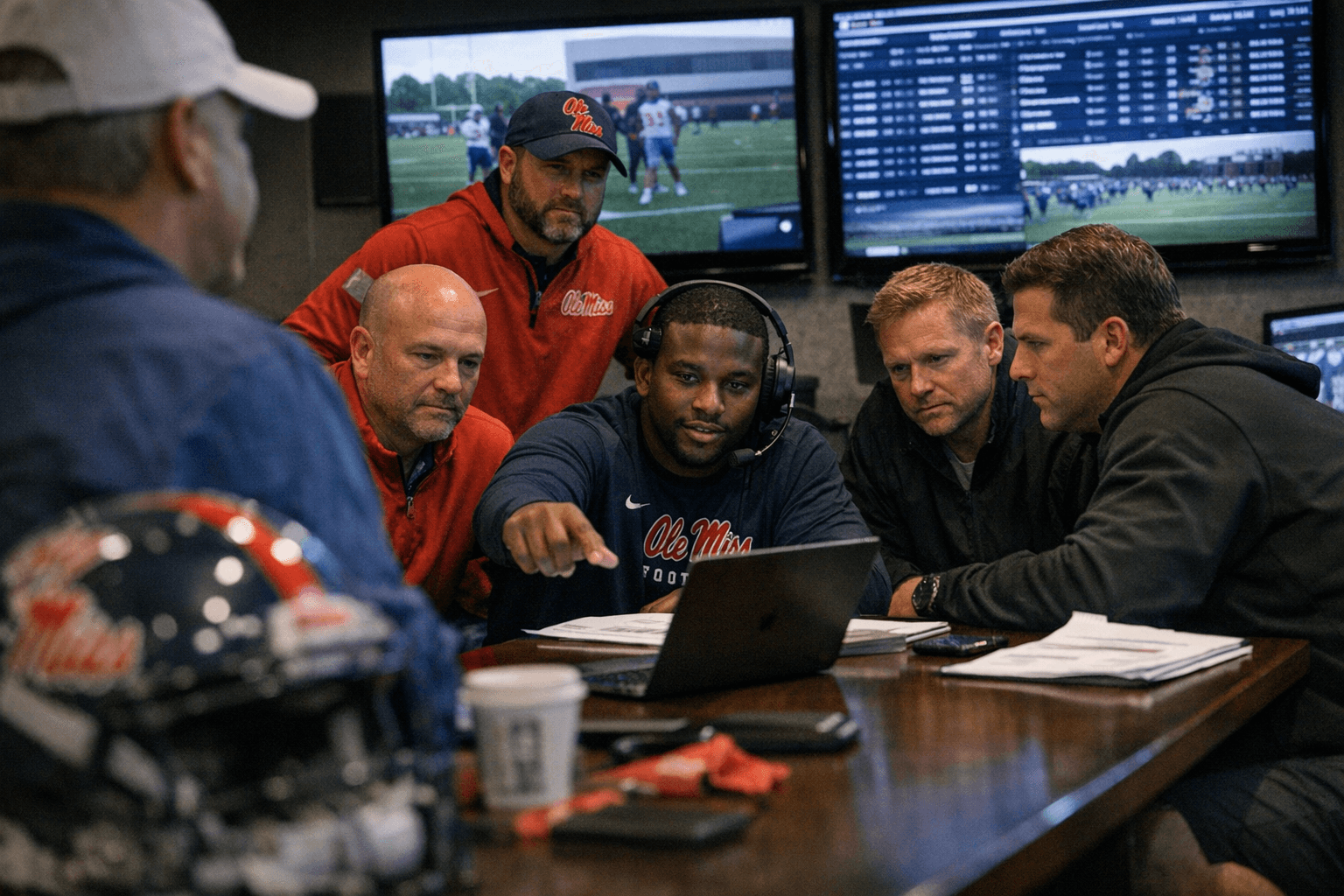
Ole Miss football added five staff members to its operations staff on December 29, deepening ties with former employees and expanding scouting capacity ahead of an active transfer period and postseason preparation. The hires include experienced recruiters and personnel specialists whose work will shape roster construction, name image and likeness budgets, and scouting plans that affect playing time and local fan engagement.
Frank Wilson returns to Oxford as senior associate head coach and running backs coach. He brings recruiting experience from LSU and the University of Texas at San Antonio, a background that will be central as the program seeks talent in the transfer portal. Austin Thomas was named President of Football Operations and General Manager. Thomas previously worked at Ole Miss from 2022 to 2023 and has experience at LSU, placing him in a role that coordinates logistics, budgeting, and roster decisions. Kelvin Bolden returns from LSU to serve as assistant general manager, after three years as recruiting coordinator at Ole Miss. Jai Choudhary is Director of Player Personnel, rejoining the program after time in Baton Rouge where he worked within the Ole Miss player personnel pipeline. Jacob Sugarman joins as Director of Scouting, bringing experience from UCLA, an NFL internship, and graduate work at LSU.
For Lafayette County residents, the personnel changes are more than coaching headlines. College football drives local economic activity through game day spending, seasonal employment, and university visibility. The emphasis on scouting and roster management also influences campus life and student athlete resources, from practice schedules to academic support needs. As the program steps up NIL budgeting, community stakeholders should watch how financial opportunities are managed to ensure fair access and to avoid exacerbating existing inequalities among athletes.
There are health and equity dimensions to these staffing shifts. Stronger operations can improve coordination around player safety, concussion protocols, and access to medical and mental health services, although specifics of such plans were not announced. Similarly, recruiting practices and transfer decisions carry implications for educational continuity and for the distribution of opportunities across socioeconomic backgrounds.
The hires signal an operational push as the transfer portal opened and postseason activity approaches. For local residents and university partners the key questions will center on how this expanded staff supports athlete well being, maintains competitive success, and ensures that the community benefits from the program that is an important part of Lafayette County life.
This article was produced by Prism’s automated news system from verified source data, official records, and press releases, then run through automated quality and moderation checks before publishing. The system is built and supervised by the people who set the standards it runs under. Read our full AI policy.
Did this article answer your question?