Ole Miss study reframes hazing as a public health issue
A 411-person national survey found most adults see hazing as harmful and a public-health problem, and the attitudes track with views on sexual violence.

Hazing is being recast in Oxford as more than a campus discipline problem. A University of Mississippi study published May 27 in Public Health found that among 411 adults surveyed nationwide, most respondents said hazing is harmful and should be treated as a public health issue.
The finding matters in a college town where the consequences spill beyond campus gates. The study also found that adults who were more tolerant of hazing were more likely to minimize sexual violence, tying hazing attitudes to a broader culture of risk that reaches into schools, youth groups, athletic programs, and civic institutions across Lafayette County.
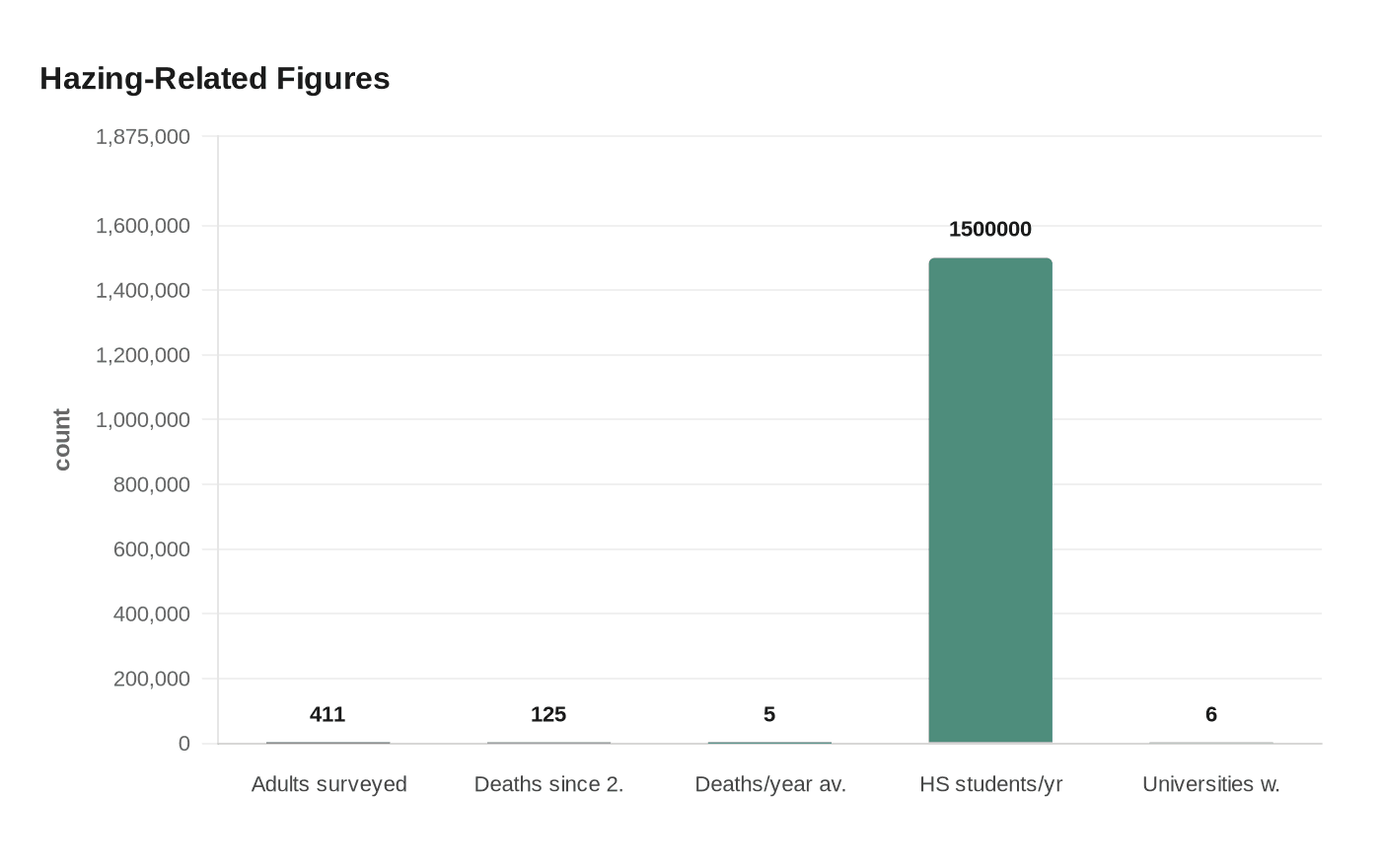
The scale of the problem gives that warning weight. Researchers cited estimates that more than 125 U.S. students have died in hazing-related incidents since 2000, and a University of Maine co-developed database has found an average of five hazing deaths a year since 2000. The problem is not confined to fraternities and sororities. It also appears in athletics, honor societies, club sports, and performing arts organizations, and more than half of college students and 1.5 million high school students experience hazing every year.
Mississippi law already treats hazing as a crime under Mississippi Code § 97-3-105. First-degree hazing applies when conduct creates a substantial risk of physical injury and causes injury, while second-degree hazing is also criminalized and can be punished as a misdemeanor with a fine of up to $1,000. Mississippi lawmakers kept pushing on the issue in 2026 with House Bill 1592, which sought to clarify the definition of hazing and increase penalties.
Ole Miss has built out its own response. The university joined the Hazing Prevention Consortium in October 2023 and says its Hazing Prevention Task Force focuses on education, prevention, and safety. Its StandKIND program for fraternity and sorority leaders includes hazing prevention, bystander intervention, alcohol and other drug education, and sexual assault prevention. The university’s policy directory says the purpose of its hazing policy is to educate students and protect the university community from hazing and its effects.
For Oxford and Lafayette County, the study points to a practical shift: hazing prevention works best when parents, teachers, superintendents, jurors, lawmakers, and youth leaders treat it like a shared safety problem, not a one-off punishment issue. That urgency is sharpened by a 2025 analysis reporting that six of eight Mississippi public universities lacked publicly available data on hazing cases, leaving the true frequency difficult to see and harder to stop.
This article was produced by Prism’s automated news system from verified source data, official records, and press releases, then run through automated quality and moderation checks before publishing. The system is built and supervised by the people who set the standards it runs under. Read our full AI policy.
Know something we missed? Have a correction or additional information?
Submit a Tip