Ole Miss study shows magnets could recover rare earths from waste
A University of Mississippi-led study found a magnet-based way to recover rare earths from waste, a step that could affect phones, EVs and wind turbines.

A simple magnet may one day help pull rare earth elements out of waste streams that now end up in ash, mine tailings and industrial leftovers, and that matters in Lafayette County because Ole Miss is part of the research pushing that idea forward.
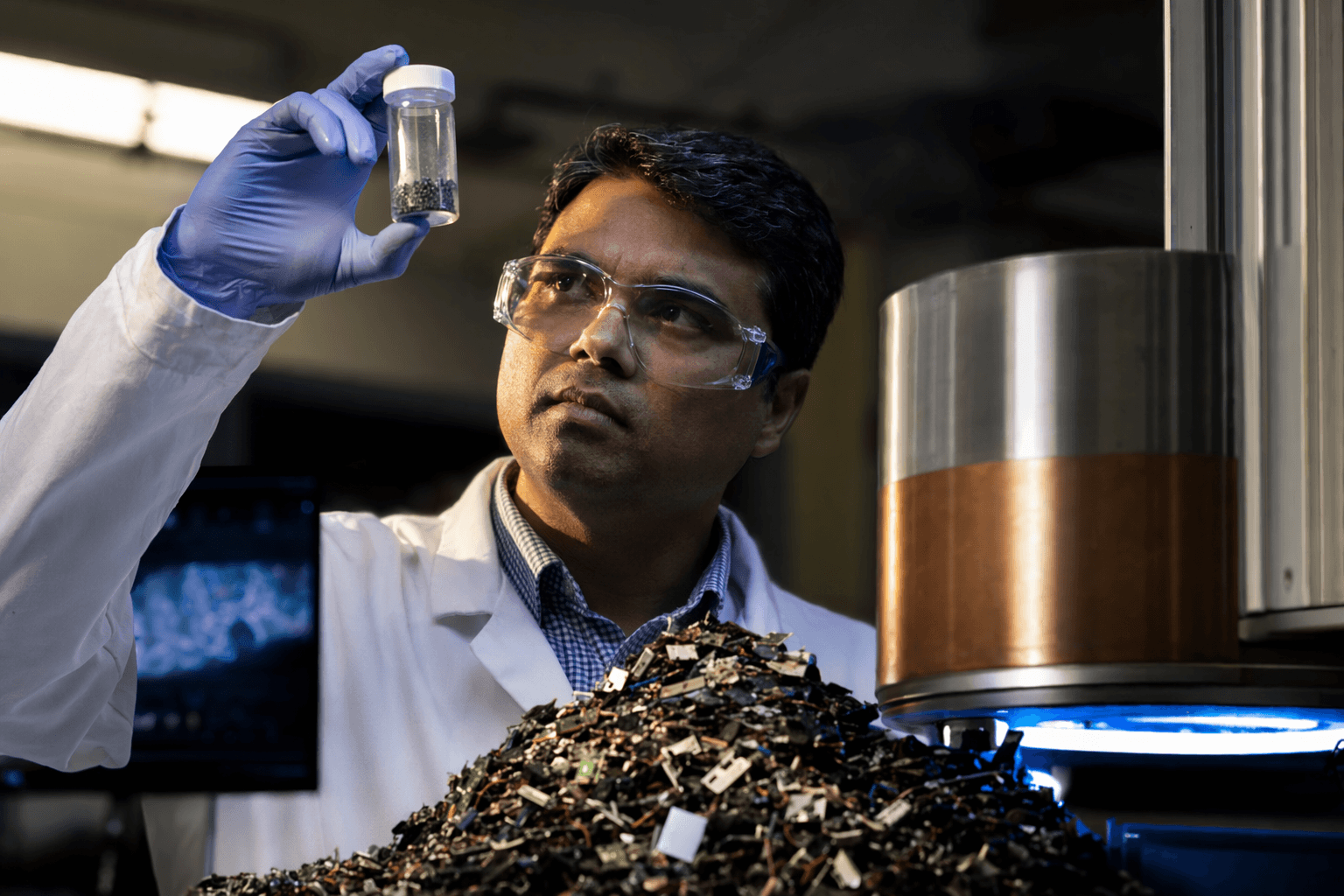
The University of Mississippi and Pacific Northwest National Laboratory worked on a separation method that uses a permanent magnet to help isolate critical minerals from liquid feedstocks. The target materials include rare earths such as dysprosium and lanthanum, elements that show up in cell phones, computers, wind-turbine generators, hybrid and electric vehicles, rechargeable batteries and defense systems.
The key is that rare earth ions respond differently to magnetic fields. That difference gives researchers a way to separate selected minerals from surrounding material without relying on the kind of heavy chemical processing that makes many current recovery methods costly, slow and energy-intensive. PNNL said related work also showed an energy- and chemical-efficient route to separate dysprosium and neodymium from simulated recycled e-waste, with iron removed in an early stage before the solution was enriched in critical minerals.
For Oxford and Lafayette County, the local angle is not just that Ole Miss is in the mix. A University of Mississippi doctoral student in chemistry, Ivani Jayalath, worked on the separation method, showing how campus research is tied to industrial problems that reach far beyond University Avenue. If the approach keeps advancing, it could help companies recover valuable metals from coal power plant residue, mining waste and oil and gas byproducts instead of starting with dirtier extraction.
That potential comes with a broader economic payoff. The U.S. Geological Survey says rare earths are a group of 17 elements that are relatively abundant but hard to separate economically. It also estimated that U.S. imports of rare-earth compounds and metals were $170 million in 2024, down 11% from $186 million in 2023. Even with that decline, the supply chain remains important for products people use every day, from phones and laptops to electric motors and missile guidance systems.
The federal government has been investing in this problem for years. The Department of Energy and the National Energy Technology Laboratory have funded rare-earth and critical-mineral recovery work from coal-based resources and mine wastes, and late last year DOE announced up to $134 million in new funding to strengthen domestic rare-earth supply chains.
Ole Miss is entering a field that already includes major scale-up work. Oak Ridge National Laboratory said its membrane process had reached recoveries above 95% and purities above 99.5% at scales up to 1 ton per month of scrap permanent magnets. That is the benchmark the Oxford-area research will eventually have to clear: not just proving the chemistry in a lab, but showing it can work at industrial scale, with lower cost, less waste and less dependence on far-off suppliers.
This article was produced by Prism’s automated news system from verified source data, official records, and press releases, then run through automated quality and moderation checks before publishing. The system is built and supervised by the people who set the standards it runs under. Read our full AI policy.
Did this article answer your question?


