Oxford board weighs storm recovery, development, transit funding and events
Storm recovery, roundabout approvals and summer event permits put the city’s daily operations, and its recovery costs, squarely before the board.
Storm recovery carries the biggest financial stakes
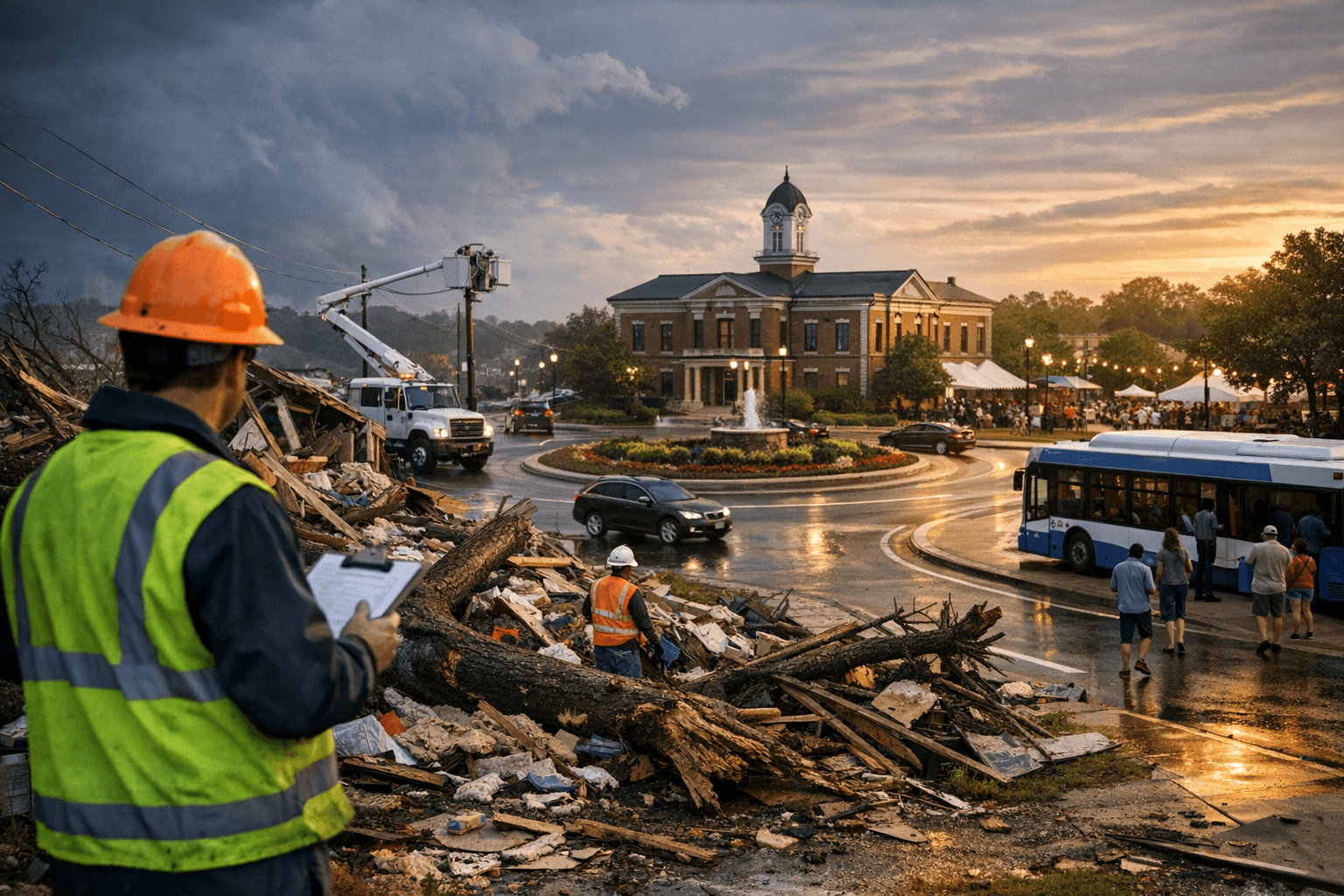
Oxford’s aldermen were set to confront the kind of decision that can determine how much of a disaster bill lands on local taxpayers and utility customers. The agenda called for extending the city’s Local State of Emergency and authorizing Mayor Robyn Tannehill to sign the MEMA Public Assistance Agreement so Oxford Electric can pursue FEMA reimbursement for storm-related expenses. That moves the storm response from short-term cleanup into the harder work of documenting costs and protecting the city’s chance at reimbursement.
The timing matters because Winter Storm Fern hit from January 23 to January 26, 2026, and state leaders moved quickly afterward, with Mississippi approving $20 million for MEMA’s initial response and recovery work in early February. For Oxford, the practical question is not just whether crews have already cleared the damage, but whether the city has preserved the paper trail needed to recover costs later. If the board approves the extension and agreement, it keeps the city aligned with the federal process that could return some of those expenses to Oxford Electric instead of leaving the full burden on local budgets.
Development decisions point to growth, traffic and long-term access
The development items on the agenda were not cosmetic. They reach into how Oxford’s built-out neighborhoods will connect to each other, how traffic will move, and how much flexibility the city keeps as new projects take shape. At 715 Molly Barr Road, the board was scheduled to consider bids for finish upgrades, while planners were also prepared to update The Lamar TND regulating plan so it reflects the completed Molly Barr and Chickasaw roundabout.
That roundabout is more than a traffic circle on a map. By locking it into the regulating plan, the city would be formally matching its development rules to a roadway project that is already finished, which is the kind of bureaucratic step that often decides whether future projects fit cleanly into the network or create friction later. The board was also set to consider two plat amendments, one at 130 Slack Road and another for The Oaks at Oxford Commons Phases 19 and 27.
The most sensitive of those was The Oaks item, where staff flagged concern about a proposed lot vacation tied to future road connectivity. That wording signals a familiar Oxford tension: private development plans can solve one project’s needs while narrowing the city’s ability to connect roads, disperse traffic and shape the next phase of growth. In practical terms, a lot vacation can affect how quickly emergency vehicles move, how safely drivers reach nearby streets and whether future growth has room to breathe.
Public works includes the small decisions that keep the city moving
The board’s engineering agenda showed the less visible side of city government, the side that keeps streets, drainage and equipment functioning after storms and during winter weather. Members were scheduled to accept the completed Molly Barr and Chickasaw roundabout, a routine-looking action that still matters because it closes out a capital project and puts the roadway fully into service under the city’s responsibility.
The agenda also called for reverse-auction bidding on a new dump truck with a snowplow attachment. That purchase matters because it reflects how Oxford has to prepare for more than one season at a time: the same vehicle can help with hauling and debris removal, then pivot to winter weather work when temperatures drop. In the wake of Winter Storm Fern, that kind of equipment planning is not abstract. It is tied directly to whether the city can respond faster the next time roads, utilities or public spaces are hit.
Transit and resilience funding widen the stakes beyond one department
The board was also scheduled to consider a Rural Transit 5311 Grant and a BRIC grant application. Those items may not draw the same immediate attention as a storm declaration or road project, but they influence the city’s ability to fund transportation options and resilience work without relying entirely on local dollars. In a city where mobility affects access to jobs, medical appointments and daily errands, transit funding can have a broader reach than its budget line suggests.
The BRIC application carries a different kind of significance. It points to Oxford trying to position itself for future resilience funding rather than waiting until the next storm exposes a vulnerability. That approach can shape what gets hardened, repaired or redesigned before the next round of severe weather puts pressure on utilities and public infrastructure.
Permits for parades, fireworks and Music in the Park show how much logistics matter
The agenda’s event permits made clear that the board’s work is not limited to policy language and capital projects. It also covers the practical choreography that keeps Oxford’s public calendar moving through summer. The permits included fireworks, parades, Music in the Park, a car show and a second-line parade, each of which comes with its own demands for traffic control, public safety, parking and neighborhood coordination.
These approvals matter because events in Oxford can spill across the streets, parks and commercial areas that residents use every day. A fireworks permit affects safety planning. A parade permit changes traffic flow. Music in the Park and a car show can draw families, visitors and vendors into spaces that need sanitation, policing and crowd management. The board’s role is to make sure those events happen without disrupting the city’s core functions.
A proclamation and surplus items show the human and fiscal sides of city government
Not every item on the agenda carried a policy fight. The packet also included a proclamation for Annie Lee Driver Williams on her 100th birthday, a recognition that gives the board a chance to honor a long local life in the middle of a heavy municipal agenda. That kind of gesture reminds residents that city government is not only about contracts and zoning, but also about shared milestones and civic memory.
The board was also previewing routine housekeeping on surplus equipment, including OFD fitness machines, multiple pieces of mTrade Park equipment and two Oxford Utilities trucks. Surplus declarations matter because they are one of the final steps in getting outdated, unused or replaced equipment out of the city’s books. In a practical sense, they help the city clear space, manage assets responsibly and keep attention on the equipment that still has value.
Oxford’s official calendar listed the meeting for Tuesday, April 21, 2026, at 5:00 p.m. in the City Hall Courtroom. The board itself is made up of seven members, six elected by ward and one elected at-large, and the city says it meets on the first and third Tuesday of each month at 5:00 p.m. That structure makes the agenda more than a one-night snapshot: it is a regular checkpoint where Oxford decides how to recover from storms, accommodate growth, fund transit and prepare for the season ahead.
This article was produced by Prism’s automated news system from verified source data, official records, and press releases, then run through automated quality and moderation checks before publishing. The system is built and supervised by the people who set the standards it runs under. Read our full AI policy.
Did this article answer your question?