Oxford Eagle feature revisits Larry Hentz’s life and burial at Parchman
Larry Hentz’s burial at Parchman turns a prison cemetery into a final chapter about punishment, memory and what Mississippi leaves unclaimed.
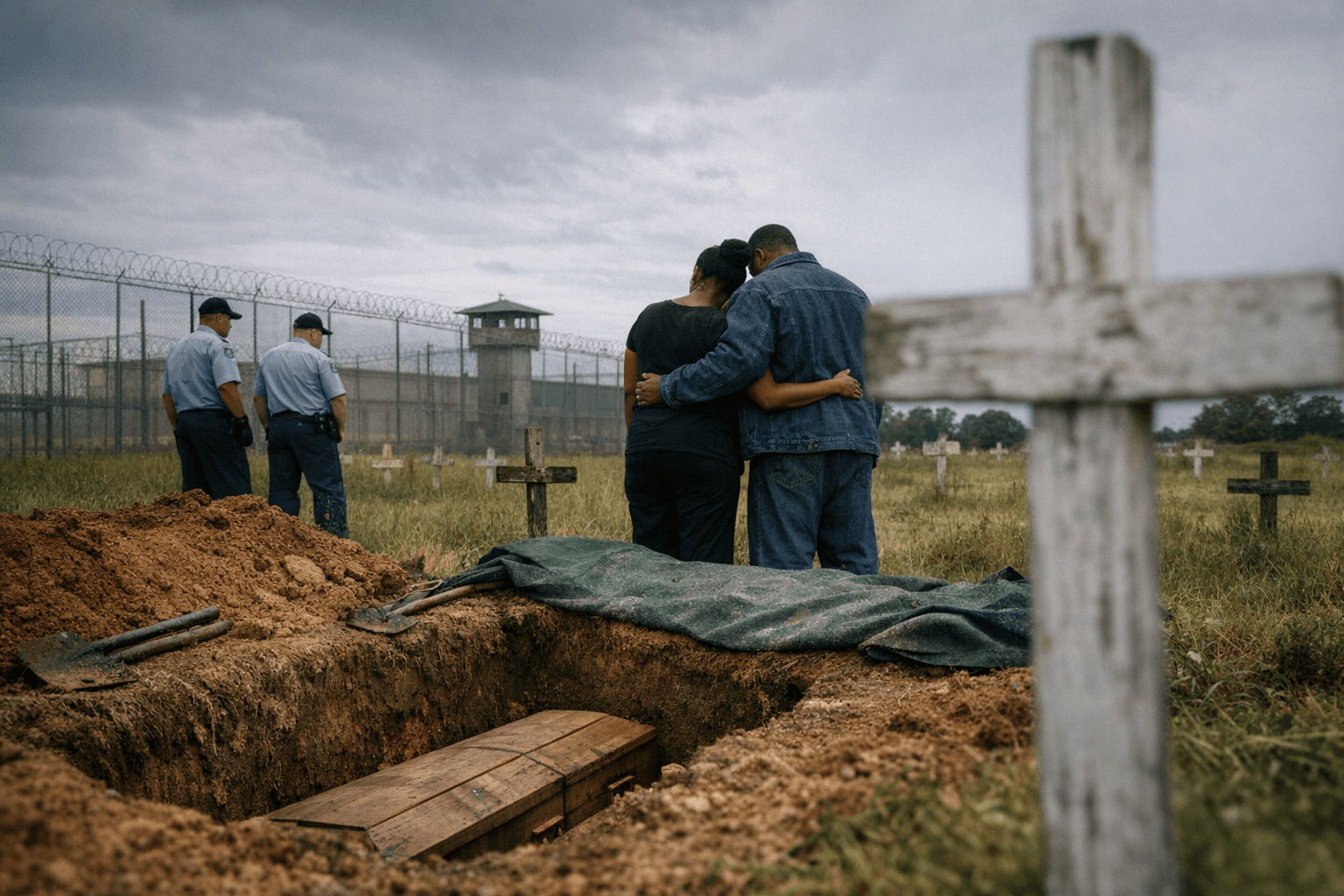
A burial that carried the weight of Parchman
Larry Hentz’s last chapter did not end with a courthouse filing or a prison notice. It ended at Parchman, where the Mississippi State Penitentiary’s cemetery gave his life and death a final setting that felt larger than one man’s obituary. The Oxford Eagle’s feature, published in early April 2026, used that burial to ask a harder question: what does it mean in Mississippi when a person’s body is laid to rest on the grounds of the state’s most notorious prison?
The answer reaches beyond one family and one inmate. Parchman is not just a place name in Sunflower County. It is the state’s oldest prison, opened in 1901, spread across roughly 18,000 acres, and burdened by a history that still shapes how people read every story connected to it. When a burial happens there, it lands in a landscape marked by confinement, labor, race, punishment and long public memory.
Who Larry Hentz was
Hentz was not remembered in tidy terms. Court records show that Larry S. Hentz entered a guilty plea on November 18, 1983, to reduced charges that included murder and grand larceny, and he received consecutive sentences that included life plus five years. Local reporting tied the case to a March 1982 shooting death reported as the killing of James Williamson in Yalobusha County.
That history mattered because it framed the person being buried at Parchman as someone whose life had already passed through Mississippi’s courts and corrections system for decades. Hentz had been at Parchman since 1983, and his name stayed in the record through later appeals and filings in the 1980s and 1990s. For Lafayette County readers, that timeline is part of the story’s blunt force: this was not a sudden ending, but the close of a long and complicated sentence.
The escape that reshaped his reputation
Hentz’s name returned to headlines in a very different way on November 17, 2003, when he escaped from Mississippi State Penitentiary. Contemporary reports said he got out by sawing a bar from his cell and cutting through a fence, and later state investigation found contraband tools had been smuggled in. Authorities also alleged that his wife, Elizabeth Lacy Hentz, also known as Lacy Murphree, helped supply materials for the escape.
He was captured less than a month later, on December 11, 2003, in San Diego, California, and returned to custody. That episode hardened the public image many readers would already have had of him as a convicted killer and an escapee, but the burial story complicates that picture by shifting the focus from flight and security failures to mortality and final disposition. It is a reminder that correctional histories do not end when the headlines do.
Why Parchman was his final resting place
The prison cemetery at Parchman exists for people whose bodies are not claimed. Mississippi law, through state procedure for unclaimed bodies, puts counties and coroners in the chain of responsibility for notification and final disposition when no next of kin comes forward. At Parchman, that process has long produced a pauper burial ground where inmates are laid to rest on site.
The scale is sobering. Reporting in the Clarion-Ledger noted that about 273 inmates had been buried in the two-acre Parchman pauper cemetery since 1930. That number turns a single grave into part of a much larger institutional practice, one that reflects both the practical demands of unclaimed remains and the social reality that some people die with no one able or willing to take them home.
For health and public policy, that matters because burial is not only a legal endpoint. It is also a measure of dignity, administrative capacity and social distance. When a body is unclaimed, the state steps in, and the setting chosen for that last act says a great deal about how Mississippi handles people at the margins.
The service itself, and who was there
The Oxford Eagle feature added rare detail about the burial ceremony. Parchman Deputy Warden Rocky Jaco invited the columnist to attend after reading his column, and prison chaplain Elder Arthur Rhodes led the service and provided the funeral program. The paper noted that public attendance is usually not part of prison burials because they are treated as private affairs.
That invitation is important because it turned a closed institutional event into a witnessed moment. It also gave the burial a human scale, not by softening Hentz’s record, but by showing that even inside a prison, death can still draw ritual, order and a small measure of ceremony. The presence of Jaco and Rhodes grounded the scene in the everyday workings of the prison, where bureaucracy and burial meet.
Why the ending resonates in Lafayette County
Oxford and Lafayette County readers are not reading this story because Parchman sits in their backyard. They are reading it because the Oxford Eagle treated it as a local human-interest story with regional memory attached. The Panolian’s remembrance of Hentz as an “outlaw pen pal” shows how his story had already reached beyond the prison walls into the lives of people who corresponded with him and tried to make sense of him as a person, not only a case file.
That tension, between the man on the record and the man some readers thought they knew, is what gives the burial its force. Parchman is a place where Mississippi has long stored its hardest contradictions, from plantation-style prison labor to civil-rights era scrutiny and modern criticism over conditions. To bury Hentz there is to place one more life into that landscape of punishment and unresolved memory.
For Lafayette County, the story lingers because it is not only about a death at the edge of the state prison system. It is about what Mississippi does with the people it has sentenced, forgotten or could not return to anyone else. At Parchman, even a grave becomes part of the state’s moral history.
This article was produced by Prism’s automated news system from verified source data, official records, and press releases, then run through automated quality and moderation checks before publishing. The system is built and supervised by the people who set the standards it runs under. Read our full AI policy.
Did this article answer your question?