Oxford Police Mounted Patrol Offers Crowd Control, Community Presence Downtown
Six horses lined up on the Square can move a crowd without an arrest. Oxford mounted officers explain why horses outperform squad cars in the city's narrow streets.
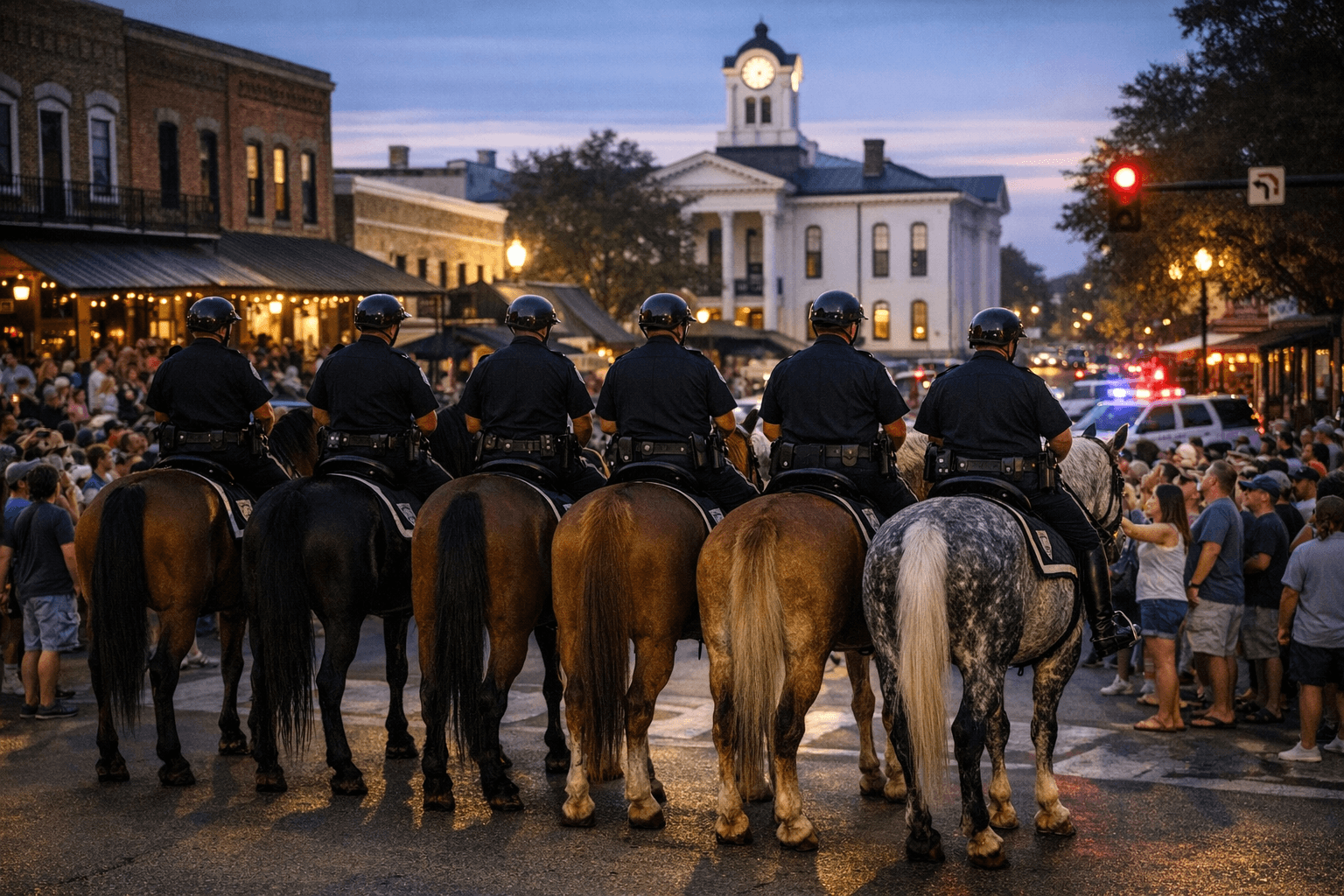
Six horses lined up along Oxford's downtown Square can accomplish what a fleet of squad cars cannot: move a crowd without a single arrest. That operational reality sits at the core of how the Oxford Police Department's Mounted Patrol unit has built its role in the city's public safety strategy.
Officer Scott Stewart describes the unit's effect in blunt terms. Mounted patrol is "kind of a show of force without having to use force," Stewart said. When officers form a line with a half-dozen horses, crowds tend to comply. No batons, no escalation, no arrests.
Officer David Misenhelter points to Oxford's geography as a driving factor. "Oxford's narrow and busy streets make maneuvering with typical transportation difficult," he said. Vehicles that perform well on a highway become liabilities on a packed Friday night near the Square, where pedestrian density can overwhelm a standard patrol car. On horseback, officers can navigate those crowds and, as Misenhelter explained, "see over the tops of a crowd," a significant advantage in situational awareness during large gatherings.
The unit sees its most concentrated deployment during Oxford's marquee events, including the Double Decker Arts Festival, where large crowds, narrow streets, and a festive atmosphere create exactly the conditions mounted officers are built to manage. The equine presence reduces both arrest rates and use-of-force incidents at those events, making a practical case for the program that extends well beyond its visual impact.
Beyond crowd control, the horses serve a quieter but equally important function. A horse stationed near the Square invites people to stop, ask questions, and start conversations with officers, interactions that rarely happen when a cruiser rolls past. That informal accessibility creates channels of dialogue a patrol car simply cannot open.
Maintaining the unit carries real and ongoing costs. Stables, veterinary care, and specialized officer training place consistent demands on the city's public safety budget. Oxford's program, like mounted units in smaller cities across the country, relies partly on nonprofit and volunteer partnerships to cover those operational expenses, a model that underscores how much of the unit's long-term sustainability depends on community investment beyond the police department itself.
This article was produced by Prism’s automated news system from verified source data, official records, and press releases, then run through automated quality and moderation checks before publishing. The system is built and supervised by the people who set the standards it runs under. Read our full AI policy.
Did this article answer your question?