Planning Commission Rejects Nine-Lot Subdivision in Historic Oxford Core
Oxford planners blocked nine new lots in the historic core, ending a subdivision bid that raised density, tree and drainage concerns on Buchanan and Lincoln avenues.

A plan to carve nine residential lots out of a two-acre parcel in Oxford’s historic core failed at the Planning Commission, keeping the Gary Subdivision from moving forward and putting a sharper spotlight on how much infill the city will allow in older neighborhoods.
The proposal would have split the property into lots ranging from about 0.19 to 0.30 acres, with three lots fronting Lincoln Avenue and six fronting Buchanan Avenue. One of the Buchanan lots already includes the applicants’ family residence, underscoring that the request would have changed an existing household and the surrounding block pattern, not just drawn lines on a plat.
Planning staff said the lot sizes met zoning requirements, but also noted that a subdivision of that scale is uncommon in historic districts and deserves closer scrutiny. Neighbors pressed the commission on whether nine homes could be fit onto the narrow dead-end streets without overwhelming the area’s character, and they questioned whether the design would create a cookie-cutter look that did not match the established homes around it.
Tree preservation also became central to the fight. A designated historic tree on a neighboring South 11th Street property was part of the discussion, reinforcing that the project touched more than the two-acre site itself. Oxford’s Tree Board has long described the city’s trees as a major part of its heritage, and the land-development code requires officials to weigh tree preservation and protection alongside historic compatibility, emergency access and stormwater management.
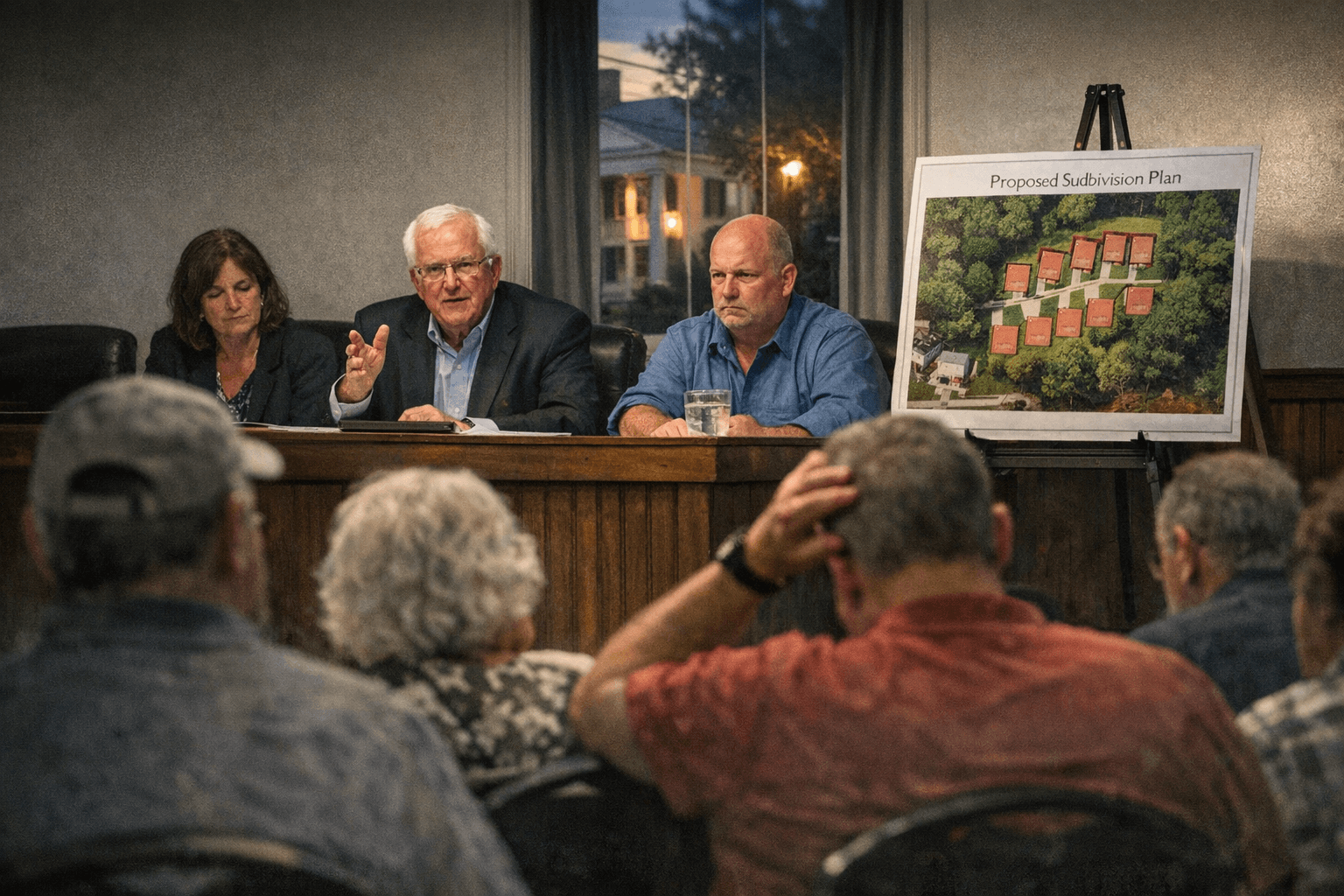
Those infrastructure concerns were not minor. The subdivision still lacked engineering approval for its stormwater plan, which called for drainage swales, an underground detention basin and roadway improvements along Lincoln Avenue. Buchanan Avenue would have needed to be extended through the site, and the plan also included an emergency turnaround to give public safety crews access.
At the April 19 meeting in the City Hall courtroom, a motion to approve failed for lack of a second, and a follow-up motion to deny passed 4-1. The Planning Commission, which serves as Oxford’s gatekeeper for development proposals, left the door open only to an appeal before the Oxford Board of Aldermen.
Even if that appeal is filed, the project would still need Historic Preservation Commission approval before any home construction could begin. For Oxford, the vote signaled that older neighborhoods, especially in the historic core, may face tougher scrutiny when new density collides with lot pattern, infrastructure and preservation standards.
This article was produced by Prism’s automated news system from verified source data, official records, and press releases, then run through automated quality and moderation checks before publishing. The system is built and supervised by the people who set the standards it runs under. Read our full AI policy.
Did this article answer your question?