Rowan Oak and Lafayette County Historic Sites Worth Visiting Year-Round
Rowan Oak charges just $5 cash at the door, but the outline Faulkner penciled directly onto his study wall for a Pulitzer Prize-winning novel stops most visitors cold.
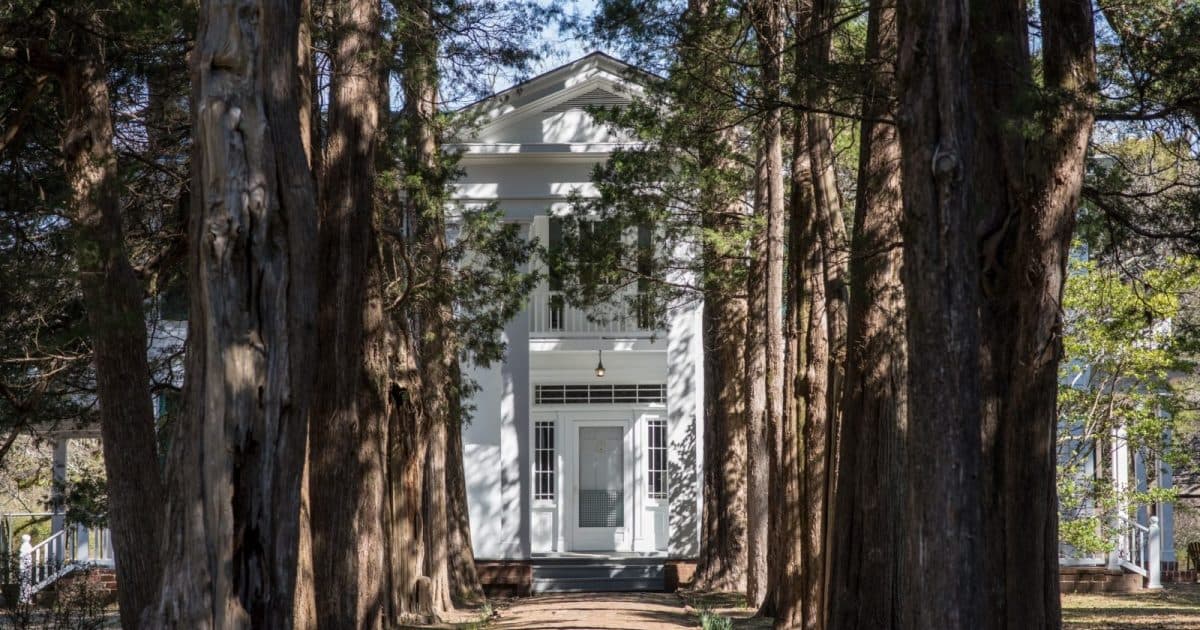
Five dollars cash gets you inside William Faulkner's home. What no admission sign prepares you for is the moment you reach his study and find the plot outline for his Pulitzer Prize-winning novel A Fable penciled directly onto the plaster wall in graphite and red, still there, visible, untouched since he drew it. That detail alone separates Rowan Oak from most literary pilgrimage sites, and it's why this particular stop on Old Taylor Road rewards repeat visits more than a single rushed walkthrough.
Lafayette County sits inside a geography that connects Faulkner's fiction to the physical landscape around it, and for residents within a short drive of Oxford's courthouse square, several sites make that connection immediate and concrete. Here is a practical, honest look at four of them.
Rowan Oak: What to Expect and How to Visit
Rowan Oak is located at 916 Old Taylor Road, southeast of downtown Oxford, and operates Tuesday through Saturday from 10 a.m. to 4 p.m. and Sunday from 1 p.m. to 4 p.m. The site is closed on Mondays. House admission is $5 per person, cash only; children 12 and under, University of Mississippi students, faculty and staff, and UM Museum members enter free. To avoid a declined credit card moment at the door, stop at an ATM before you head down Old Taylor Road.
The property itself is significant in scope: four acres of landscaped grounds surrounding the Greek Revival house, plus 29 additional wooded acres known as Bailey's Woods. Faulkner bought the estate in 1930 when it was in disrepair, did much of the early renovation himself and lived there until his death in 1962. The University of Mississippi purchased it from Faulkner's daughter Jill in 1972, and the house today retains 90 percent of its original furnishings, preserved as they were at the time of his death.
The wall outline in the study is the single detail most visitors underestimate. Faulkner used graphite and red to plot A Fable across the plaster, a working document he never bothered to erase, or chose not to. It remains one of the more startling objects in American literary history and is included in your $5 admission.
Parking is limited: roughly 10 unpaved spaces on site. Carpooling is strongly encouraged for larger groups, and ADA parking assistance is available by calling 662-234-3284 upon arrival. Groups of 10 or more must reserve at least two weeks in advance at the same number or by email at rowanoakhome@olemiss.edu; fire safety rules cap indoor attendance at 40 guests at a time, with an overall group limit of 80. The grounds are pet-friendly.
For the lowest-crowd visit, aim for a weekday morning during the academic semester rather than Ole Miss football weekends or the Oxford Conference for the Book in spring. The grounds are open during business hours only; visiting after daylight is not permitted.
The University of Mississippi, a state institution, funds and maintains the property. A 2005 renovation, partially funded by novelist and Ole Miss School of Law alumnus John Grisham, addressed structural needs. The site is listed as a National Historic Landmark, which provides federal designation but not necessarily guaranteed federal dollars; ongoing preservation depends substantially on university budget allocations and donor support. Admission revenue and UM Museum memberships directly support site operations.
Oxford Courthouse Square: Architecture, Markets and the South's Oldest Department Store
The courthouse square is the logical complement to a Rowan Oak visit, about a mile northwest up Old Taylor Road. The square functions as Oxford's civic and commercial center, ringed by locally owned shops, restaurants and historic storefronts that have remained in continuous use. The Lafayette County Courthouse anchors the center, and the surrounding block gives a compact but legible picture of small-city Southern commercial architecture developed across more than a century.
One detail most visitors walk past without realizing: Neilson's Department Store at 119 Courthouse Square, founded in 1839, is the oldest department store in the South and is still in operation. That predates Faulkner's purchase of Rowan Oak by nearly a century.
The square hosts a seasonal farmers market and a recurring calendar of festivals and public events organized by the City of Oxford and local business groups; the Oxford tourism office maintains an up-to-date event calendar online. Parking downtown can be tight on event weekends. The square is a city-maintained public space, and the surrounding buildings are a mix of privately owned commercial properties and some municipal infrastructure. Guided walking tours occasionally run through the square as part of Oxford's broader heritage programming, particularly during literary festivals.

Mississippi Hills National Heritage Area: Regional Context and Thematic Itineraries
Lafayette County is part of the Mississippi Hills National Heritage Area, a federally designated network that spans north Mississippi and documents cultural landscapes connected to music, literature, agriculture and Civil War-era history. The Heritage Area does not operate a single physical visitor center in Oxford, but its online resources include maps, interpretive guides and thematic itineraries that give regional context to individual stops.
For visitors interested in building a day around Faulkner's geography, the Heritage Area's literary itinerary routes connect Oxford-area sites to broader north Mississippi landscapes that shaped his work. Music-history routes in the network extend into the Delta, making this a useful planning tool if you intend to combine a Lafayette County visit with travel further west. Funding for the Heritage Area comes through a federal-state-local partnership, with the National Park Service providing programmatic support alongside local affiliates.
University of Mississippi Museum: Free Campus Collections Worth Adding to Your Route
The University of Mississippi Museum, located at the corner of University Avenue and Fifth Street on campus, rounds out a natural day-trip circuit with Rowan Oak. Established in 1939 as the Mary Buie Museum, it holds the largest collection of fine arts and artifacts at any academic museum in Mississippi, and Rowan Oak is formally part of the same museum complex.
The permanent collection covers 19th-century scientific instruments, ancient Mediterranean artifacts and American art, including Mississippi folk paintings by Theora Hamblett and works by Georgia O'Keeffe and Man Ray. Rotating exhibitions change through the year, so checking the museum calendar before you visit is worthwhile. Public programming includes a Brown Bag lecture series, Free Sketch Fridays and Family Activity Days, all open to the public at no charge. Guided gallery tours are available on request with advance notice. Plan roughly an hour for the galleries.
The museum is funded as part of the University of Mississippi's academic infrastructure, making it a state-supported institution. A bike rack is available at the side entrance, and restrooms are accessible just inside.
Practical Notes Before You Go
A full day connecting all four stops is realistic from the courthouse square outward: morning at Rowan Oak (Tuesday through Saturday opening at 10 a.m.), a walk through Bailey's Woods, lunch on the square at one of the locally owned restaurants, an afternoon at the UM Museum and a final pass through the square before shops close.
Bring cash for Rowan Oak. Verify hours before any visit, as holiday closures and special programming can alter schedules. After significant storms, check MDOT and Lafayette County road notices for Old Taylor Road access and downtown parking availability. Rowan Oak requests that visitors stay on designated paths and avoid climbing on structures; the historic fabric of a house that has stood since 1844 is not reinforced for recreational use.
The most durable reason to visit these sites together is that they are not simply decorative heritage stops: the outline on Faulkner's wall, the 1839 storefront still doing business, the 29-acre woods still largely as they were in antebellum times. Lafayette County's history did not get preserved behind glass. Most of it is still standing.
This article was produced by Prism’s automated news system from verified source data, official records, and press releases, then run through automated quality and moderation checks before publishing. The system is built and supervised by the people who set the standards it runs under. Read our full AI policy.
Did this article answer your question?