Scientist Turned Photographer Brought Arctic Wildlife to Southern Audiences
A recent profile traced the life of Dr. Daniel A. Guravich, born in 1918, who moved from postwar genetic research into a second career photographing polar bears and Arctic wildlife. His blend of scientific training and photographic skill helped introduce distant ecosystems to American audiences and offers Lafayette County a local example of science, art, and conservation intersecting.
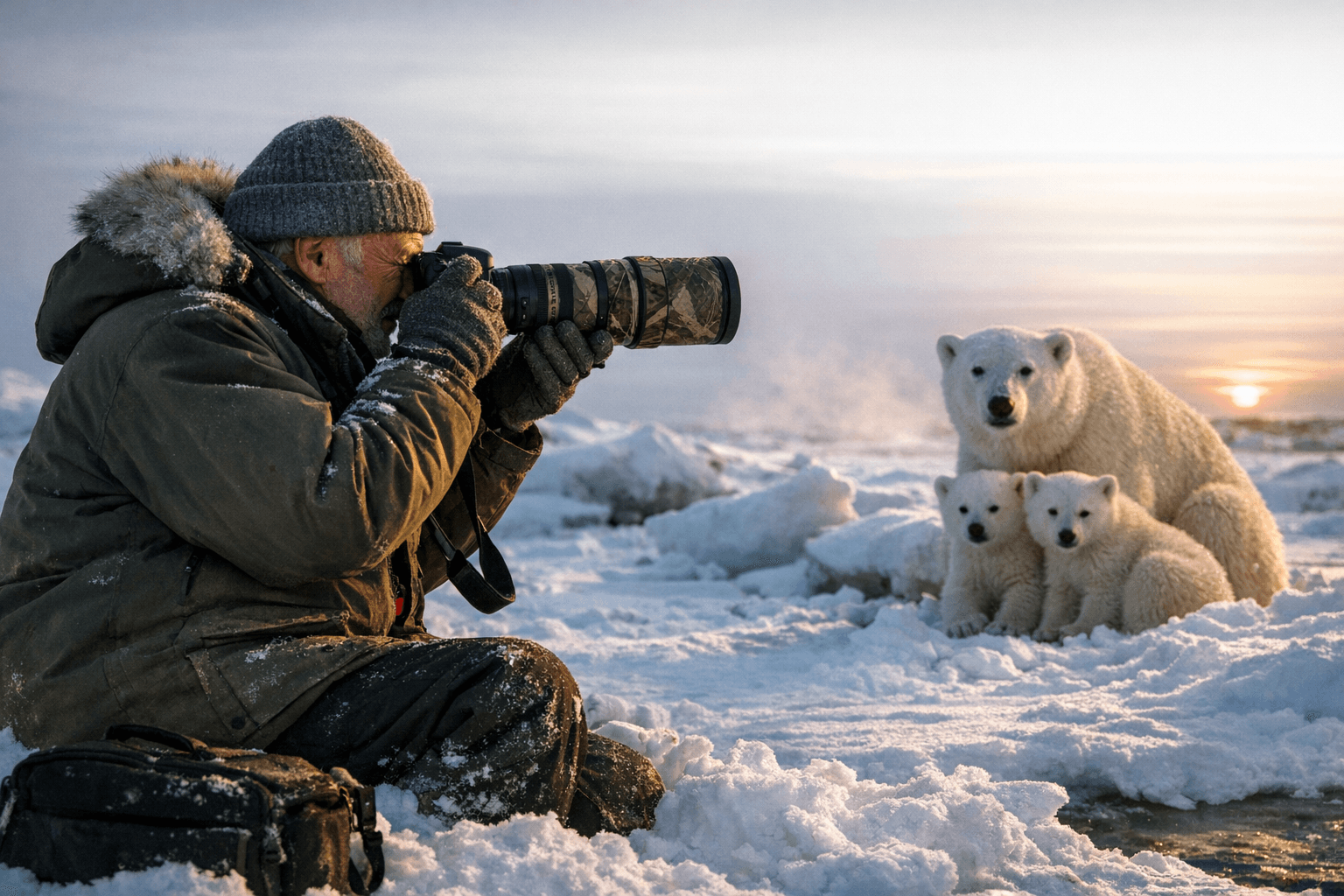
A new feature on the life of Dr. Daniel A. Guravich highlights how a scientist from the postwar era used photography to shape public understanding of faraway ecosystems. Born in 1918, Guravich earned a Ph.D. in 1949 from the University of Wisconsin and began his professional life as a geneticist at the Delta Experiment Station. After serving in a World War II combat photography unit, he shifted careers and applied the technical rigor of science to the composition and documentation of natural history subjects.
Guravich relocated to Greenville, Mississippi, where he developed a portfolio that notably included polar bears and other Arctic wildlife. His images, produced in the mid-20th century, bridged the gap between remote natural environments and the American public, bringing visual evidence of Arctic species into classrooms, magazines, and public exhibits. The profile traces that trajectory from laboratory to lens, showing how a foundation in genetics informed both the subjects he chose and the way he framed animals within their habitats.
For Lafayette County residents, Guravich’s story is regionally resonant on several levels. His early work at the Delta Experiment Station places him within a local scientific tradition that has long linked agricultural research and applied biology in the Mississippi Delta region. His later career demonstrates a path from technical expertise to public-facing work in media and education, an increasingly common transition that can create new opportunities for local scientists, artists, and cultural institutions. Photographic collections and exhibitions draw visitors, support educational programming, and can contribute modestly to local cultural economies through museum attendance and school partnerships.
Beyond cultural and economic considerations, Guravich’s images contributed to a broader pattern in which visual media helped build public support for conservation. By making polar bears and Arctic landscapes visible and relatable, such photography played a role in shaping public opinion that later fed into policy debates and funding priorities for wildlife research and habitat protection. The profile places his work in that longer trend: a mid-20th century wave of natural history documentation that helped move distant ecological issues into the sphere of national concern.
As communities in Lafayette County and across the region balance economic development with conservation and education goals, Guravich’s career offers a practical example of how scientific training can be repurposed to inform and engage the public. His combination of methodical research background and visual storytelling remains relevant to educators, museums, and local initiatives seeking to connect residents with global environmental challenges.
This article was produced by Prism’s automated news system from verified source data, official records, and press releases, then run through automated quality and moderation checks before publishing. The system is built and supervised by the people who set the standards it runs under. Read our full AI policy.
Did this article answer your question?