UMMC Staff Complete Liver Transplant During Major System Outage
Wade Watts received a life-saving liver transplant at UMMC on Feb. 18 while a cyberattack quietly knocked out phones and electronic medical records mid-surgery.
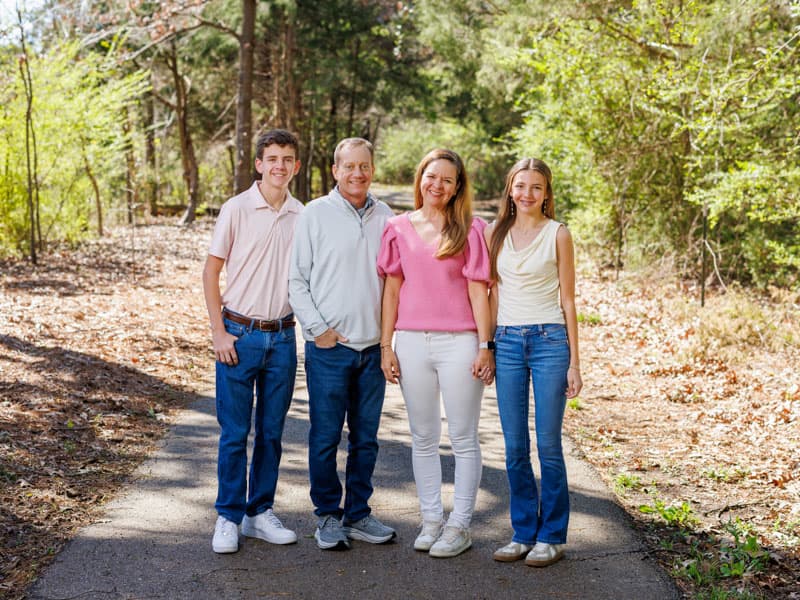
While Wade Watts was on the operating table at the University of Mississippi Medical Center on the evening of Feb. 18, the Jackson hospital's electronic systems were quietly going dark around him.
Phones and electronic medical records went offline as what staff initially assumed was scheduled maintenance was later confirmed as the first signs of a cyberattack. For Watts, a Madison resident who had waited what he described as "forever" for a donor organ, the timing could not have been more precarious. It made no difference to his outcome.
"During a recent cyberattack that disrupted hospital systems, UMMC teams relied on training, teamwork and compassion to keep care moving forward," UMMC said in a public statement following the surgery. "For liver transplant patient Wade Watts and his family, the experience showed that even when technology fails, the people behind it never do."
The call that set everything in motion had already reduced Watts to a momentary freeze. "I immediately had two reactions," he said of learning a donor organ was available. "The first was I physically froze to the point she had to ask was I okay. She reassured me this is what we've been waiting on and what a wonderful thing was about to happen. The second was I had a flood of thoughts about how many people have been praying for this, how me and my family had wanted this for what seemed like forever, and about the donor's family grieving for the loss of their loved one who had left behind a gift to me so that I could continue my life. I will never forget that call and will be forever grateful to have received it."
After hugs and kisses as their children left for school, Watts and his wife Sara arrived at UMMC early the next morning. By the evening of Feb. 18, he was headed to the operating room. The surgery stretched past midnight, and at about 1:30 a.m., Dr. Christopher Anderson walked into the SICU waiting room where Sara had been keeping watch with three friends.
"He told me Wade was doing great and seemed to have a 'very happy liver,'" Sara said.
Anderson, the James D. Hardy professor and chair of UMMC's Department of Surgery and chief of the Division of Transplant and Hepatobiliary Surgery, noted that transplant guidelines typically require patients with cancer outside the liver to be cancer-free for five years before being listed, though variation exists based on cancer type, stage and behavior.
Across the hospital, employees were piecing together what had happened. Within hours of the Watts surgery getting underway, staff realized phones and electronic medical records were unavailable. The operation and all postoperative care proceeded regardless, with the clinical team relying on coordination and preparation rather than digital infrastructure. For the Watts family, care never stalled.
UMMC performed 91 liver transplants in 2023, including 8 from living donors and 83 from deceased donors. The center partnered with Infinite Legacy, the local organ procurement organization, which worked with the donor family through the process. UMMC and Infinite Legacy together developed a protocol supporting donation procedures, which must comply with legal and ethical guidelines requiring that the declaration of death be unequivocal and that family consent for donation be confirmed.
The center has also expanded its use of abdominal normothermic regional perfusion, a technique that maintains donated organs at normal body temperature of 37 degrees Celsius using a perfusion circuit, allowing clinicians to evaluate organ viability in real time. Recent research suggests the method may reduce rates of complications and bile duct damage compared to traditional donation-after-circulatory-death recovery.
UMMC shared the Watts account on its Facebook page and linked to a longer article on its website, presenting the case as evidence that staff preparedness carries a hospital through failures that no firewall or backup generator can anticipate.
This article was produced by Prism’s automated news system from verified source data, official records, and press releases, then run through automated quality and moderation checks before publishing. The system is built and supervised by the people who set the standards it runs under. Read our full AI policy.
Did this article answer your question?