Visit Oxford spotlights Faulkner, historic sites and downtown culture
Oxford’s best visitor stops are still the ones locals use: the Square, Rowan Oak, Square Books and the historic streets that give the town its edge.

What Visit Oxford is really pointing people toward
Oxford’s strongest draw is not a single landmark but a compact set of places that explain why the town still feels bigger than its population of about 25,000. Visit Oxford puts the Square at the center of that story, and for good reason: since Oxford was incorporated in 1837, the Square has remained the city’s cultural and economic hub. That makes it the right first stop for out-of-town family and friends, but it is only the beginning of what is worth showing them.
The visitor pitch also reflects the modern Oxford economy. Visit Oxford says the city has more than 400 independent businesses, a dining scene that has picked up multiple James Beard Award nominations and Michelin Guide recognition, and a university stadium that fills with about 60,000 fans on game days. In other words, the town’s appeal rests on a mix of heritage, college energy, and a locally owned business base that still gives downtown its character.
The literary stops that still matter
If someone is coming to Oxford for the first time, Rowan Oak belongs on the list. William Faulkner’s former home was built in 1844, purchased by Faulkner in 1930, and remained his residence until his death in 1962. It is open to the public year-round, which makes it an easy recommendation whether guests are here for a weekend or just passing through.
Rowan Oak also helps explain the larger literary identity Oxford has built over decades. Visit Oxford frames the town as a place where visitors can walk in the footsteps of Faulkner, but the story does not stop with him. The town is also associated with John Grisham, Barry Hannah and Willie Morris, which is part of what gives Oxford’s cultural brand more depth than a single author shrine. The literary identity here is not decorative. It is woven into neighborhoods, house museums, bookstores and the way the city has marketed itself for years.
Square Books is the clearest example of that living literary economy. Founded in 1979 by Richard and Lisa Howorth, it has grown into four stores with more than 10,000 square feet on the Square and hosts more than 150 author events a year. That makes it more than a place to buy a book. It is one of the strongest reasons to bring visitors downtown, especially when you want to show them that Oxford’s reputation is sustained by active institutions, not just nostalgia.
Historic districts beyond the postcard view
The tourist version of Oxford often begins and ends at the Square, but the city’s preservation map tells a broader story. The Lafayette County Courthouse was listed on the National Register of Historic Places on September 23, 1977, and the Oxford Courthouse Square Historic District followed on April 2, 1980. Those dates matter because they show that Oxford’s historic atmosphere has been protected deliberately, not left to chance.
The city’s preservation system also extends beyond the courthouse block. The Courthouse Square Preservation Commission oversees the Courthouse Square District, while the Historic Preservation Commission covers the South Lamar, Depot, Jefferson-Madison and North Lamar districts. For residents hosting visitors, that opens up a useful strategy: send them beyond the busiest downtown blocks and into the surrounding historic fabric that makes Oxford feel like a real town instead of a themed district.
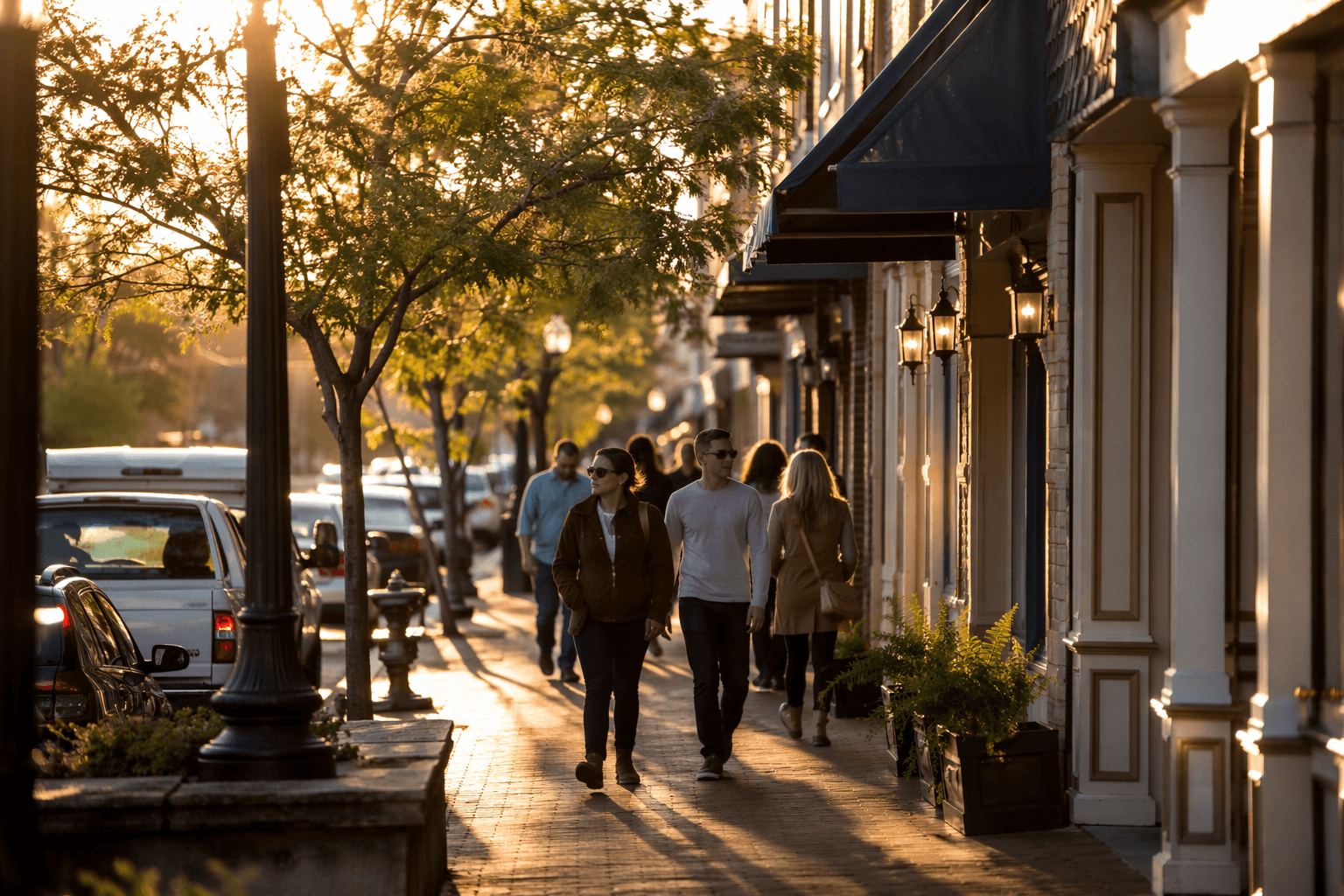
That is especially important for Lafayette County. When visitors spread out beyond the central Square, they are more likely to notice the scale of the city’s preservation work, the continuity of its older neighborhoods and the everyday buildings that support local life. The result is a more complete picture of Oxford, one that reflects how locals actually move through the city.
Why the Square still anchors everything
The Square remains the place where Oxford’s identity is easiest to read. It is where the courthouse sits, where shops and boutiques cluster, and where the city’s history and economy overlap in plain sight. Visit Oxford’s own materials make clear that the Square is the city’s organizing center, and the tourism infrastructure reinforces that reality.
The Oxford Tourism Council says it exists to promote Oxford and Lafayette County as a tourist destination while supporting economic development. The city also says the tourism services program is funded by a 2% hotel and motel tax and a 2% prepared food and beverage tax, which links visitor traffic directly to local revenue. That is the policy side of the story: tourism is not just branding, it is a funding stream that helps support restaurants, lodging and the small businesses that make the town work.
For residents, that creates a practical test for any attraction guide. The best recommendations are the ones that keep people downtown, move them into preserved districts, and give them a reason to spend time in locally owned places. Oxford’s marketing succeeds when it shows that the town is not just a stop on the way to something else.
How to steer guests through Oxford
A good Oxford visit usually works best when it combines a few distinct stops rather than one long sightseeing loop. Start on the Square, where the courthouse and surrounding blocks give first-time visitors the clearest sense of the town’s scale and history. From there, Rowan Oak adds the Faulkner connection, while Square Books shows how strongly literature still shapes the local economy.
If you want to help guests understand Oxford the way locals do, send them a little farther out into the preservation districts. The South Lamar, Depot, Jefferson-Madison and North Lamar areas show that the city’s historic character is broader than one square and one mansion. That matters because Oxford’s real appeal comes from the way these pieces fit together: university life, literary memory, protected streetscapes, independent businesses and a downtown that still functions as the center of daily life.
That is the Oxford worth recommending now. Not a brochure version, but a town where the heritage business is still tied to how people live, work and gather every day.
This article was produced by Prism’s automated news system from verified source data, official records, and press releases, then run through automated quality and moderation checks before publishing. The system is built and supervised by the people who set the standards it runs under. Read our full AI policy.
Did this article answer your question?