Lake County seeks election judges for busy polling places
Lake County needs paid election judges for 2026, and the job is more than staffing: it helps keep polling places moving, ballots secure, and voting confidence high.
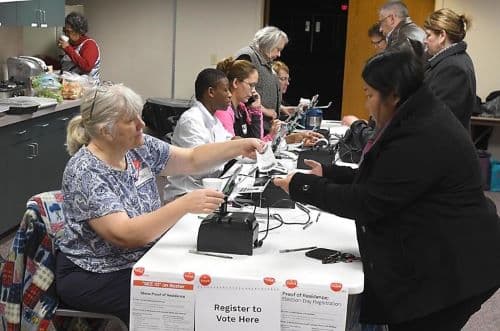
Lake County is recruiting election judges for the 2026 State Primary and General Elections, and the job sits at the center of how elections actually run. County auditors in Lake and Cook counties handle polling places, vote tabulation, and ballot integrity, but election judges are the people voters meet at the precinct, opening the site, checking registrations, and closing it down after the last ballot is counted.
Why the county needs more judges
This is not casual volunteer work. Election judges are the hands-on workers who set up booths and tabulators, greet voters, verify registration, register new voters on site, and help people complete ballots when they need assistance. At the end of the night, they process and certify results, then pack sensitive election materials for return to the courthouse.
That workload is why both Lake County and Cook County are always recruiting. Turnout in the two counties exceeds every other county in Minnesota, and Minnesota itself leads the nation in turnout, so election staffing has to be ready for heavy use. Lake County Interim Auditor Ronelle Radle has said the county never has too many judges and is always looking for trained backup judges who are available.
For voters, that staffing matters in a very practical way. More judges means polling places are more likely to open smoothly, keep check-in moving, and offer help when someone needs it. Too few judges can slow the process, strain the staff that is there, and create avoidable friction at the very place where confidence in the system is supposed to be strongest.
Who can apply in Lake County
Lake County’s recruitment is open to ordinary residents who meet the state’s basic qualifications. The core requirements are straightforward:
- You must be an eligible voter.
- You must be at least 18 years old.
- You must be able to read, write, and speak English fluently.
Minnesota law also allows some 16- and 17-year-old students to serve as trainee election judges under certain conditions, which gives younger residents a way to learn how elections operate from the inside. The caucus process can also feed the judge pool, creating a pipeline for civic-minded residents who want a practical role in election work.
There is also a work-related protection built into state law. If an employee is selected as an election judge, the worker can take time off after giving the employer at least 20 days’ written notice. That rule matters for people who want to serve but need to coordinate with a job schedule.
What the training looks like
Election judging is a regulated public duty, not an informal side gig. The Minnesota Secretary of State’s training materials are provided under Minnesota Statutes 204B.25 and Minnesota Rules Chapter 8240, and the basic training includes a two-hour online session. Head judges receive an additional hour of in-person instruction.
That training reflects the fact that election judges do more than check names off a list. They must understand procedures, voter rights, ballot handling, and the chain of custody for materials that cannot be left to chance. The state says there can be as many as 30,000 election judges temporarily employed at polling places across Minnesota on Election Day, which shows how much the system depends on people who are trained, available, and reliable.
How pay and staffing rules work
Election judges in Minnesota are paid officials, not unpaid helpers. Lake County’s recruitment materials describe them as paid officials who staff local polling places, carry out election procedures, and protect voter rights. Cook County advertises $18 per hour, and Lake County is expected to be similar.
The work is also shaped by state staffing rules. Minnesota law requires at least four election judges in each precinct for a state general election, or at least three in precincts with fewer than 500 registered voters as of 14 weeks before the state primary. The law also says no more than half of the judges in a precinct, or at any location where ballots are counted, may belong to the same major political party unless the board has an odd number of judges.
Those rules are a safeguard as much as a staffing formula. They are designed to keep polling places functional, make sure no single party dominates the room, and preserve public trust in the count. In a partisan-election year, each major political party must prepare its list of eligible election-judge candidates by May 1, another reminder that election staffing is planned well before voters arrive.
Why Lake County’s numbers make this urgent
Lake County’s own election history underscores why the county keeps recruiting. Minnesota’s 2024 general election turnout was 76.35 percent statewide, and county turnout ranged from 59.9 percent to 88.6 percent. Lake County’s 2024 general-election reporting table showed 6,977 estimated voters out of 7,648 eligible voters, a strong level of participation that puts real pressure on precinct staffing.
That is why election judging is best understood as a civic job with direct local consequences. When turnout is strong, counties need more dependable people at the tables, more backup judges ready to step in, and enough trained staff to keep ballots moving without sacrificing accuracy. If the staffing is thin, the burden lands on the voters waiting in line and on the officials trying to keep the process orderly.
Lake County’s current recruitment for the 2026 State Primary and General Elections signals that the need is immediate and ongoing. The county’s election system depends on ordinary residents being willing to step forward, learn the rules, and do the exacting work that turns democracy from an abstract promise into a functioning polling place.
This article was produced by Prism’s automated news system from verified source data, official records, and press releases, then run through automated quality and moderation checks before publishing. The system is built and supervised by the people who set the standards it runs under. Read our full AI policy.
Know something we missed? Have a correction or additional information?
Submit a Tip