Lutsen Mountains hauls drinking water from Grand Marais amid well failure
A failed well sent Lutsen Mountains hauling 5,000-gallon loads from Grand Marais, reviving old questions about how the North Shore shares and secures water.
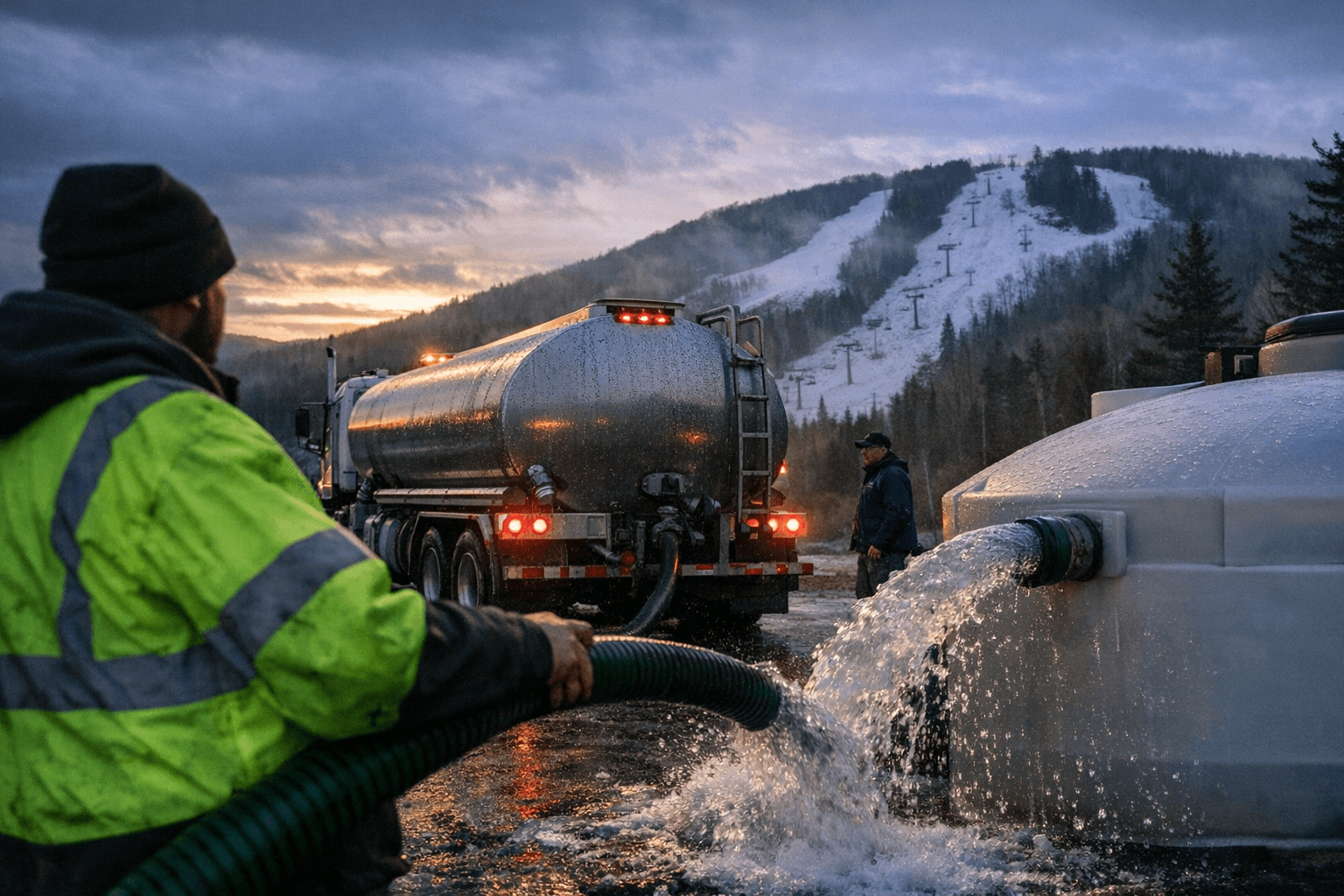
Lutsen Mountains is trucking drinking water from Grand Marais after a primary well failed last month, turning a utility breakdown into a daily operations issue for one of Lake County’s biggest tourism employers. Because the ground was frozen and snow-covered, the resort could not quickly switch to another well, so 5,000-gallon trucks began making the run down the shore, filling at a hydrant across from city hall and hauling the water back to Lutsen.
The water is being used for drinking, not snowmaking, and the cost adds up quickly. Grand Marais charges about $10 per 1,000 gallons for the service, which means each truckload carries roughly $50 in water charges before the cost of hauling. For a resort that depends on keeping guests, workers and lodging operations moving, the arrangement is a reminder that even a single well failure can ripple through the business side of a ski hill.
The fix also lands in a long-running North Shore water debate that has surrounded Lutsen Mountains for years. A Minnesota Department of Natural Resources environmental review said the agency gave the ski area four years to find an alternate source after a 2011 directive ordered it to stop drawing snowmaking water from the Poplar River no later than October 2016. State officials later found the resort had drawn too much water from the river for years. The eventual answer was the Lake Superior-Poplar River Water District and a pipeline system meant to carry Lake Superior water uphill.
That project was first described in 2013 as a $5 million build, with $3.6 million coming from state funding and the rest from local partners. It was also pitched as a shared piece of infrastructure for the Superior National Golf Course, nearby vacation homes and firefighters. Lutsen later said the pipeline became operational for all snowmaking needs in November 2017, and its environmental stewardship materials say the district and pipeline came out of work by the DNR and conservation groups. State documents described the district as a public rural system meant to provide potable and raw water to residential, commercial and government customers.
The latest hauling episode raises a harder question for the North Shore: whether the resort’s water problems are just a temporary equipment failure, or another sign that groundwater and utility resilience remain fragile for businesses and homes along the lake. Competing ski areas once opposed the state funding for the pipeline, and conservation advocates called the earlier river-draw fight a “self-created problem.” Lutsen officials did not say whether they are seeking money from the state, the Minnesota Department of Employment and Economic Development or any other agency to cover the hauling.
This article was produced by Prism’s automated news system from verified source data, official records, and press releases, then run through automated quality and moderation checks before publishing. The system is built and supervised by the people who set the standards it runs under. Read our full AI policy.
Did this article answer your question?


