Minnesota confirms first cougar family group in more than a century
Three cougar kittens filmed northeast of Orr turned a rare sighting into a management question for the North Shore and Lake County.
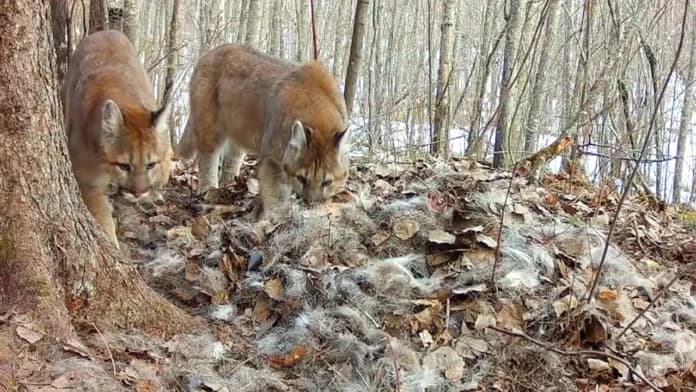
Minnesota wildlife officials have confirmed the state’s first cougar family group in more than a century, a finding that could change how Lake County and North Shore communities think about rare sightings, livestock losses, and trail safety if breeding cats move closer to the region.
The Minnesota Department of Natural Resources said April 30 that trail camera video captured in March 2026 showed a female cougar with three kittens feeding on a deer carcass northeast of Orr in St. Louis County, south of Voyageurs National Park. The footage, obtained by the University of Minnesota’s Voyageurs Wolf Project, came from two cameras placed over a GPS-collared deer researchers suspected a cougar had killed. The project recorded around four hours of video showing the mother grooming the kittens and the young cats growling and hissing as they fed.
John Erb, a DNR research biologist, estimated the kittens were about 7 to 9 months old and likely were born the previous fall. The agency said this was the first confirmed evidence of cougar production in Minnesota in more than 100 years, and the first confirmed kitten record in the state since captive escapees turned up on a homeowner’s porch in 2001.
For Lake County residents, the significance is not just biological. The DNR has long described Minnesota cougars as transient animals, usually moving through from western South Dakota, North Dakota, or Nebraska. If family groups begin appearing closer to the North Shore, the state could face pressure to move beyond the current rare-sighting model and sharpen how it verifies reports, advises landowners, and responds to encounters near homes, farms, and trail systems.
That matters because the DNR says reproduction had not been documented for more than 100 years in the eastern Midwest east of the Dakotas and Nebraska until recent reports from Michigan and now Minnesota. The sighting does not by itself prove a permanent population has taken hold, and the kittens still face threats from wolves, male cougars, vehicles, and other hazards.

Still, the footage marks a major shift. The Voyageurs Wolf Project has deployed hundreds of trail cameras across northeast Minnesota for wolf research, and the team had documented lone cougars eight times since 2023 without ever catching kittens. A 2015 DNR article counted 19 verified cougar observations from 2010 through 2014 and found no evidence then of a breeding population. This time, the evidence is different, and so is the conversation for communities that border the North Shore.
This article was produced by Prism’s automated news system from verified source data, official records, and press releases, then run through automated quality and moderation checks before publishing. The system is built and supervised by the people who set the standards it runs under. Read our full AI policy.
Did this article answer your question?