North Shore Businesses Reflect Decades of Change Along Lake County's Coastline
A Silver Bay couple who reopened two beloved North Shore businesses with a community-first mission is now selling both, felled by a burst pipe, a seasonal economy, and a shrinking local population.
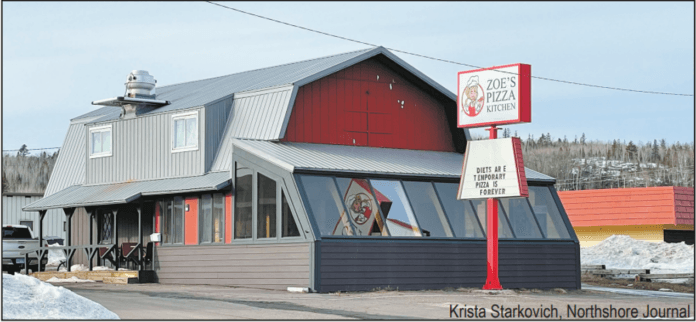
Isaac Giron and Natascha Zubarev poured everything into two Lake County businesses: a pizza kitchen in Silver Bay and a bar and grill on Highway 61 in Beaver Bay. Less than two years later, they are putting both up for sale.
Their story is the kind that Krista Starkovich captured in the North Shore Journal's March 25, 2026 feature, "The Ever-Changing Face of the North Shore," a retrospective on how small businesses along Lake County's coastline have opened, closed, changed hands, and occasionally endured across the decades. Over the years, there have been many changes along the North Shore: businesses have changed hands, some have closed, new ones have opened, and others have remained. The Giron-Zubarev story captures all of those possibilities at once.
A Community-First Vision
Since taking over Tracks N Racks in February [2024], the new owners, Isaac Giron and Natascha Zubarev, had been working hard. They gave the interior of the Beaver Bay building a new look with barnboard paneling and modern furniture, and transformed the menu with signature drinks like the Northern Lights, a gin and tonic with a colorful twist. Giron and Zubarev also re-opened Zoe's Pizza in Silver Bay that same February.
The two owners are partners in Zenviva, a business management solutions company, and brought an explicit philosophy to both venues. They worked with Lovin' Lake County to bring live music nights to the properties, driven by a simple conviction: "We're all about community. We want people, whether tourist or local, to feel at home and welcome at Tracks N Racks and Zoe's." Plans included community-oriented programming such as meat raffles, dance classes, and ladies' nights.
When asked about the area's needs, Giron said: "The Bay Area doesn't lack places to drink. What it lacks are family-centered environments that foster connection, safety, and community." That vision, however, ran headlong into reality: "Balancing multiple ventures while trying to carry a seasonal restaurant through the winter simply wasn't sustainable."
When the Ceiling Came Down
The tipping point arrived in January 2026. A burst water line at their Tracks N Racks location on Main Street in Beaver Bay caused a complete ceiling collapse, ending plans to relocate the pizza business there and causing damage to Zoe's Pizza's ceiling as well. The timing could not have been worse: mid-winter, when North Shore foot traffic is at its lowest and contractors are scarce.
Despite their community spirit, the owners announced they are putting both businesses up for sale. They cited a "perfect storm" of circumstances: a seasonal economy that doesn't sustain year-round staffing, a declining and aging population, and limited winter traffic.
Looking ahead, Giron and Zubarev may explore a more flexible food truck model to better adapt to the area's seasonal nature without the high overhead of a brick-and-mortar building. It is a pivot that reflects hard-won knowledge of how the North Shore economy actually functions.
The Seasonal Squeeze
The pressures that pushed Giron and Zubarev toward the exit are not unique to them. They represent a structural challenge that has shaped the business landscape of Lake County for generations. The shore offers coffee shops, cafés, historic dining rooms, fresh Lake Superior fish, smokehouses, taprooms, and pizza, but the full breadth of that scene runs especially from Memorial Day through late October. After that, some places close and most reduce their hours.
That seasonal rhythm rewards flexibility and punishes fixed costs. Some businesses have stood the test of time while others come and go; eventually the survivors become landmarks, familiar and trusted points along the road. Reaching that status requires either deep roots, loyal regulars built over many years, or a lean enough operation to survive the winters intact.
The Businesses That Endured
Lake County does have its survivors. North of Two Harbors, Betty's Pies is a landmark known to all who wind their way up the North Shore; it traces its origins to 1956, when Betty Lessard's father opened a fish shack. Betty sold the restaurant in 1984, and by 1998, when new owners purchased it, the pies had changed and customers were complaining. The new owners called on Betty for help, and she passed on her original recipes and methods; the business has thrived since.
In Two Harbors, the Castle Danger Taproom features rotating beer offerings alongside its current tap list, with a summer patio where guests can catch the breeze off Lake Superior. Further up the shore in Grand Marais, Jeff and Susan Gecas opened the Gunflint Tavern on May 22, 1998 in the old Grand Marais State Bank building, seeking a year-round spot for craft beer, organic food, and live music. Both have found ways to thread the needle between tourist traffic and local loyalty.
What Changes, What Stays
Starkovich's retrospective arrives at a moment that feels representative of something larger in Lake County. The communities stretching along Highway 61 from Two Harbors through Silver Bay and Beaver Bay to Grand Marais have always depended on a mix of seasonal visitors, a tight-knit year-round population, and entrepreneurs willing to bet on a place that offers remarkable natural beauty alongside genuine economic difficulty.
Giron and Zubarev made that bet with intention and energy. They renovated, programmed, collaborated with Lovin' Lake County, and kept prices accessible. What defeated them, in the end, was not effort but arithmetic: too many months of low revenue, too few workers willing to stay through winter, and one burst pipe at precisely the wrong moment.
The food truck idea they are now considering may be the more honest business model for this stretch of coastline: mobile enough to follow the tourists in summer, light enough to park until May without hemorrhaging money. Whether that chapter unfolds in Lake County or elsewhere, the question their story leaves behind is one every small-town coastal community faces: how do you build the family-centered gathering places a community needs when the economics of winter make them nearly impossible to sustain?
This article was produced by Prism’s automated news system from verified source data, official records, and press releases, then run through automated quality and moderation checks before publishing. The system is built and supervised by the people who set the standards it runs under. Read our full AI policy.
Did this article answer your question?


