Two Harbors track teams finish strong behind young rosters, senior comeback
Two Harbors’ boys won Section 7A again, and Delaney Nelson’s comeback helped a young girls roster turn depth into another strong finish.
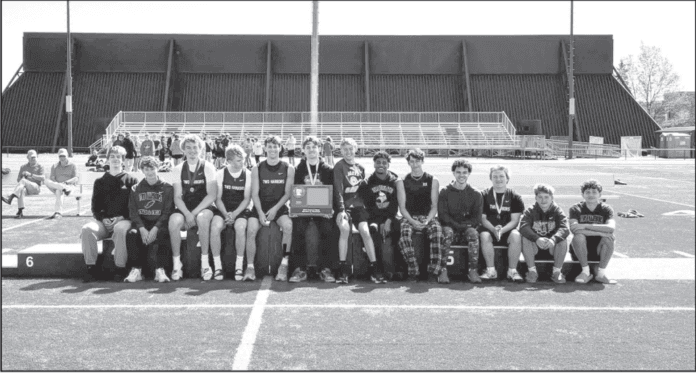
Delaney Nelson’s return in early April gave Two Harbors track and field its most visible comeback story, but the bigger takeaway was in the roster makeup. The girls were young, with almost three-quarters of the team made up of ninth and tenth graders, while the boys carried a larger, older lineup built around 10 seniors, 5 juniors, 12 sophomores and 14 freshmen. By the end of the season, that mix of experience and youth had produced a program that could still win big meets, still fill out relay teams and still put both squads deep into the postseason.
A roster that tells the whole story
The girls’ leadership group centered on Brooklyn Nelson, Delaney Nelson, Amelia Saamanen, Olivia Hagglund and Brynn von Goertz. That group had to steady a roster that leaned heavily on younger runners and field athletes, which makes the team’s consistency even more notable. When a squad is that young, every meet becomes part development and part score chase, and Two Harbors managed to do both.
The boys’ captain group was just as telling: Tommy DeChantal, Will Fransen, Jace Gomez, Carter Nelson, Erik Gischia and Jonathan Kinsey. Their roster had the feel of a program in transition, but not a program in trouble. The seniors provided the edge, the juniors and sophomores supplied the middle, and the freshmen gave the team the kind of long-term base that can keep a conference contender from sliding backward.
Delaney Nelson’s comeback set the tone
If the roster makeup explained the season’s structure, Delaney Nelson explained its emotion. After missing more than a year with a knee injury suffered the previous spring, she returned to competition in early April and slowly worked her way back into form. The rehab took hard work and determination, and once she was back, she did not merely reappear, she delivered.
Nelson placed in every meet she ran and picked up victories at some of the bigger meets, giving the girls team a senior-led anchor even though the roster was young overall. That matters in a sport where confidence often travels with repetition. Her comeback gave Two Harbors a veteran presence in the open sprints and a reminder that one athlete’s recovery can reshape an entire team’s outlook.
Conference meet depth showed up across events
At the Polar League Conference Championship on May 13 in Moose Lake, both Two Harbors teams finished third, and the results showed how widely the points were spread. Delaney Nelson won both the 100-meter dash and 200-meter dash, while Olivia Hagglund won the triple jump and long jump and finished second in the high jump. On the boys side, Tommy DeChantal won the 300-meter intermediate hurdles and placed second in the 110-meter high hurdles, a strong sign that the team was scoring not just with speed but with technical events.
The relay results underscored that breadth. The boys’ 4x200 and 4x400 teams both took first, and the All-Conference list also included Brynn von Goertz in discus, Joshua Maxwell in the 200-meter dash, Will Fransen in the 300-meter intermediate hurdles and Jonathan Kinsey in discus. Jace Gomez, Cameron Poe-Johnson, Joshua Maxwell and Carter Nelson were all part of the winning 4x200 and 4x400 relay teams, a detail that shows how much the boys relied on group speed and clean baton work to separate themselves from the pack.
For local fans, that kind of spread across sprints, jumps, throws, hurdles and relays is the clearest sign of a healthy program. It means the Agates were not depending on one star or one event family to carry the scoreboard. They were building points in several places, which is what makes third place at a conference championship feel like a floor rather than a ceiling.
Postseason results confirmed the upward arc
The sub-section meet in Esko was the next test, and both teams passed it in different ways. The boys finished second and the girls fifth, while both squads advanced a strong number of qualifiers into the section meet. The girls moved 8 individual entries and 1 relay team on to sections, while the boys sent 13 individual entries and 2 relay teams, a good indicator that the roster depth was translating into postseason volume, not just regular-season wins.
At the Section 7A Championship at the University of Minnesota Duluth on May 27, the girls finished ninth out of 25 teams and the boys won the section title by 9.5 points over Esko. That boys championship is the kind of finish that changes a program’s standard. It came on the heels of the 2025 section title, the school’s first since 1973, and the 2026 margin was tight enough to show that the Agates were still earning every point rather than coasting on history.
The 2025 win also helps explain why the 2026 title feels durable rather than fluky. That earlier championship came by 14 points over Moose Lake/Willow River, and the repeat suggests the boys program has moved from breakthrough to expectation. When a team can win sections in consecutive years, the conversation shifts from whether the run was real to how long it can last.
What next season looks like in Two Harbors
The most important lesson from this season is that the pipeline is still feeding the varsity. In 2024, Ryan McIntyre said the program had one of its larger 7th- and 8th-grade groups in years, and that youth movement has now reached the upper classes. The girls also showed they can keep climbing, finishing second at sections in 2024 by one point behind Esko, and Delaney Nelson’s school-record-level sprinting from that period still looms over the program’s recent history.
Two Harbors has also shown it can sustain success beyond one roster cycle. The girls’ 4x800 relay had made state every year since 2018 except the Covid-disrupted 2020 season, and the 2023 state recap pointed to a team identity built around senior leadership, school records and relay continuity. That history matters because it tells Lake County families what to expect next: more underclassmen moving into varsity roles, more relay combinations taking shape, and a boys program trying to defend a section title that is now part of its identity rather than a one-time surprise.
This article was produced by Prism’s automated news system from verified source data, official records, and press releases, then run through automated quality and moderation checks before publishing. The system is built and supervised by the people who set the standards it runs under. Read our full AI policy.
Did this article answer your question?