Archival photos reveal 70 years of Lane County Fairgrounds history
A forgotten set of aerial negatives opens a 70-year visual timeline of the Lane County Fairgrounds, now a 53-acre Eugene venue with far more than fair week to show.
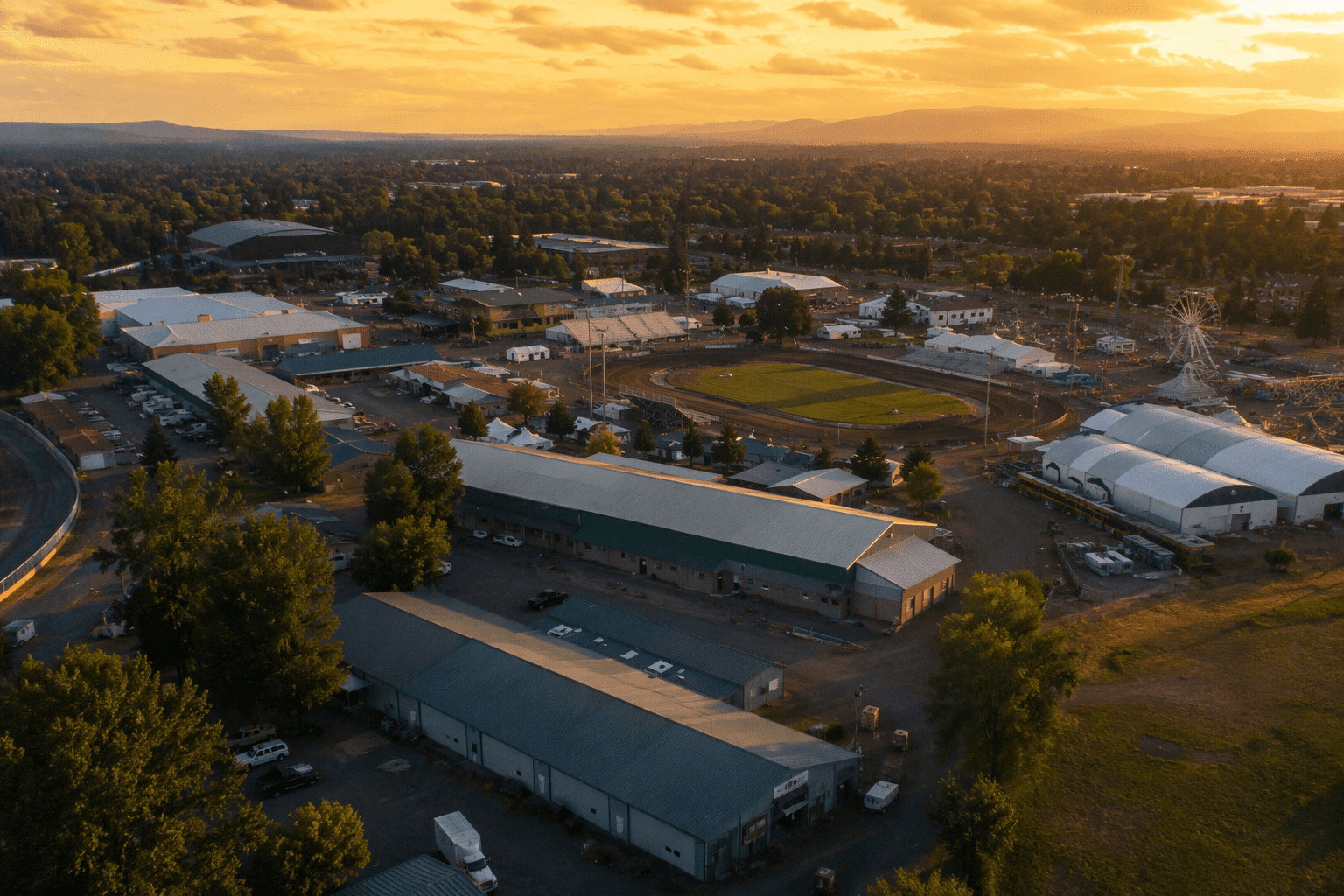
Chris Pietsch’s look through the Register-Guard archive turned up something that had been sitting in storage for decades: old 4x5 negatives of the Lane County Fairgrounds shot from an airplane. The images, which he says were apparently not looked at in nearly 70 years, turn the fairgrounds into a visual record of how Lane County has changed around one of Eugene’s most familiar public spaces.
Aerial negatives bring the fairgrounds back into view
The strongest pull of the photo gallery is not nostalgia for its own sake. It is the chance to see a place many Lane County residents know from summer events in a form that predates most of the buildings, uses, and routines now associated with it. Pietsch’s quote makes clear how unusual the find was: “While looking through The Register-Guard photo archive I stumbled on some old 4x5 negatives of the Lane County Fairgrounds taken from an airplane.”
That aerial vantage matters. A ground-level snapshot can freeze one building or one crowd, but a view from above shows the fairgrounds as a piece of the city, tied to streets, open space, and the changing edge of Eugene. The related gallery, titled “See how the Lane County Fairgrounds has changed since the 1950s,” frames the comparison as a long arc rather than a single before-and-after moment.
What the site is now
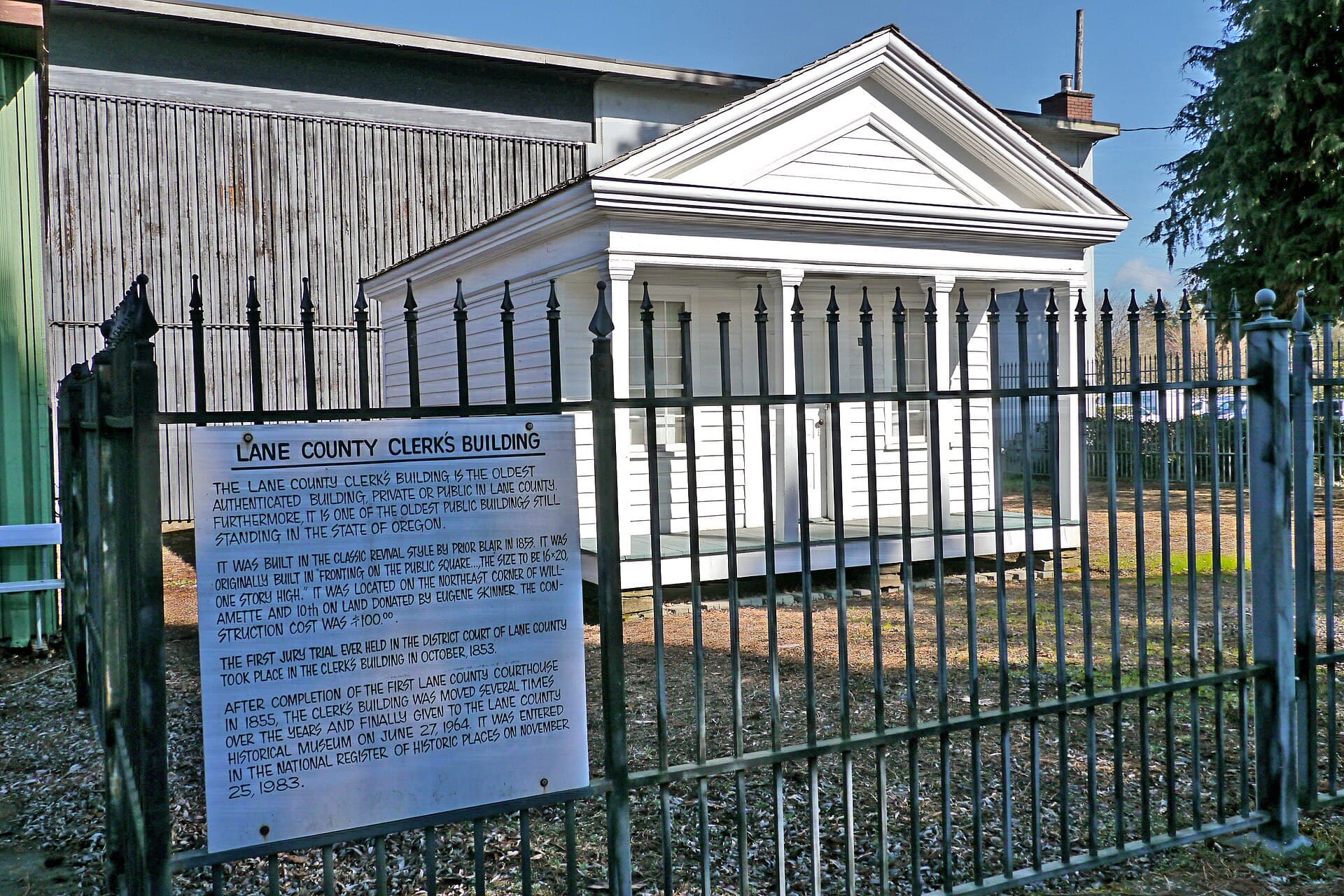
Today the fairgrounds operate as the Lane Events Center and Fairgrounds, a 53-acre site at 796 W. 13th Ave. in Eugene. The grounds map lays out a property that is far more complex than a simple fairground, with the Convention Center, Exhibit Hall, Performance Hall, Gleason Atrium, Wheeler Pavilion, Auditorium/Office, Expo Halls, Livestock Arena, Ice Rink, Agricultural Pavilion, Historical Museum, meeting rooms, and Amazon Creek Park all identified on the site.
That scale changes how people use the property. The Lane Events Center materials show a venue that hosts weddings, trade shows, sporting events, flea markets, fundraisers, and the Lane County Fair, which means the grounds function as a year-round civic asset rather than a once-a-year summer destination. The photos help readers see that shift in use alongside the physical expansion of the site.
Why the comparison matters for Lane County
The value of the archive lies in what it preserves about civic memory. Aerial negatives from a later era can show where buildings stood, how much open land remained, and how the fairgrounds fit into the surrounding neighborhood at the time. When those images are placed next to the current grounds map, the fairgrounds read less like a single venue and more like a long-running record of growth, adaptation, and public investment.
That is especially useful in a county where the fairgrounds have long served as a gathering point for families, vendors, and community groups. The site’s history reaches beyond rides and exhibits, because the grounds have also carried commerce, meetings, and public events that reflect the county’s changing economy and social life. The archival photos make that evolution visible instead of abstract.
How to read the gallery
The gallery works best when you look for the details that have disappeared or multiplied over time. Start with the broad footprint of the property, then notice how the modern site map includes multiple indoor and outdoor facilities that would not have existed in the same form in the earlier aerial views. From there, the comparison becomes a story about land use, not just architecture.
- What parts of the fairgrounds were already established in the 1950s?
- Where has the site gained density, buildings, or paved areas?
- Which current uses, such as weddings, trade shows, or the ice rink, reflect a broader shift away from a single-purpose fair site?
A useful way to move through the images is to ask a few concrete questions:
Those questions turn the gallery into a guide to the county’s changing public life. They also help explain why an archive find can matter as much as a newly built space, because the older images show what Lane County chose to preserve, replace, or expand.
A familiar landmark with a wider public role
For Eugene residents who pass the grounds on W. 13th Avenue, the fairgrounds can feel fixed in place. The archive proves otherwise. A 53-acre property with a convention center, arena, pavilion, museum, expo halls, and community event space tells a different story from the one a summer fair alone might suggest.
That is why the photo essay lands as more than a retrospective. It shows a public site that has absorbed changing uses over more than 70 years while remaining one of Lane County’s most recognizable landmarks. The fairgrounds are still where people come for the county fair, but the archival images show how the grounds became a broader center of local life, and how much of Eugene’s history is written into the land itself.
This article was produced by Prism’s automated news system from verified source data, official records, and press releases, then run through automated quality and moderation checks before publishing. The system is built and supervised by the people who set the standards it runs under. Read our full AI policy.
Did this article answer your question?