Emaciated Gray Whale Washes Ashore Near Florence During Spring Break
An emaciated juvenile gray whale beached at Florence's Driftwood Shores Resort during spring break as gray whale numbers hit their lowest point since the 1970s.
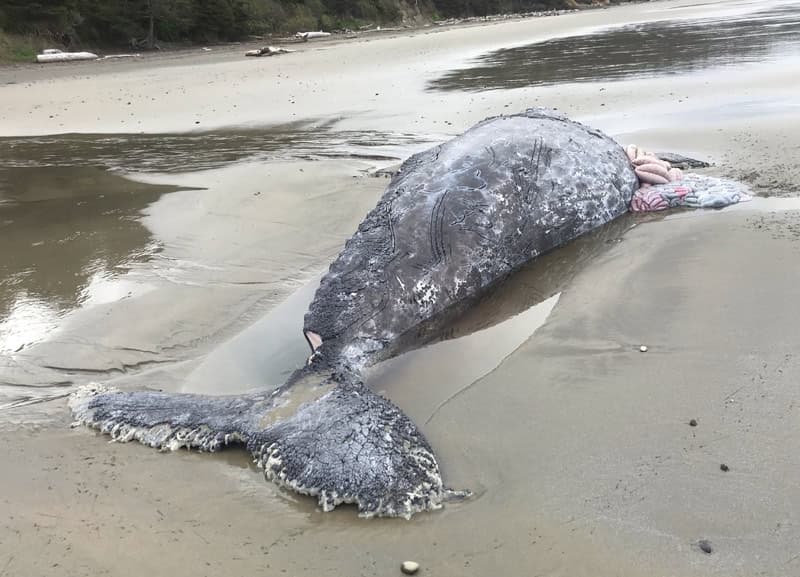
Oregon State Parks spokesperson Mike Baden confirmed a 37-foot gray whale washed ashore dead in front of Florence's Driftwood Shores Resort on the morning of March 26, prompting staff to rope off the beach during spring break and the Oregon Marine Mammal Stranding Network to begin an immediate necropsy.
The whale, a juvenile male estimated between 1 and 4 years old, was visibly emaciated when discovered. State Parks staff secured the perimeter to manage the spring break visitors who quickly gathered and to comply with federal marine mammal protections that prohibit the public from approaching or touching stranded animals.
The Marine Mammal Stranding Network, which operates through Oregon State University's Marine Mammal Institute in Newport under the direction of Jim Rice, responded to collect tissue and organ samples. Those samples are headed to the OSU Veterinary Diagnostic Lab for analysis, with results expected to take several weeks. Investigators tested for starvation markers, disease, parasites, toxins, and signs of vessel strike or entanglement, all of which can produce similar presentations in a carcass on initial observation.
Representatives from the Confederated Tribes of Coos, Lower Umpqua and Siuslaw Indians participated in customary harvesting of usable portions, consistent with tribal cultural practice and Oregon's standard approach to carcass management on public beaches. The remaining portions were buried.
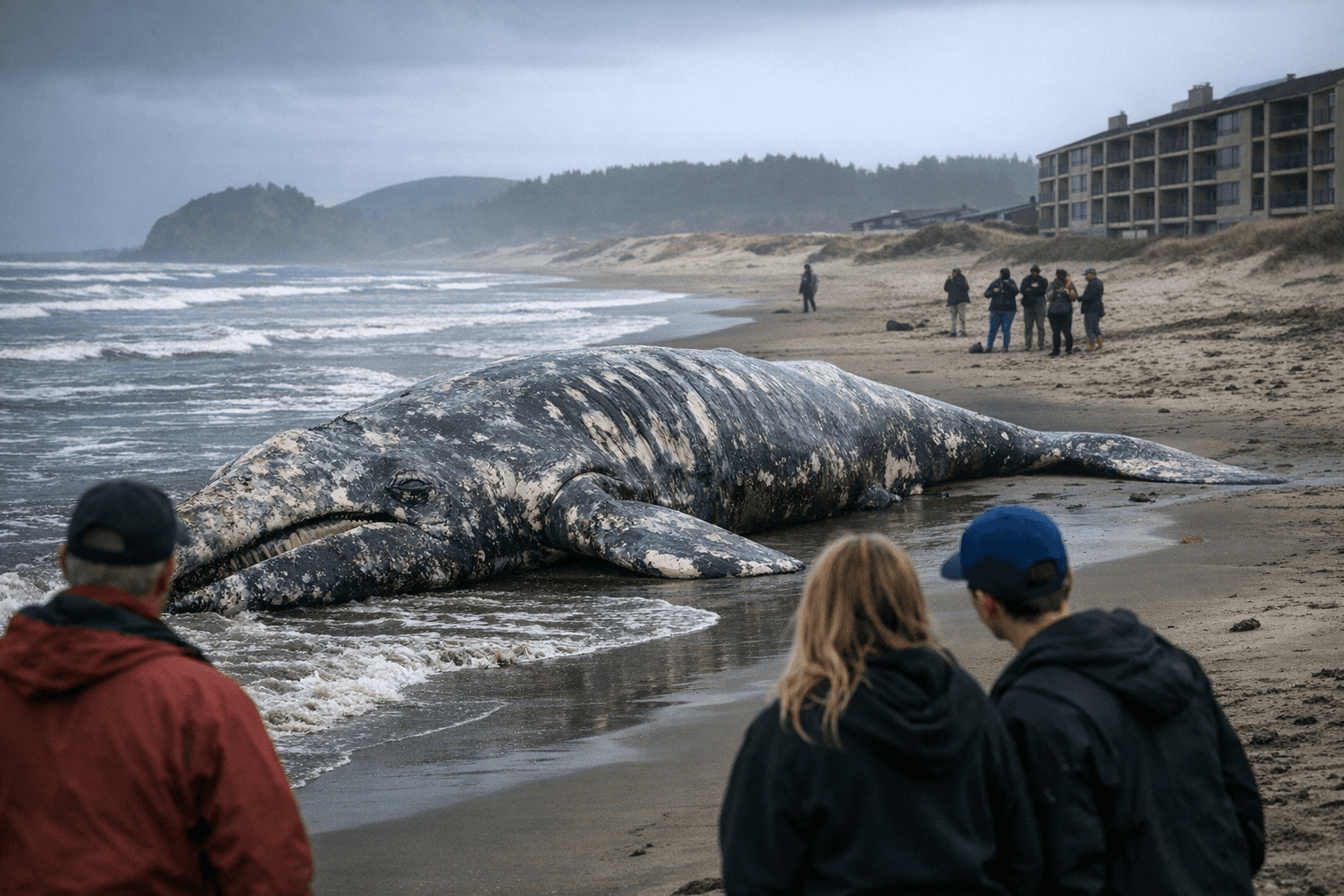
The timing of the stranding, during the same week that volunteer stations up and down the Oregon coast staffed viewing points for Spring Whale Watch Week, offered a jarring contrast: live gray whales passing offshore while necropsy teams worked the sand at one of Florence's most recognizable coastal addresses.
That contrast carries weight beyond the immediate scene. NOAA Fisheries now estimates the eastern North Pacific gray whale population at approximately 13,000 animals, the lowest count since the 1970s and roughly half the number recorded just a decade ago. West Coast strandings reached 47 confirmed deaths in 2025, up sharply from 31 the previous year. Scientists have linked the decline to shifts in Arctic and subarctic prey availability driven by changing ocean conditions, with malnourished animals facing greater risk across the entire migration corridor.
Whether the Florence whale's death reflects an isolated event or connects to that broader decline is precisely what the OSU Veterinary Diagnostic Lab will try to determine. Baden reminded the public that approaching or touching stranded marine mammals is a federal violation and urged anyone who spots a stranded animal to contact the Marine Mammal Stranding Network rather than attempt to intervene.
This article was produced by Prism’s automated news system from verified source data, official records, and press releases, then run through automated quality and moderation checks before publishing. The system is built and supervised by the people who set the standards it runs under. Read our full AI policy.
Did this article answer your question?


