Eugene Finalizes Sale of Historic EWEB Steam Plant for Riverfront Redevelopment
Eugene committed $7.8 million in public funds to a $60 million steam plant revival; a signed development agreement sets a hard late-2027 construction deadline.
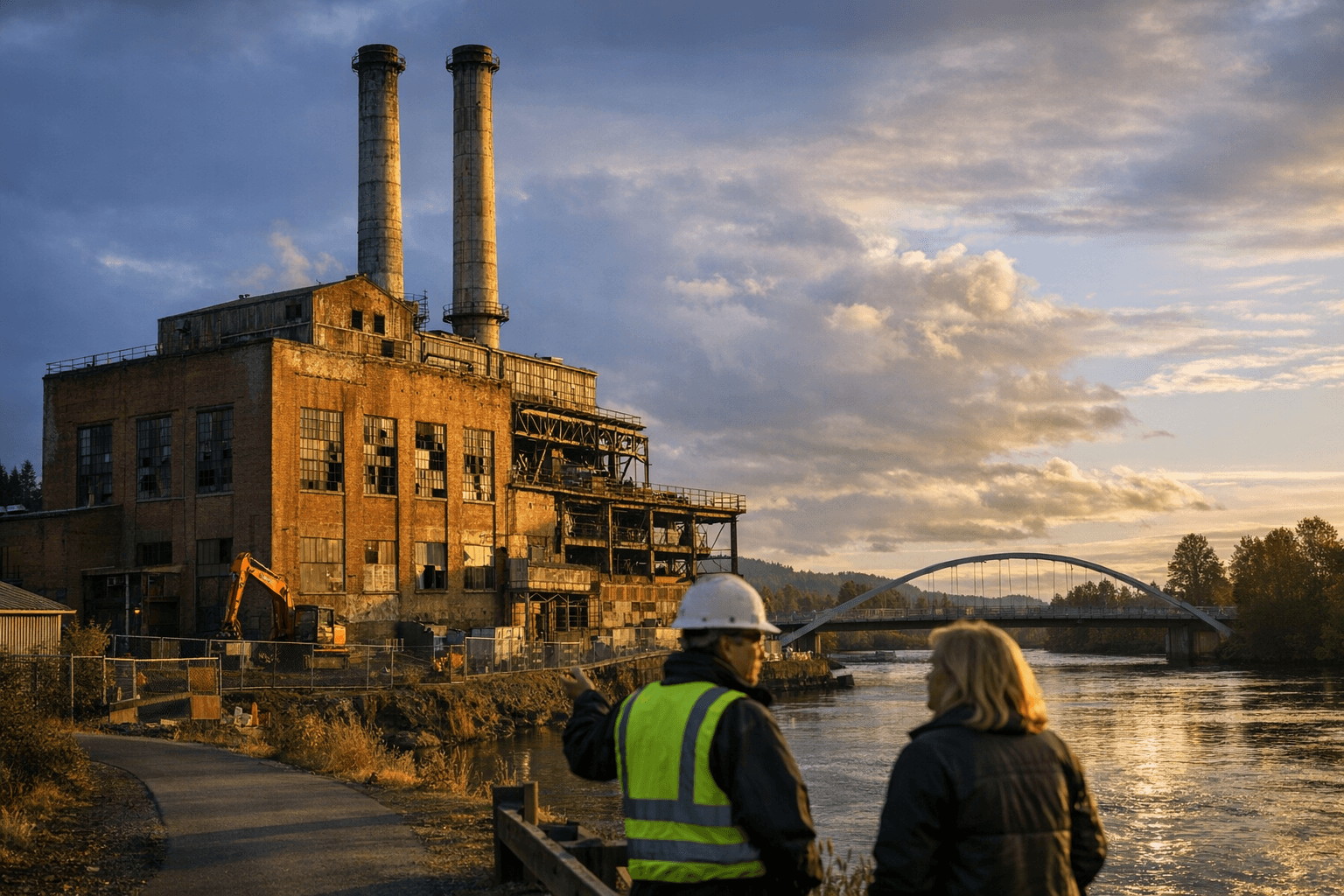
For $1, Dream Plant LLC now owns a 1931 power plant on the Willamette River's edge. The city expects $60 million in return.
Eugene's Urban Renewal Agency signed a formal development agreement for the EWEB Standby Steam Plant, binding developer Mark Miksis of deChase Miksis Development to a late-2027 construction start or the deal unravels. The agreement closes a decade-long chapter of planning and positions the oldest surviving structure on the Downtown Riverfront property as the district's final and most complicated piece.
The public investment is substantial. The city has committed $7.8 million in Urban Renewal tax increment funds to the project, including a $6 million infusion the Eugene City Council approved on April 24, 2024, to close a financing gap. Total project costs are estimated at approximately $60 million, with the private development team covering the remainder. The building itself transferred to Dream Plant LLC in February 2022 for $1.
Plans call for converting the decommissioned steam plant, which EWEB built to heat downtown businesses and shut down in 2012, into a mixed-use destination anchored by a boutique independent hotel of 70-plus rooms. The hotel, developers say, provides the fiscal foundation to make the adaptive reuse viable. The ground floor will open toward the river with food and drink vendors, public amenities, and arts programming. A performance and exhibit space, added after community input, will serve as the building's centerpiece, alongside flexible office space intended to bridge downtown and the University of Oregon.
The city and Dream Plant LLC will also begin the process of listing the plant on the National Register of Historic Places and catalog the building's materials and structural needs, a recognition of the 1931 structure's singular position as Eugene's closest building to the Willamette River, sitting within 50 feet of the bank.
City Councilor Emily Semple, who pushed for the additional public funding at the April 2024 council meeting, was direct about the stakes: "I think from a historic point of view it's really important to save it. From an economic point of view I think it's important to save it."
The project's complexity is not lost on city staff. Development Program Manager Amanda D'Souza has described it as "a really complicated project," noting that adaptively reusing a building designed solely as a steam plant carries extraordinary costs. Planning and Development Executive Director Denny Braud framed the site's irreplaceable value plainly: "It's a tremendous opportunity, because you will never build that close to the river, probably ever again."
The Steam Plant redevelopment is the last major piece of the broader Downtown Riverfront district, a $230 million public-private initiative targeting up to 800 housing units on the former 16-acre EWEB operations yard. Two residential buildings have already opened: Heartwood, with 95 units in June 2024, and Portal, with 130 units in June 2025. The Urban Renewal Agency has spent or allocated nearly $52 million on the district overall, with roughly $64 million remaining available.
Mayor Kaarin Knudson has called the broader effort "a once in a many generation opportunity." With a construction clock now running, Eugene will find out by late 2027 whether that generation delivered.
This article was produced by Prism’s automated news system from verified source data, official records, and press releases, then run through automated quality and moderation checks before publishing. The system is built and supervised by the people who set the standards it runs under. Read our full AI policy.
Did this article answer your question?