Eugene May Day events set rallies, protests, and public gatherings around city
Downtown Eugene, the UO campus and 4J offices all became May Day flashpoints, with family events, immigrant-rights action and labor protests reshaping the day.
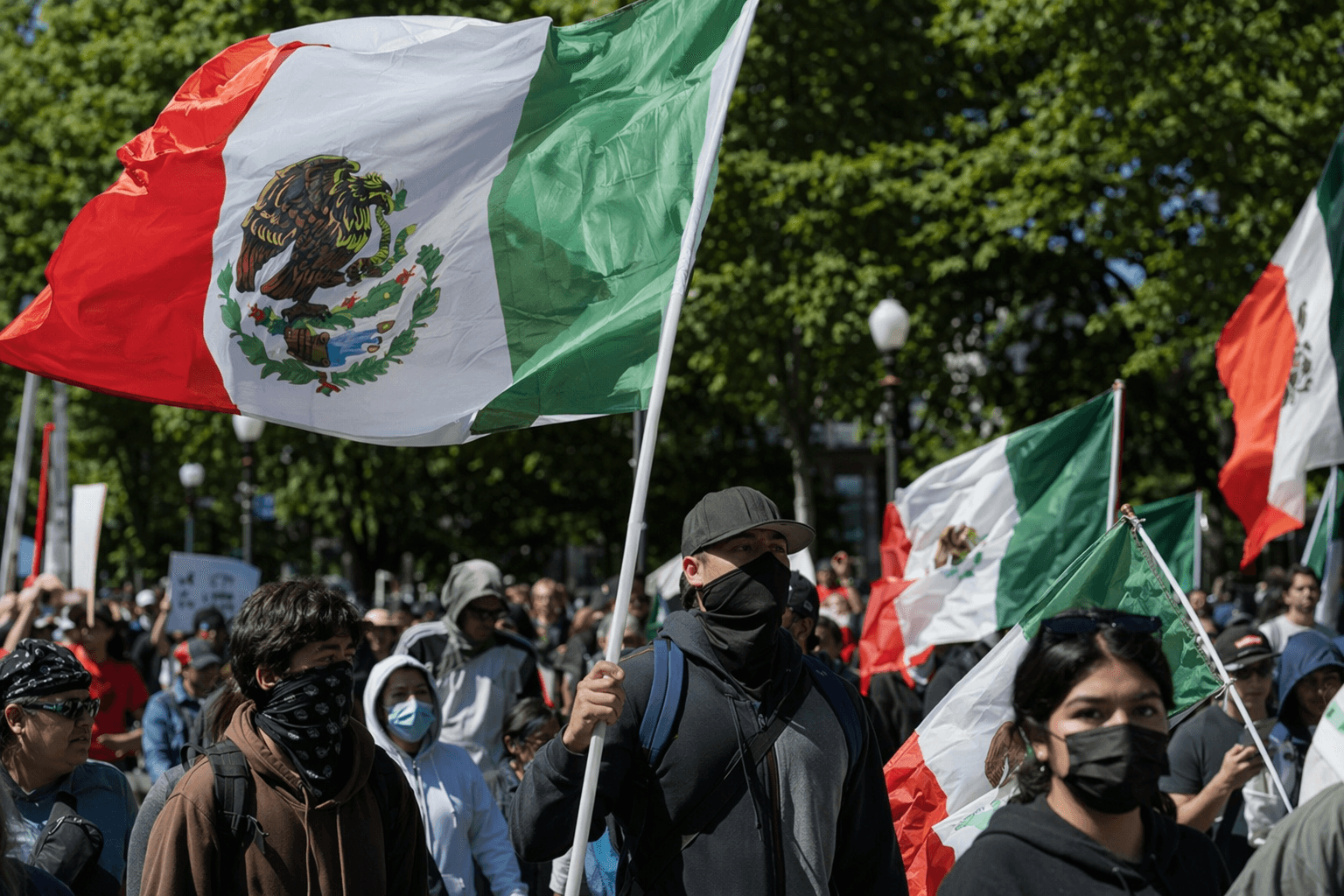
Eugene’s May Day reshaped the downtown core, the University of Oregon campus and the west side into a day of rallies, marches and public gathering, with Eugene School District 4J’s 269 planned position cuts and a $16 million budget gap giving the observance a concrete local target. For residents moving through town, the story was not abstract symbolism. It was a sequence of visible street events, from a family-friendly celebration at the Eugene Park Blocks to a midday rally at Free Speech Plaza and an evening protest that ended at 4J’s central offices.
What drew people out
The most accessible part of the observance was the Eugene May Day celebration at the Eugene Park Blocks, at 8th and Oak, where organizers set out music, art, food, workshops, a May Pole, games, kids’ activities and speakers for a noon-to-5 p.m. gathering on Sunday, April 26. That gave families, students and neighbors a place to mark International Workers’ Day without stepping directly into a march or protest line. The event made clear that May Day in Eugene is not only about confrontation, it is also about community space, music and a shared public table.
The more activist-focused portion of the day centered on May 1 at Free Speech Plaza, 799 Oak Street, where a rally and march drew people into the downtown core. That gathering was part of a broader set of actions spread across the city, including campus-related activity at the University of Oregon and later protests tied to school district layoffs. For anyone crossing downtown, the practical takeaway was simple: expect crowds, expect people moving block by block, and expect public space to feel busier and more politically charged than usual.
How the downtown marches moved
The downtown rally did not stay fixed in one place. Protesters marched through several city blocks before returning to Wayne Morse Plaza, turning the route itself into part of the message. Many participants carried signs objecting to the Trump administration, and the movement through downtown made the day visible to people who were not attending directly. That loop through the core meant the protest was not only a gathering, it was also a street-level presence that touched the rhythm of shops, sidewalks and everyday travel.
The University of Oregon campus was part of the day as well, with protests in support of workers’ rights expected from the campus to the downtown core. That spread matters for local planning, because it places the observance in the city’s main pedestrian and transit corridors rather than in one isolated plaza. Residents heading through campus, Oak Street or the blocks around Wayne Morse Plaza had to move around a civic event that was intentionally public, vocal and hard to miss.
A separate march and rally at Washington Jefferson Skate Park, tied to worker solidarity and the 4J layoffs, widened the footprint even further. Taken together, the events showed why May Day in Eugene functions as a day-long map of organizing rather than a single rally point.
Why the 4J layoffs changed the stakes
The evening protest drew one of the sharpest local lines of the day. It began at Washington Jefferson Park and marched to Eugene School District 4J’s central offices, linking labor activism to a very specific public-service crisis. The district planned to cut 269 positions next school year and faced a $16 million budget gap, making the layoffs one of the most immediate public issues in Lane County.
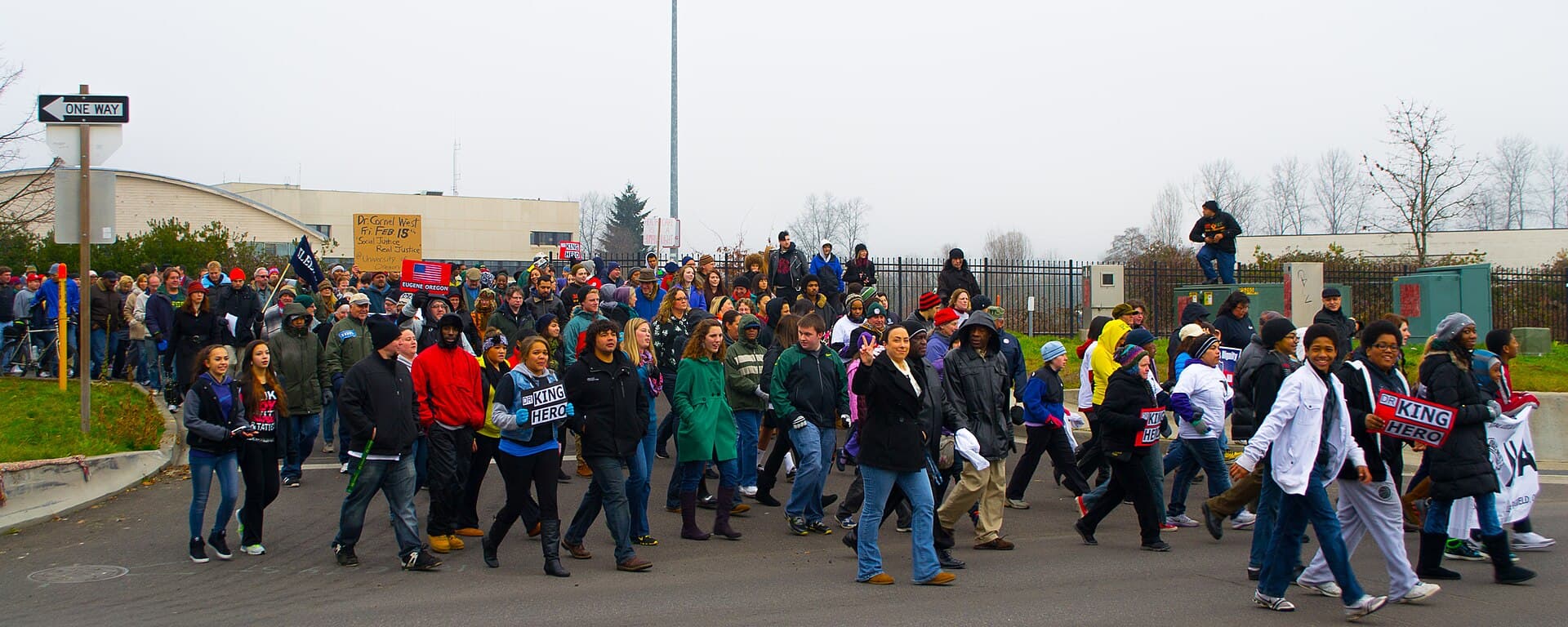
That budget fight gave May Day a direct educational and economic edge. The 4J board had approved $30 million in proposed cuts, and layoff notices were later sent out on the evening of May 1, including hour reductions and transfers. In a city where schools are a major public institution and a major employer, that turned International Workers’ Day into a local protest over staffing, classrooms and public priorities. The result was a demonstration that connected union-like labor concerns with the daily reality of students, parents and school employees.
For people deciding how to move around town, that evening march also meant added activity near Washington Jefferson Park and the streets leading toward the district offices. The practical effect was a reminder that May Day here is not limited to downtown symbolism, it follows the institutions that shape everyday life.
Immigrant-rights and labor were joined together
Part of what made the day resonate so strongly was the way immigrant-rights organizing and labor politics overlapped. Patty Hine of Eugene 350 described the downtown action as a “Day Without Immigrants” event and a day for labor, and the rally included monarch butterfly signs. That framing linked immigrant labor, work visibility and solidarity in a way that fit Eugene’s activist culture and broadened the appeal beyond a single issue.
The downtown gathering was even identified in photo coverage as “International Workers - Day Without an Immigrant” at Wayne Morse Free Speech Plaza, which shows how organizers were blending global labor language with a very local staging ground. Earlier in the year, a February “Day Without an Immigrant” rally outside Johnson Hall drew about 200 people and included the University of Oregon Student Workers, PSL Eugene, the Latiné Male Alliance, UO Mecha and UO Young Democratic Socialists of America. That network helps explain why May Day in Eugene feels so coordinated, with campus groups, labor advocates and immigrant-rights organizers often appearing in the same public moment.
Why Eugene’s May Day carries real local history
Eugene’s May Day tradition did not begin this year. The city’s modern observance dates to 1971, when about 2,500 residents converged downtown to support the People’s Peace Treaty and oppose escalation of the Vietnam War. That crowd assembled at the University of Oregon’s Erb Memorial Union and the Lane County Fairgrounds, and nonviolent protests and sit-ins temporarily shut down federal offices downtown. The memory of that mobilization still shapes how May Day is understood here, as a day when public space is used to challenge power, not just commemorate workers.
That history is not frozen in the past. The University of Oregon Libraries’ Special Collections and University Archives recently published interviews with 19 Eugene residents who took part in the anti-Vietnam War movement from 1967 to 1973, adding a living archive to a tradition that still informs local protest culture. Eugene Weekly also noted that May Day is observed in more than 100 countries and that this year’s actions connect to struggles against exploitation, poverty wages, unsafe conditions, long hours, militarism, racism and war.
May Day Strong’s call for “no work, no school, no shopping” gave the day a broader national frame, but Eugene’s version remained unmistakably local. Here, the observance ran through Free Speech Plaza, Wayne Morse Plaza, Washington Jefferson Park, the University of Oregon campus and the 4J offices, tying global labor politics to the streets and institutions residents use every day. In Eugene, May Day is still a civic event you feel in the blocks you cross, the offices you pass and the public spaces where the city decides to speak.
This article was produced by Prism’s automated news system from verified source data, official records, and press releases, then run through automated quality and moderation checks before publishing. The system is built and supervised by the people who set the standards it runs under. Read our full AI policy.
Did this article answer your question?


