Eugene Native American encampment shares traditions, community connection
Eugene’s sixth Native American Cultural Encampment turned teaching into a public classroom, ending with a free Sunday meal and hands-on demonstrations families rarely see in school.

The sixth annual Native American Cultural Encampment gave Lane County families a chance to learn traditions the classroom rarely reaches, from cultural demonstrations to a closing traditional dinner. Native and non-Native visitors spent three days in Eugene seeing knowledge shared in public, not behind closed doors, as the gathering focused on cultural teaching, tribal connection and community connection.
The event was built around participation. KEZI reported that the encampment brought people together for demonstrations and a traditional dinner to close the gathering, while the NA Cultural Encampment said the public was welcome Friday through Sunday from 10 a.m. to 5 p.m., with a free meal on Sunday afternoon. That format made the encampment feel less like a performance and more like a working classroom, where children, students and parents could watch traditions being carried forward in real time.
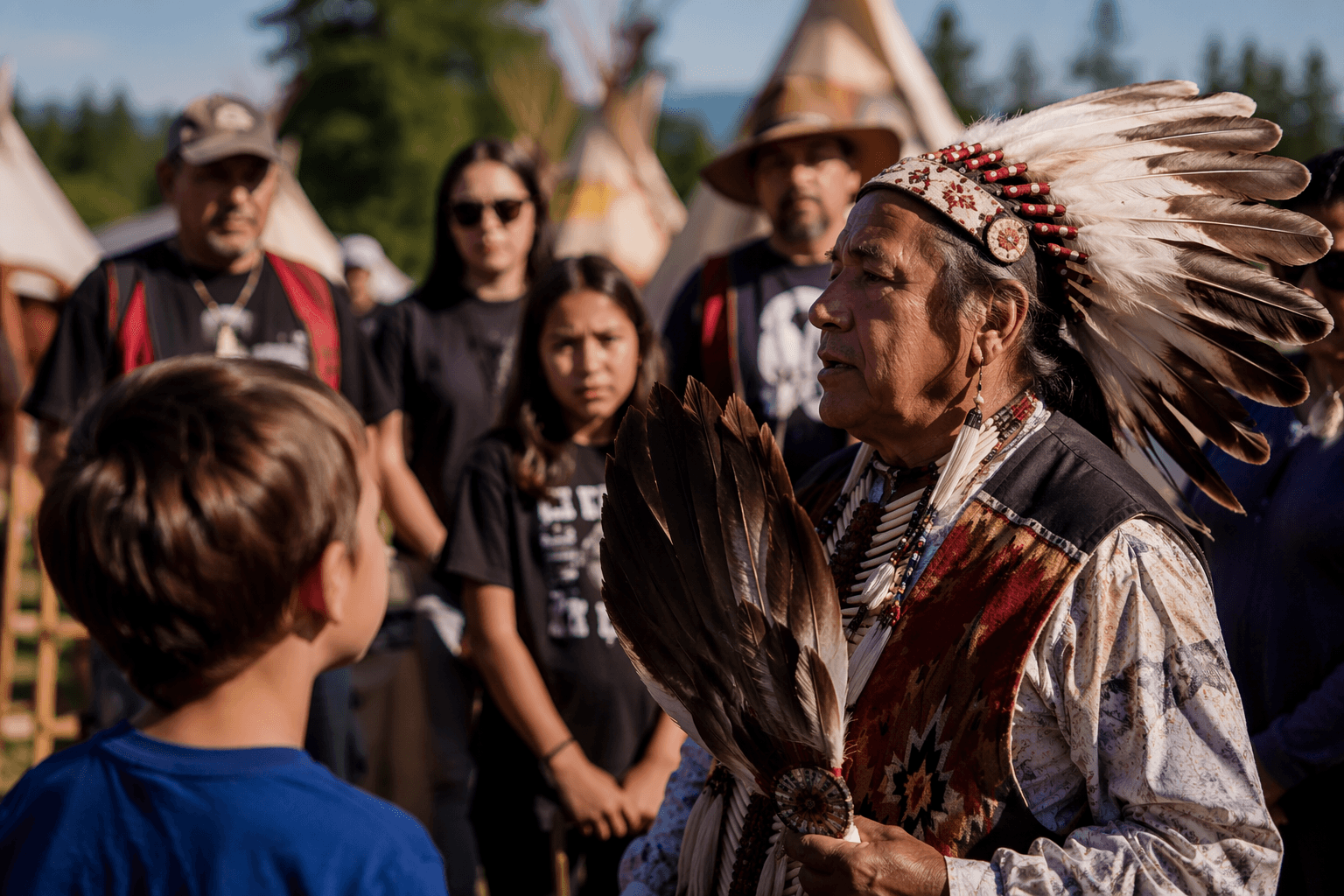
The educational value matters in a county where Native history is often flattened into dates and treaties. Lane County History Museum’s 2024 Lane County Historian included a feature titled Native Peoples’ Traditional Encampments at Eugene and Springfield by David G. Lewis, showing growing local attention to the region’s encampment history. Eugene, Cascades & Coast says numerous tribes lived in this landscape for more than 10,000 years, and identifies the original tribes of the Oregon Coast in this region as the Siuslaw and Alsea. State of Oregon archives note that the Kalapuya, Suislaw and Molalla tribes of the Lane County area signed treaties in 1855 that assigned them to the Grand Ronde Reservation.
That broader history gave the Eugene gathering added urgency. The encampment offered something visitors are unlikely to get from textbooks alone: direct contact with living practices, intergenerational teaching and the chance to understand how traditions survive through repetition, explanation and presence. In a region where public cultural events compete for attention, the encampment stood out because it made heritage visible in a way that invited questions instead of passive observation.

Lane County already has other public Native gatherings that serve a similar role. The University of Oregon said its 58th annual Mother’s Day Powwow in 2026 was free and open to the public, and the university described it as the oldest documented powwow in Oregon. Lane Community College’s Native American Student Association also has hosted an annual Lane Powwow open to the public and free of charge. Together, those events show how Native education in Eugene continues to happen in public, through food, dance, story and demonstration.
This article was produced by Prism’s automated news system from verified source data, official records, and press releases, then run through automated quality and moderation checks before publishing. The system is built and supervised by the people who set the standards it runs under. Read our full AI policy.
Did this article answer your question?


