Eugene weighs surveillance policy after license plate reader controversy
Eugene moved toward a surveillance policy after the Flock fight, with council members weighing privacy reviews, retention limits and public input before any new technology is bought.
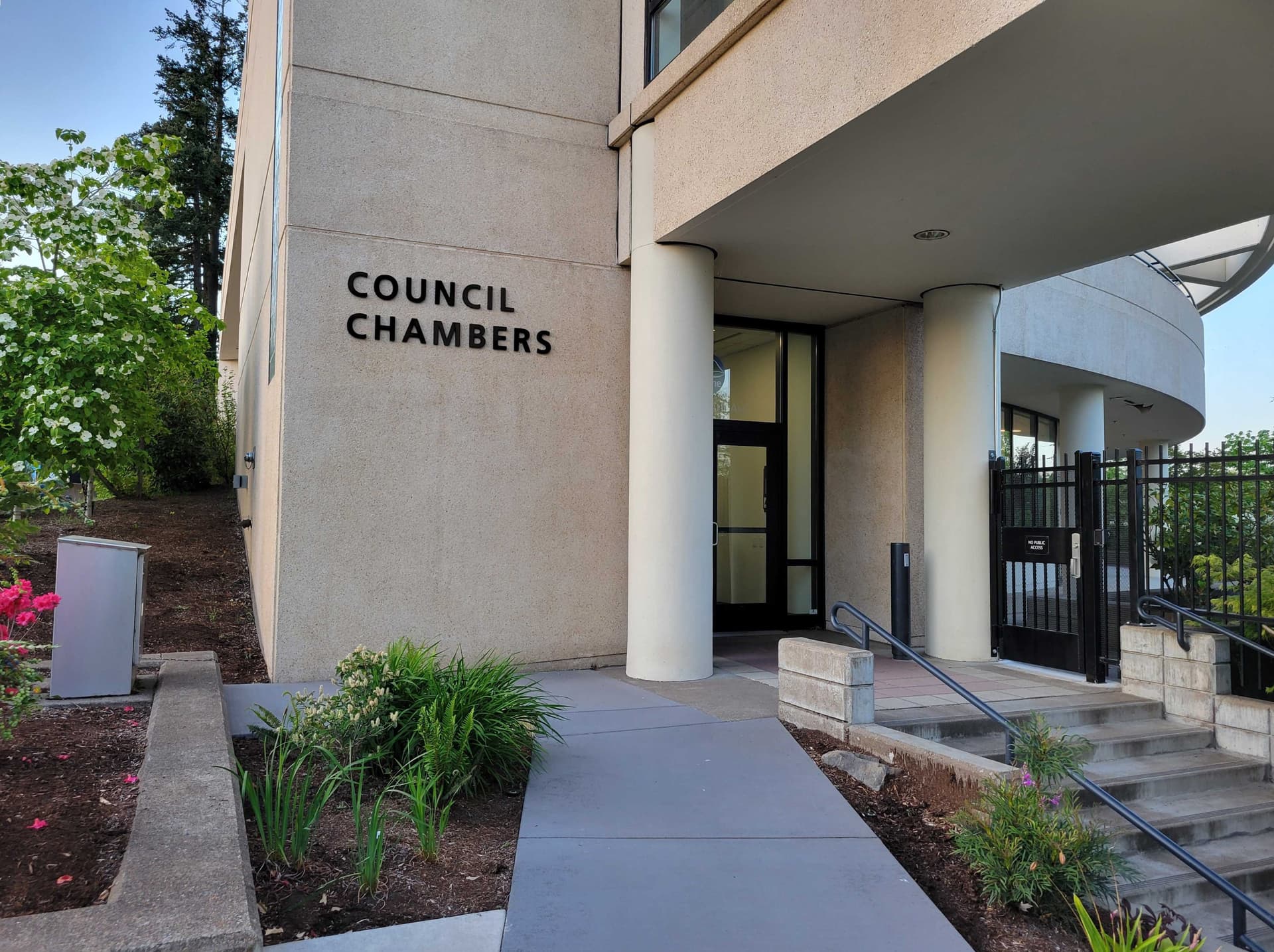
Eugene moved closer to writing a formal surveillance policy on June 17, as city leaders tried to turn the backlash over automated license plate readers into rules that would govern cameras, drones and other tools across city government. The discussion came after months of protest over Flock Safety’s ALPR system and the city’s rollback of that program, and council members framed the question as whether Eugene should limit its own power or simply describe practices already in place.
Councilor Alan Zelenka said Oregon law already set some baseline rules for ALPRs, but left too many gaps. He pushed for tighter standards that reflect Eugene’s values and civil liberties concerns, while staff said the broader effort would apply not just to license plate readers but to any surveillance technology the city might buy or keep using in the future. City officials also said they were not discussing bringing ALPR cameras back now.
The scrutiny in Eugene has centered on the same issues residents raised last year: transparency, retention, oversight, approval rules and public notice. The city’s ALPR transparency portal had already posted information on detections, acceptable and prohibited uses, retention, camera counts, searches, hot-list hits, outside organizations with access and a public audit feature. Even with that public dashboard, opposition remained intense enough that the city paused use of the cameras on October 14, 2025, pending further discussion and review.

The city’s surveillance footprint is wider than ALPRs. Staff said Eugene already uses drones through both police and engineering departments, while the police department relies on dash cameras and body worn cameras. All patrol officers have had body cameras since 2017, Eugene Police first added drones in April 2018, and the Eugene-Springfield Metro Drone Team formed on October 31, 2022. Downtown Eugene also has security cameras, including three announced in April 2023, and staff said no part of city government currently uses facial recognition. Similar technology already exists at the Hult Center and Eugene Airport.
To shape a policy, staff said they were reviewing approaches from Portland, Berkeley and San Jose. Some councilors favored San Jose’s model because it requires a privacy risk assessment before new technology is acquired, while Portland’s process requires a privacy impact assessment early in procurement. Eugene has already completed an inventory of technology that could be used for surveillance, and those reports are public. Staff said drafting the policy could take at least six months, especially if council members decide to review existing tools and department-specific rules, and several members said public input should be central.

The debate remains charged outside City Hall. The ACLU of Oregon sued Eugene over refusal to disclose ALPR camera locations after a mid-June 2025 public-records request was denied, and critics organized through Eyes Off Eugene-Springfield have warned that plate data could be used for immigration enforcement or to track people seeking abortion care. Eugene Police Chief Chris Skinner said in December 2025 that the department would keep looking for ALPR technology after ending its Flock contract, and he later said the cameras had contributed to more than 60 cases. At the state level, Oregon lawmakers advanced SB 1516 in 2026 to restrict sharing, vendor access and retention of captured plate data, sharpening the standards Eugene is now deciding whether to write into its own code.
This article was produced by Prism’s automated news system from verified source data, official records, and press releases, then run through automated quality and moderation checks before publishing. The system is built and supervised by the people who set the standards it runs under. Read our full AI policy.
Did this article answer your question?