Florence's Easter Cart Explosion Tradition Returns, Drawing Crowds to Oregon Coast
Florence's Scoppio del Carro exploded again Sunday as the Easter cart ceremony returned after pandemic disruptions, drawing holiday crowds to the Oregon coast.
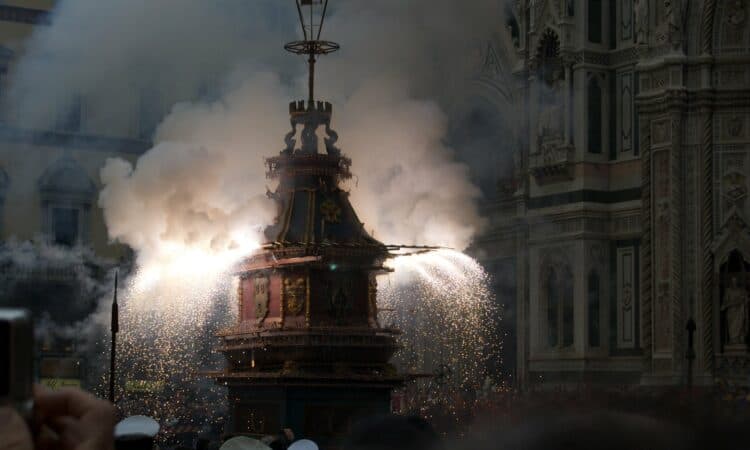
Nine centuries after the Florentine nobleman Pazzino de' Pazzi reportedly carried sacred flints from the Holy Sepulchre back to Italy, Florence lit its Easter fire again on Sunday. Florence, Oregon marked Easter on April 5 with the return of the Scoppio del Carro, the "Explosion of the Cart," one of the coast's most distinctive public rituals and a tradition that traces its origin to the First Crusade in 1101.
The celebration drew residents and visitors through a Saturday evening procession and a series of community gatherings that set the stage for Sunday's centerpiece: a symbolic lighting ceremony culminating in a controlled, fireworks-like ignition of the ceremonial cart. Organizers staged the events to mirror, in adapted form, the medieval pageantry of the ritual's Italian origins, where it was originally believed to ensure a good harvest and civic prosperity for the year ahead.
For local businesses, the timing could not have been better. Hotels, restaurants and craft vendors along Florence's coastal corridor absorbed a concentrated surge of foot traffic as spring holiday visitors arrived for the Easter weekend. City tourism partners have pointed to events like the Scoppio del Carro as central to their strategy of attracting off-season and holiday visitors, a model that gained new urgency following pandemic-era disruptions that sidelined many of Florence's signature public gatherings.
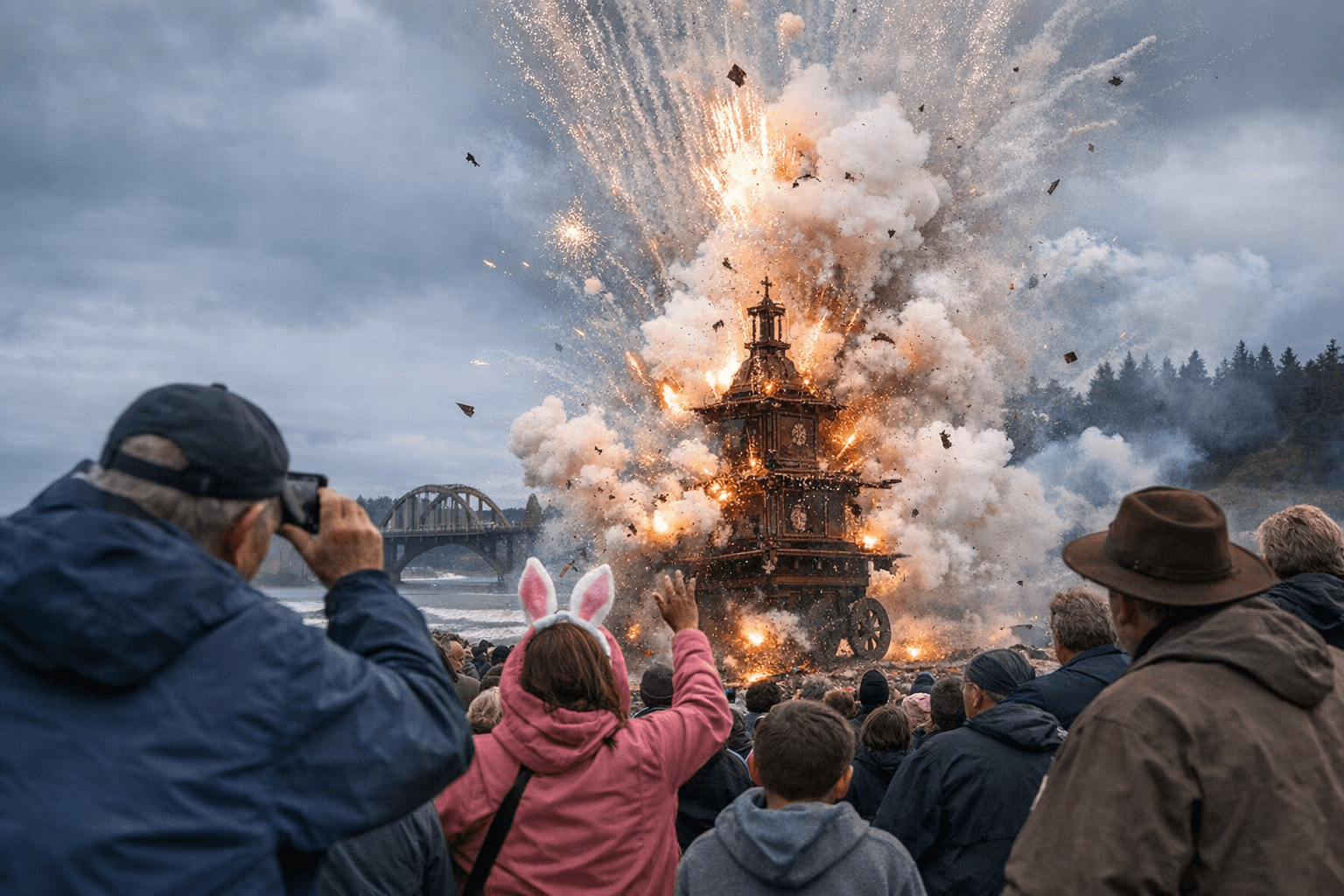
Crowds were large enough that organizers urged attendees to arrive early and plan for limited parking, a familiar challenge on spring holiday weekends along the coast.
The return of the ceremony also served a quieter purpose for longtime Florence residents: a chance to reconnect with a ritual that has become woven into the city's civic identity. For younger generations experiencing the event for the first time, it offered a window into a tradition that has endured, in one form or another, since a Florentine nobleman struck a spark from Jerusalem stone more than 900 years ago.
This article was produced by Prism’s automated news system from verified source data, official records, and press releases, then run through automated quality and moderation checks before publishing. The system is built and supervised by the people who set the standards it runs under. Read our full AI policy.
Did this article answer your question?