Hundreds honor Eugene activist Marion Malcolm at celebration of life
Hundreds filled Venue 252 in Eugene to honor Marion Malcolm, whose work with CALC, ROP and SAfER shaped Lane County organizing for decades.
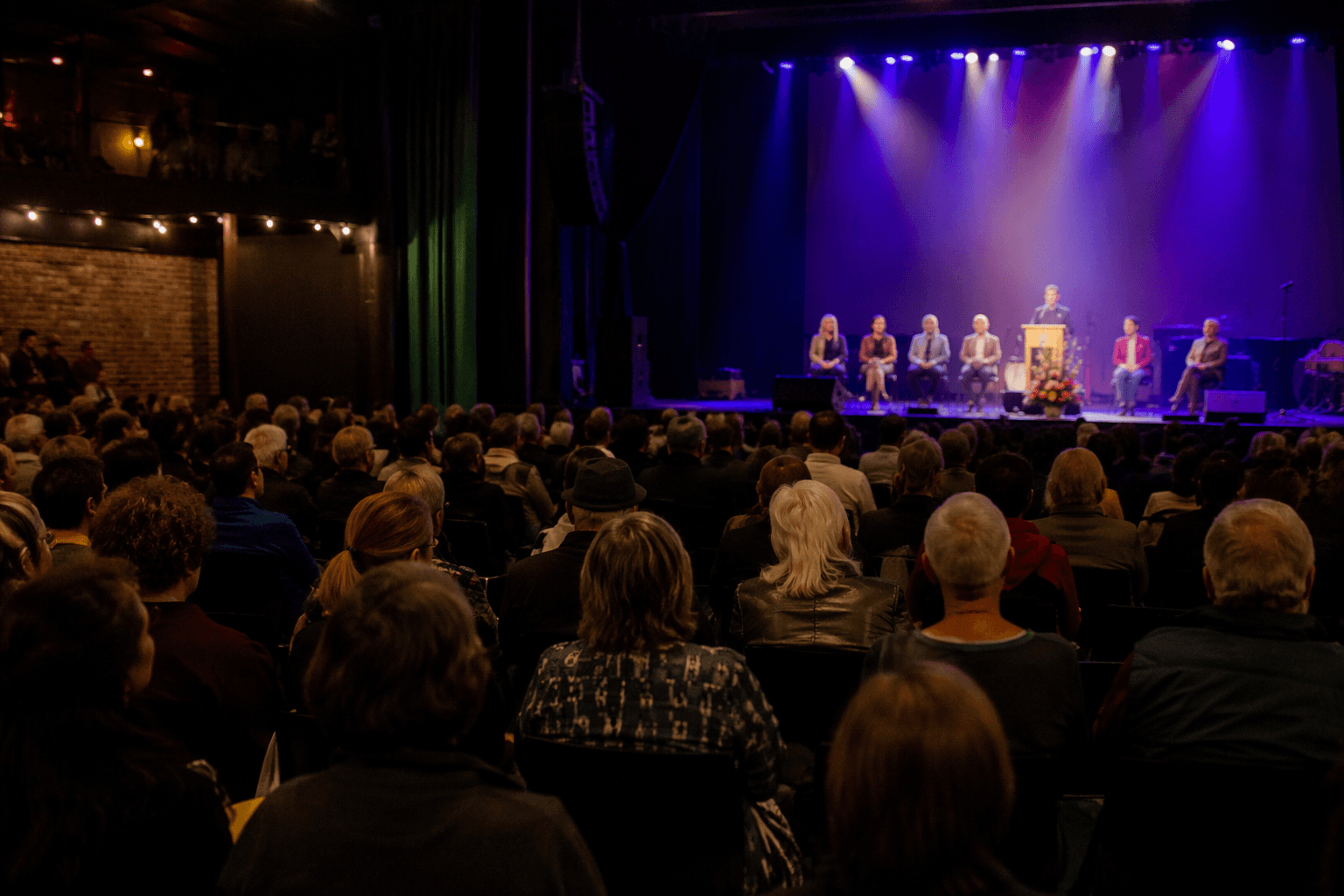
Hundreds of people filled Venue 252 in Eugene on July 20 to honor Marion Malcolm, a longtime community activist whose work reached across Eugene and Springfield for decades. The celebration of life drew a crowd that reflected how widely Malcolm was known in Lane County and how many local institutions carried her imprint.
Malcolm’s measurable civic legacy ran through the Community Alliance of Lane County, where she had worked since the 1970s, through the Rural Organizing Project board, where she served from 1996 to 1998, and through Springfield Alliance for Equality and Respect, a CALC program focused on human rights advocacy. Those roles tied her to the kind of neighborhood organizing and public-facing advocacy that rarely shows up in headlines until a life like hers is being marked by the people it touched.
The gathering at Venue 252 became more than a memorial. It was a public accounting of the ways Malcolm’s organizing shaped the city’s civic fabric, from grassroots work in Eugene to human-rights efforts in Springfield. Friends and family remembered her as a leader who did the steady work of building relationships, keeping people engaged and pushing local action forward over time.
A July 11 profile called Malcolm a longtime community organizer and described her as “respectful but relentless,” a phrase that fit the account of a woman who stayed active across multiple campaigns and organizations rather than attaching herself to a single cause. That span mattered in Lane County, where CALC, ROP and SAfER each played a role in sustaining activist networks and training new organizers.
Malcolm’s death brought those networks into one room, but the response also pointed to what remains after the crowd leaves. The organizations she helped carry, the people she mentored and the habits of civic participation she modeled are the parts of her legacy that still matter to Eugene residents now. The turnout at Venue 252 showed that her influence was not confined to one moment or one institution, but lived in the local organizing culture she helped build.
This article was produced by Prism’s automated news system from verified source data, official records, and press releases, then run through automated quality and moderation checks before publishing. The system is built and supervised by the people who set the standards it runs under. Read our full AI policy.
Did this article answer your question?