Koppers leases west Eugene land, neighbors brace for scrutiny
Koppers leased 35 acres off West 1st Avenue near Beltline, on a former landfill where enclosed buildings are banned, and west Eugene neighbors are bracing for the next round of scrutiny.
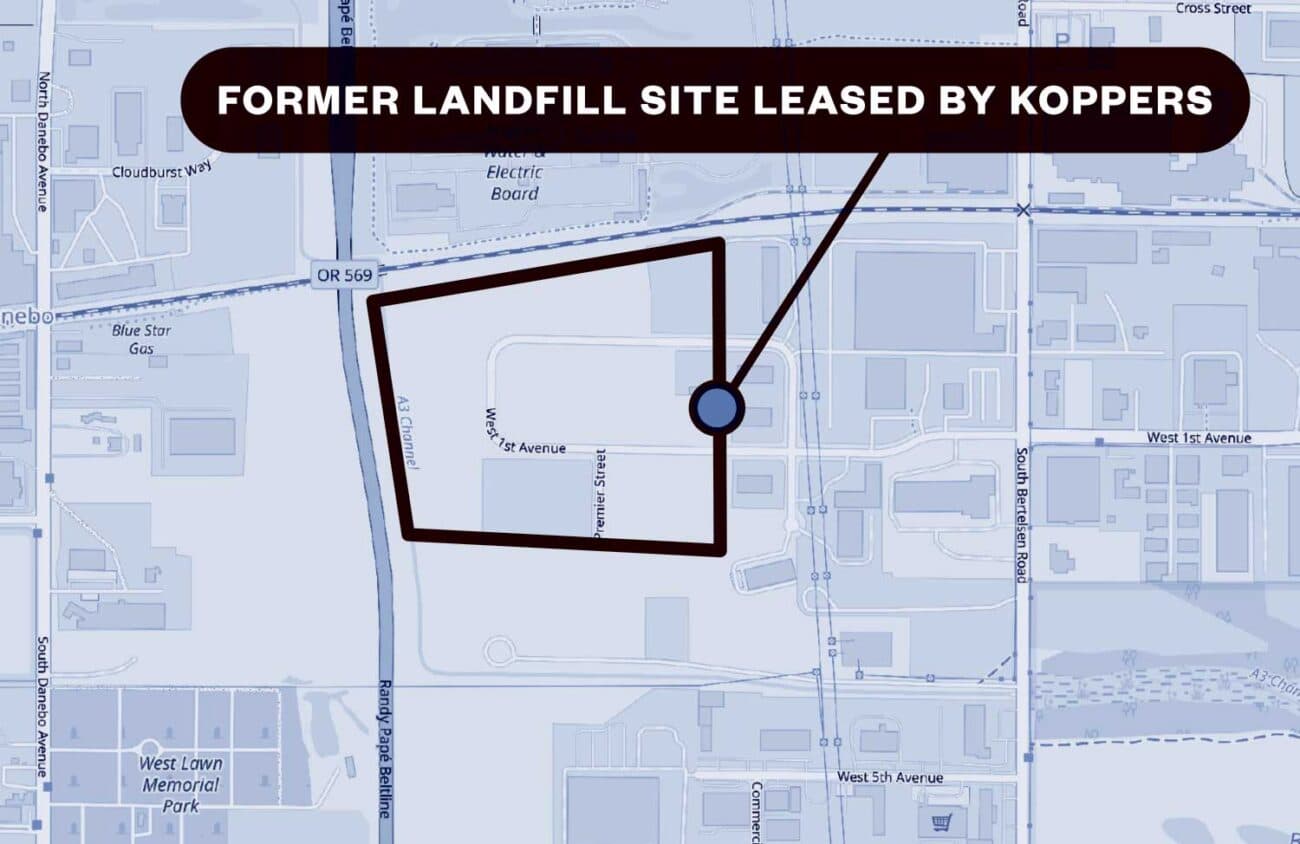
Koppers Holdings has taken control of 35 acres off West 1st Avenue near the Randy Pape Beltline, a west Eugene site with a long environmental history and a built-in land-use constraint: the state has banned enclosed buildings there because methane gas rises from buried garbage. The lease, signed Dec. 22, 2025, also gives the company an option to buy.
The company says it wants to use the property to store wood poles, not to soak them in toxic chemicals. Even so, the move lands in a part of Eugene where industrial reuse, neighborhood development and pollution concerns have collided for years, and where a large lease can quickly become a test of what the city is willing to allow next.

The acreage sits on the former Lane Plywood Cooperative mill site, adding another layer of industrial legacy to a parcel already marked by landfill restrictions. The location near one of the city’s main transportation corridors also raises practical questions about truck traffic, access and how much of the West 1st Avenue area could eventually be pulled deeper into industrial use if Koppers pursues a purchase.
That concern is amplified by the company’s broader footprint in Oregon. Koppers has said in a separate release about another property that it can help optimize its wood-treating and distribution network on the West Coast, language that will likely draw attention in a city where wood-treating pollution is already a live issue.
Just south and east of the new lease site, the former J.H. Baxter site remains one of west Eugene’s most visible environmental warning signs. The U.S. Environmental Protection Agency added the site to the Superfund National Priorities List on July 7, 2025, saying nearly 80 years of wood-treating operations released hazardous substances into soil, groundwater and sediment. EPA also completed removal of tanks and chemicals there in February 2026. The Oregon Department of Environmental Quality held a public meeting on the cleanup and investigation on July 12, 2023.
City leaders are also moving to tighten protections. Eugene’s Public Health Standards project was created to identify land-use changes that better protect people living near industrial areas, and the Eugene City Council discussed code amendments on March 9, 2026, directing staff to draft an ordinance and schedule a public hearing.
In west Eugene, and especially in the 97402 zip code, Beyond Toxics says decades of disproportionate industrial pollution have already taken a toll on air, water, soil and property values. That history is why a storage-only lease on West 1st Avenue is likely to be read locally as more than a simple real estate deal: it is another decision point in a neighborhood that has spent years fighting to limit what comes next.
This article was produced by Prism’s automated news system from verified source data, official records, and press releases, then run through automated quality and moderation checks before publishing. The system is built and supervised by the people who set the standards it runs under. Read our full AI policy.
Did this article answer your question?