Lane County dispatchers answer emergency calls, guide help across the county
A 911 call in Lane County starts with a dispatcher, and those first words can decide what help gets sent, how fast it arrives and how the scene unfolds.
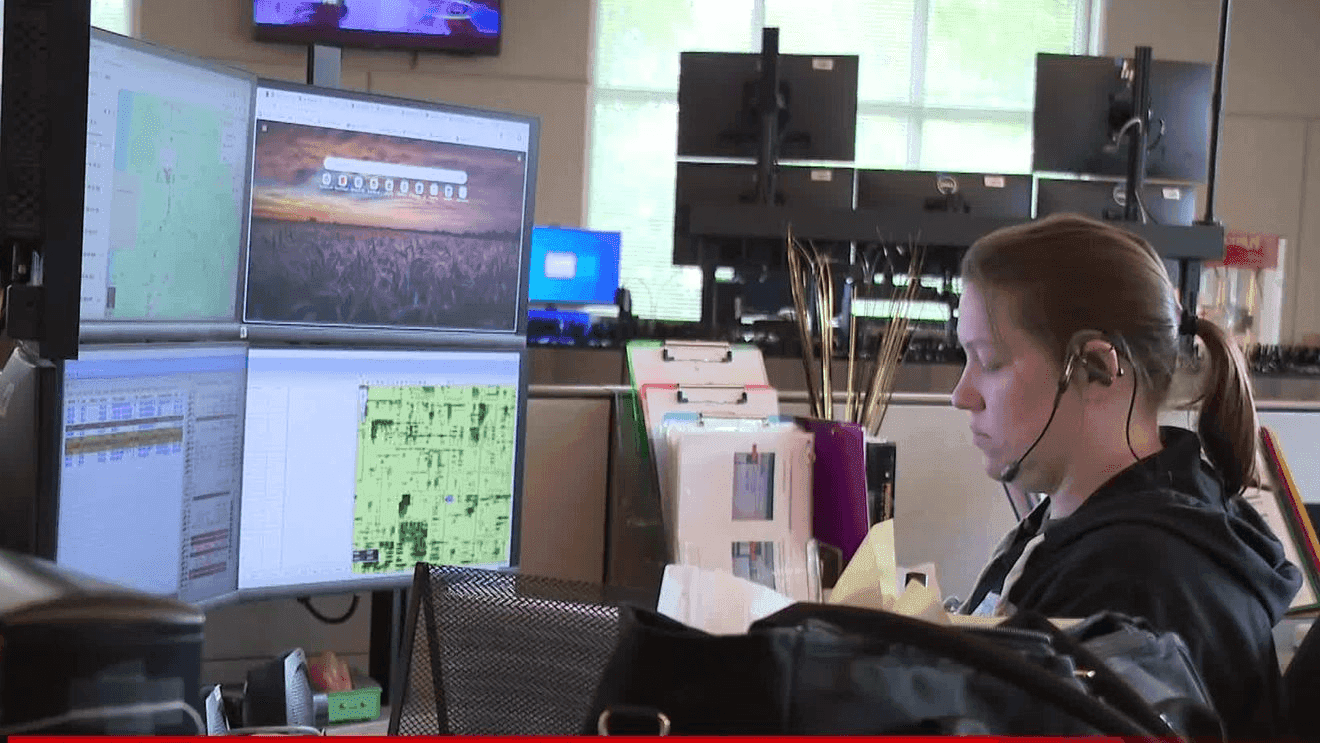
A 911 call in Lane County does not begin with sirens. It begins with a dispatcher at Central Lane Communications, listening for the details that turn panic into a plan and deciding whether police, fire or medical help should be sent first.
During National Public Safety Telecommunicators Week, the work usually stays out of sight. That is what makes it easy to miss how much rides on the person answering the phone. Dispatchers describe themselves as the first first responders because they are often the first voice a frightened, injured or confused caller hears, and their judgment helps set the pace for everything that follows.
The first voice on the line
At Central Lane Communications, the job is not just to answer calls. It is to sort through the opening seconds of an emergency and keep the caller calm long enough to gather the facts that matter most to the crews racing toward the scene. Eugene Police Officer Matthew Grose says dispatchers deserve far more recognition than they usually get, while Eugene Springfield Fire Chief Mike Caven says that calm voice on the radio can mark the start of someone’s worst day and help shape the outcome of a traumatic event.
That is the central public-safety lesson for Lane County. By the time firefighters, officers or medics arrive, a dispatcher has already helped determine what kind of help is needed, where it should go and how quickly it should be moved. John Helmer, a communications specialist, describes the work as absorbing other people’s distress while staying focused on getting help moving. That emotional load is part of the job every day, whether the call involves a medical emergency, a fire, a violent crime or a panicked caller who can barely explain what is happening.
The observance itself has a long history. National Public Safety Telecommunicators Week is held during the second full week of April each year. APCO International says it was conceived in 1981 by Patricia Anderson of the Contra Costa County Sheriff’s Office and later formally proclaimed by Congress in October 1991.
What dispatchers need from you first
The biggest mistake on a 911 call is often starting with too much story and too little substance. Dispatchers need the location, the type of emergency and any immediate danger first, because those details tell them which crews to send and how to guide the caller until help arrives.
In a medical emergency in Eugene, for example, the person on the line may be frightened or unable to speak clearly. In that moment, the dispatcher still has to pull out the essentials, keep the caller engaged and move the response forward. In a fire in Springfield, the caller may be focused on smoke, noise and getting family members out. The dispatcher has to cut through the chaos, get the address and understand whether people are trapped, because that is what determines how fast the right units get rolling.
- Giving a long explanation before saying where the emergency is
- Hanging up too soon after the first call
- Assuming dispatch already knows the exact location
- Talking to someone else instead of staying with the dispatcher
- Forgetting to mention if a person is hurt, a fire is spreading or a weapon is involved
Common caller mistakes can slow that process:
The first seconds matter because dispatchers are not just taking notes. They are making decisions in real time about whether the response should include police, fire or medical resources, and they often do it while trying to keep a caller calm enough to answer the next question.
Why Lane County depends on this center
Central Lane Communications sits at the center of a countywide system that serves people from the coast to the mountains. The Lane County Sheriff’s Office says it is the primary 9-1-1 response agency for more than 117,000 people in Lane County, which makes every answered call part of a much larger public-safety network.
The workload is heavy. Earlier KVAL coverage reported that Central Lane Communications receives more than 1,000 calls per day. A 2017 KVAL report said the center handled 301,379 incoming phone calls in a year, including 121,321 9-1-1 emergency calls. Even though those figures are from several years ago, they show the scale of what dispatchers manage and why the center is a critical piece of local infrastructure.
Lane County also uses public-facing incident and crime-mapping tools, which show how dispatch data feeds real-time information for the community. That connection is easy to overlook, but it is one more reminder that a call to Central Lane Communications does not disappear into a void. It becomes part of the county’s response record, helping shape what residents can see and how agencies deploy resources.
How Oregon’s 9-1-1 system supports the work
The Lane County operation sits inside a statewide framework that was established by the Oregon Legislature in 1981. According to the Oregon Department of Emergency Management, Oregon now has 40 Public Safety Answering Points, and telecommunicators remain a critical public safety workforce with job openings continuing across the state.
OEM describes dispatchers and call takers as the calming voice on the other end of the line, guiding people through some of the hardest moments of their lives while coordinating the right emergency response. The system itself has also evolved over time. Oregon moved to statewide Enhanced 9-1-1 wireline coverage on January 1, 2000, a milestone that helps show how much the state’s emergency communications network has grown since the original 1981 program began.
The funding model reflects that public role. OEM says the 9-1-1 tax is $1.25 per phone line or device capable of reaching 9-1-1. That revenue supports a system built to provide uniform, prompt and efficient access to public and private safety services across Oregon.
A job that still needs more people
The staffing picture is part of the story too. In September 2025, OEM launched a statewide 9-1-1 job board in response to shortages across Oregon’s PSAPs. That move underscored something many callers never see: the people who answer emergency calls are essential, but they are also working in a profession that has struggled to keep enough trained staff.
That strain makes the public-facing side of the job even more important. When a call comes in from Lane County, the dispatcher is the one who has to stay steady, gather enough information to send the right help and keep the emergency from getting worse before responders arrive. In a county where one center helps cover tens of thousands of people and where the first voice on the line may be the most important one of the day, the work behind the headset is public safety in its purest form.
This article was produced by Prism’s automated news system from verified source data, official records, and press releases, then run through automated quality and moderation checks before publishing. The system is built and supervised by the people who set the standards it runs under. Read our full AI policy.
Did this article answer your question?