Lane County photographer Gary Parker, known for celebrity portraits, dies
Gary Parker shot Steve Jobs and Lane County families with dwarfism, and his Leaburg work pushed disabled people into view.
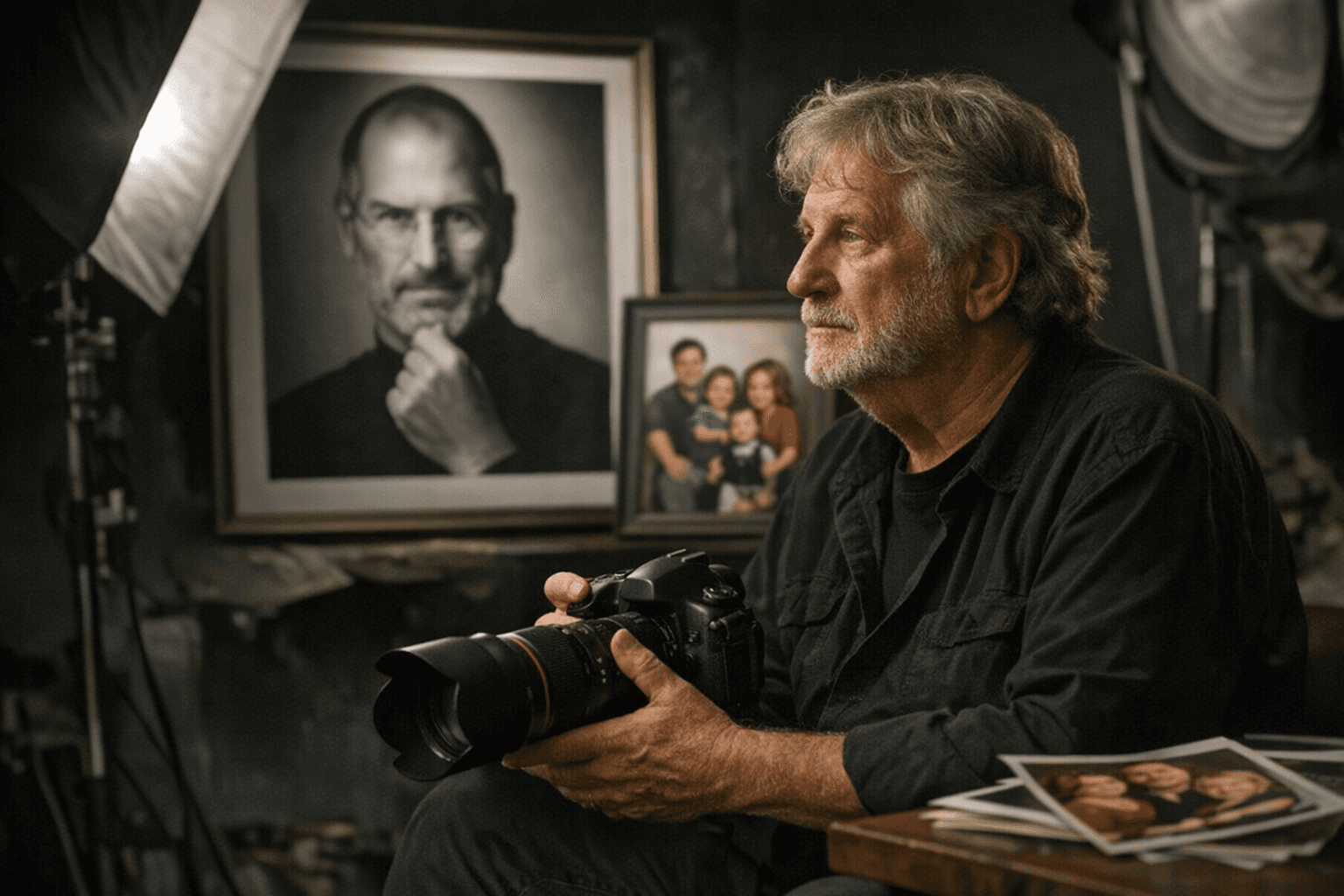
Gary Parker, the Leaburg photographer whose portraits ranged from Steve Jobs and Guy Fieri to children and adults with dwarfism, died Jan. 5 and left behind a body of work that broadened who was seen, remembered and taken seriously in Lane County.
The Register-Guard described Parker as one of the most prolific photographers of little people and said he had called Leaburg home for the past 10 years. The paper also said he fought against disabled erasure with “images of positivity,” a description that fits the throughline of his career: Parker did not just photograph well-known people, he made sure people often left out of the frame were also represented with care and dignity. Little People of America later called him a nationally renowned, award-winning photographer and said he strongly encouraged families of children with dwarfism to join the organization and involve their child in it.
Parker began his career in the newspaper business before building a portfolio that reached far beyond Lane County. His website says he photographed Steve Jobs with Laurene Jobs on Aug. 15, 1998, the day Apple released the original multicolored iMac, after Jobs’ worldwide satellite feed near Apple. Over the years, Parker’s subjects included Bill Gates, Tim Cook, Larry Ellison, Jensen Huang, Marc Andreessen, Gordon Moore, Shuji Nakamura, Ajay Bhatt and Vivek Ranadive, placing a Leaburg-based photographer in the orbit of some of technology’s best-known names.
Photographer Ron Martinsen said in a memorial post that Parker died on Monday, Jan. 5, 2026, and remembered him as a mentor and master of light and color. That legacy now sits in two places at once: in celebrity portraits that traveled far beyond Oregon, and in the local images that helped define how Lane County saw disabled people, families and neighbors for decades.
The Register-Guard published a portfolio of Parker’s work on April 12, a reminder that his most important contribution may have been less about fame than access. In a region where many people are known only through narrow labels or passing headlines, Parker built a visual record that insisted on presence, variety and worth.
This article was produced by Prism’s automated news system from verified source data, official records, and press releases, then run through automated quality and moderation checks before publishing. The system is built and supervised by the people who set the standards it runs under. Read our full AI policy.
Did this article answer your question?


