Lane County Students Gain Research Experience Through Geoscience Mentorship Program
A University of Oregon hosted partnership completed its first year long Geoscience Education and Inclusion Twinning Program, placing six undergraduates on fully funded research projects that produced conference presentations and community outreach. The program strengthens local scientific capacity, supports student retention in STEM, and yields research relevant to coastal planning in Lane County and beyond.
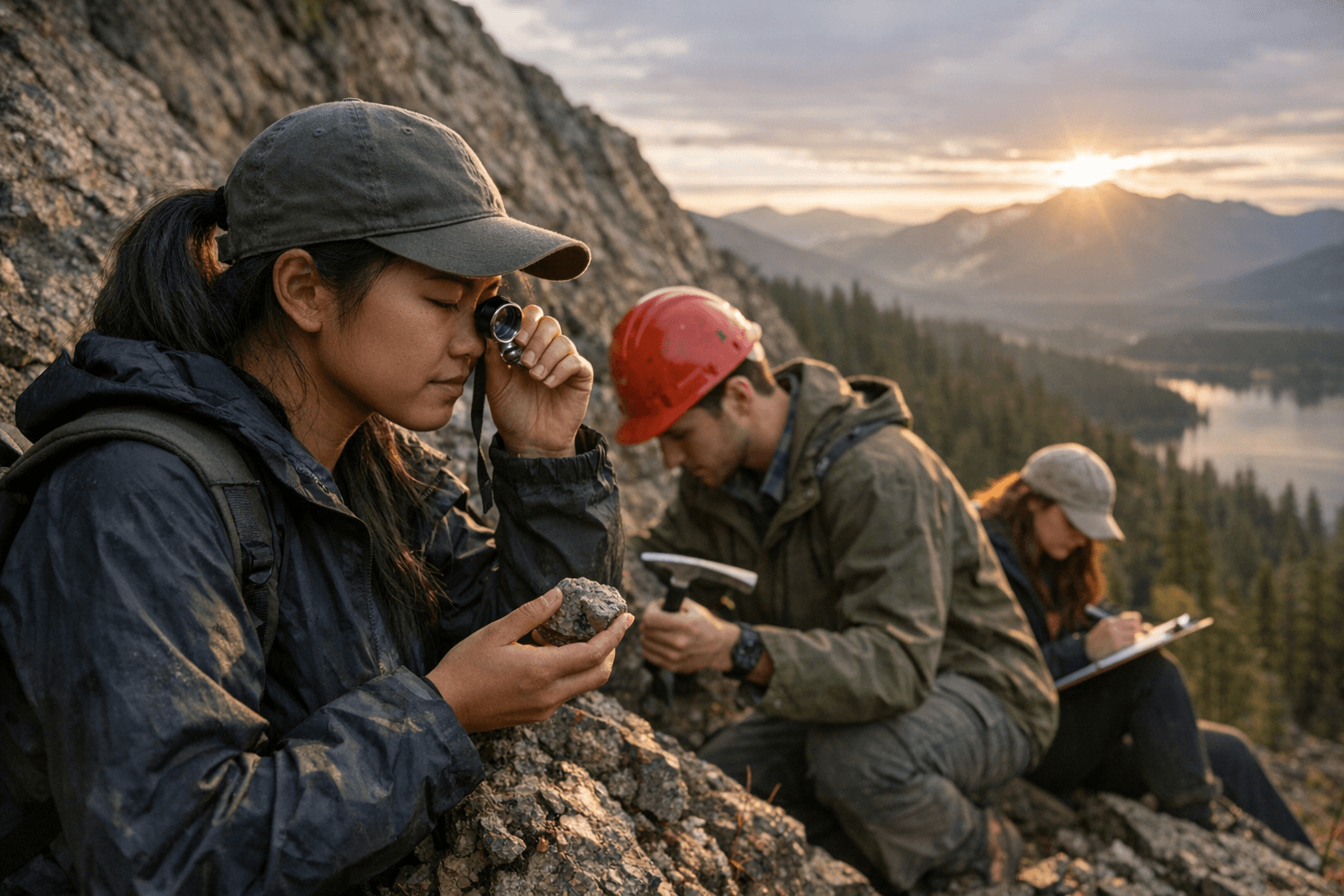
CRESCENT, a research partnership hosted at the University of Oregon, has concluded the inaugural year long Geoscience Education and Inclusion Twinning Program, delivering paid, mentored research experiences to six undergraduate students during 2024 to 2025. The cohort included students from the University of Oregon, Portland State University, San Jose State University, the University of Texas at El Paso, and Southwestern Oregon Community College. Participants completed fully funded projects, presented findings at the Geological Society of America and the CRESCENT Annual Meeting, and engaged in public outreach activities.
Project topics spanned subduction dynamics, volcanic system impacts, subduction strain analysis, and sea level rise research focused on Coos Bay. Those locally relevant studies provide data and trained personnel that can inform county planning and coastal resilience work. Program manager Dr. Shannon Fasola emphasized that year round funding allowed students to focus on research without financial distraction and to develop both technical and communication skills. Students also brought their work into the community by visiting elementary schools and making research more accessible to nontechnical audiences.
For Lane County the program represents several policy and institutional implications. The concentrated, paid mentorship model addresses common barriers that force students to choose paid work over research opportunities. That reduces attrition from STEM pipelines and increases the likelihood that trained students remain engaged with regional research and workforce needs. Research on sea level rise and subduction processes also contributes empirical knowledge at a time when local governments are facing mounting pressure to plan for coastal hazards and infrastructure needs.
Institutionally, the Twinning Program demonstrates the value of multi campus partnerships that include community colleges and distant universities. Hosting the initiative at the University of Oregon gives Lane County a focal point for collaborative geoscience work, while the inclusion of partner institutions expands recruitment and diversifies perspectives. The program raises the county profile at national scientific venues through student presentations at professional conferences, which can in turn help attract research funding and partnerships that benefit local institutions.
Community engagement is another measurable outcome. Student visits to schools introduce K through 12 students to geoscience careers and build public scientific literacy, a key component of civic resilience when policy decisions involve complex environmental data. That public engagement also creates pathways for future recruitment and encourages local stakeholders to consider sustained investment in hands on science education.
As CRESCENT looks toward future cohorts, the program offers a model for how year long, fully funded mentorship can produce immediate research outputs and longer term benefits for regional planning, workforce development, and civic engagement. The first cohort’s work establishes a baseline of expertise and public connection that local officials and education leaders can build on as they plan for climate related and geological challenges.
This article was produced by Prism’s automated news system from verified source data, official records, and press releases, then run through automated quality and moderation checks before publishing. The system is built and supervised by the people who set the standards it runs under. Read our full AI policy.
Did this article answer your question?