Lorane grew from stage stop to enduring Lane County community
Lorane began as a stage stop on an old travel corridor and became a wine-country crossroads, with vineyards, a store and more than 700 residents.
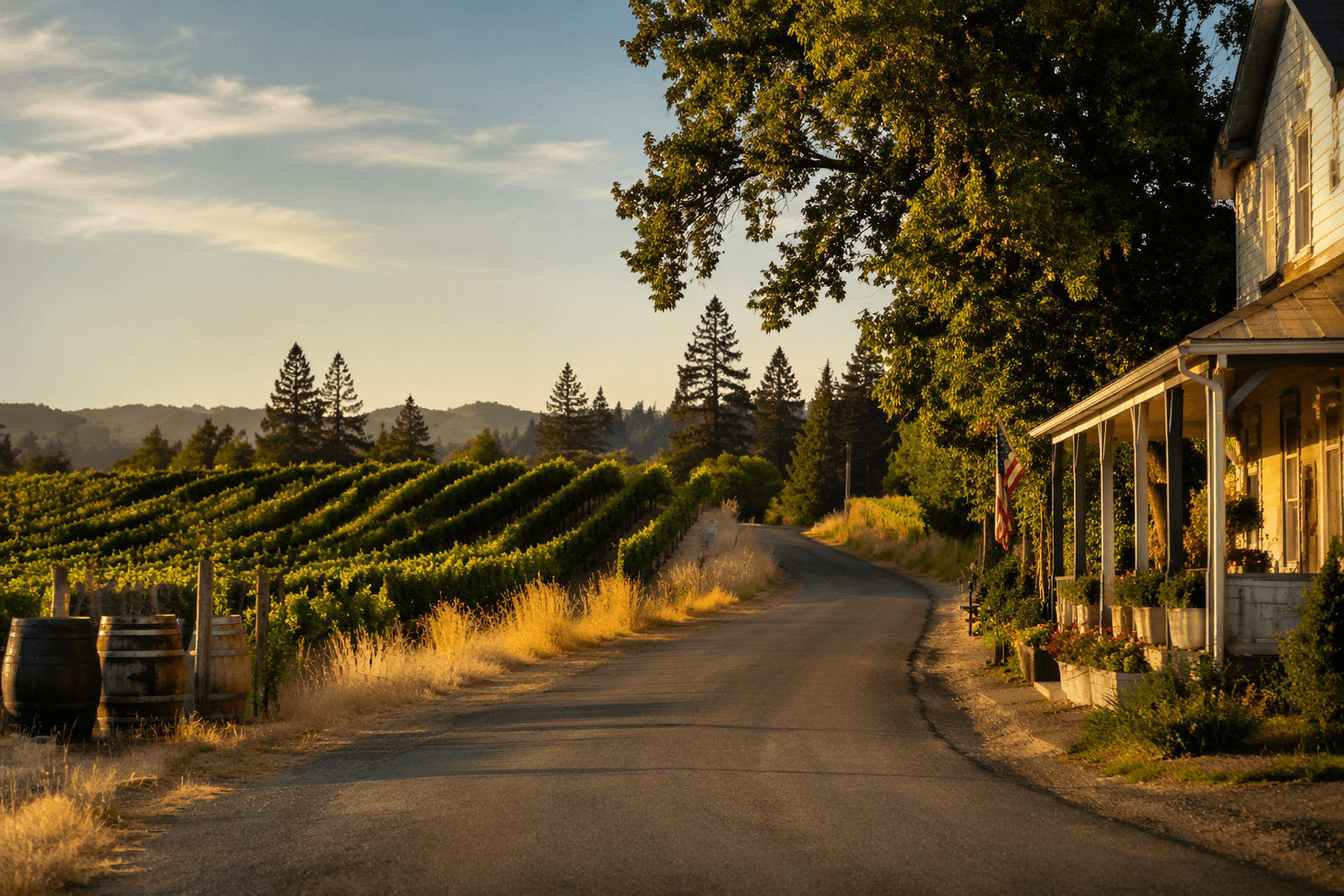
Lorane’s story begins on a road that once carried stagecoaches and now pulls drivers toward tasting rooms, farm businesses and a small cluster of services between Eugene and Cottage Grove. The unincorporated Lane County community sits a few miles from the headwaters of the Siuslaw River, about 22 miles southwest of Eugene and 12 miles west of Cottage Grove. What has stayed constant is its role as a stopping point, even as the local economy moved from frontier travel to lumber, orchards and wine.
From trail stop to named community
White settlement in the area dates to the early 1850s, when the Donation Land Claim Act of 1850 drew settlers west. William Martin was the earliest white settler recorded in the area, arriving in 1850, and the community took the name Lorane in 1888. Long before that naming, the valley was already tied to movement: the Applegate Trail and a stage route passed nearby, and the corridor linked travelers between Fort Vancouver and Fort Umpqua.
By 1853, that trail had become a stagecoach route, and in 1857 it was designated Territorial Road. Travel slowed in the 1870s when railroad travel became available, but the area remained part of the region’s working travel network. That history gives Lorane its defining shape today: it was never just a place on the map, but a place people passed through, paused in and returned to.
The Cartwright House and the road economy
Four miles south of Lorane, Darius B. Cartwright built the Cartwright House, later known as the Mountain House, between 1853 and 1855. It was the first business in Lorane and served as a landmark farm and stage stop along the California-Oregon Trail. As a hotel and stopping place, it offered the services and accommodations that made the route workable for people and freight moving through Lane County.
The Mountain House became one of the most recognizable early markers of the valley’s importance, described as a major stage stop between Portland and San Francisco. Its physical presence is gone now, after demolition in 1973, but the site still explains why this small community mattered beyond its size. Lorane grew around the practical needs of travel, rest and exchange, and that pattern still echoes in the way the area functions.
How the valley fed itself, then changed course
For more than 100 years, logging and lumber were Lorane’s main resource. More than 29 mills and lumber companies operated within a few miles of town, which places the community squarely inside Lane County’s industrial history rather than outside it. The roads that once moved stage traffic later served mills, loggers and the supplies that kept them running.
Agriculture later took a different form. In the early 1900s, Lorane Valley orchards shipped apples, pears and plums to markets in Oregon and California. Over time, the same 1,800 acres that had held orchards became vineyards supplying grapes for Oregon wine, a shift that turned the valley from fruit-growing country into wine country without erasing its agricultural identity.
That change fits a larger regional pattern. The Willamette Valley is Oregon’s oldest wine region, home to more than 700 wineries and two-thirds of the state’s wineries and vineyards. Lorane’s vineyards are part of that broader transformation, but the valley’s scale keeps the story local: the same land that once supported orchards and timber now anchors a quieter, more specialized farm economy.
What Lorane looks like now
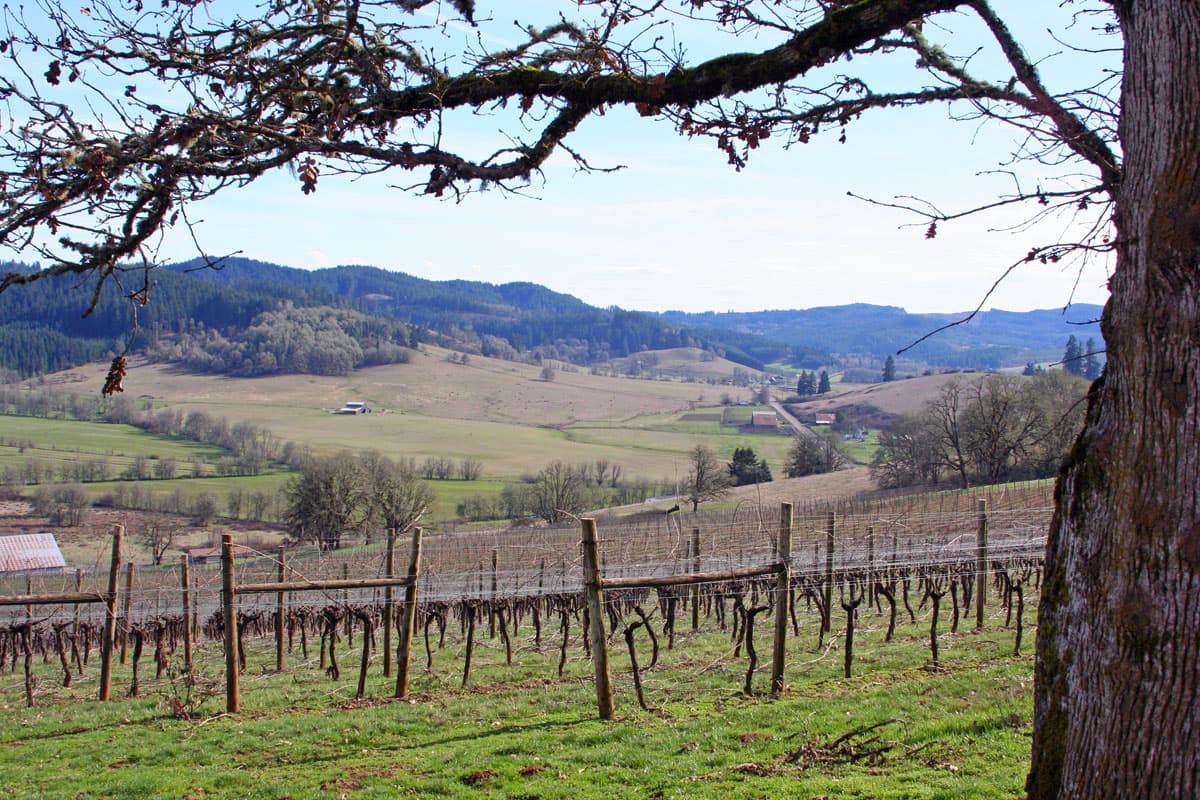
Lorane remains an unincorporated community, and vineyards and wine-making are now its most prominent economic resources. Three wineries offer tours and tastings, and the day-to-day life of the place still depends on practical services as much as on visitors. A general store, a publishing office, gasoline and a delicatessen give the community a working center that is easy to miss if you only think of it as a wine stop.
King Estate is one of the best-known nearby names. Ed King Jr. founded the winery in 1991 after finding what he saw as an ideal 600-acre cattle ranch near Lorane while buying hay for his horses. Chateau Lorane also operates at 27415 Siuslaw River Road, keeping wine production visibly tied to the valley itself rather than to a distant commercial district.
Population figures reinforce how small the community remains. No official census count is recorded for Lorane, but the fire district lists more than 700 residents within its boundaries. That number helps explain how the area can support both destination businesses and basic local services while staying compact enough that roads, volunteer protection and neighbor-to-neighbor ties still matter.
Lorane endures because it keeps adapting without losing the shape of the road that formed it. Stagecoaches gave way to railroads, orchards gave way to vines and mills, and the old stopping point became a small wine-country community with a still-working center of its own.
This article was produced by Prism’s automated news system from verified source data, official records, and press releases, then run through automated quality and moderation checks before publishing. The system is built and supervised by the people who set the standards it runs under. Read our full AI policy.
Know something we missed? Have a correction or additional information?
Submit a Tip