Low mountain snowpack raises summer water and wildfire concerns
Oregon's mountain snowpack is far below normal in basins that feed Lane County, raising concern for summer water supplies and wildfire risk.
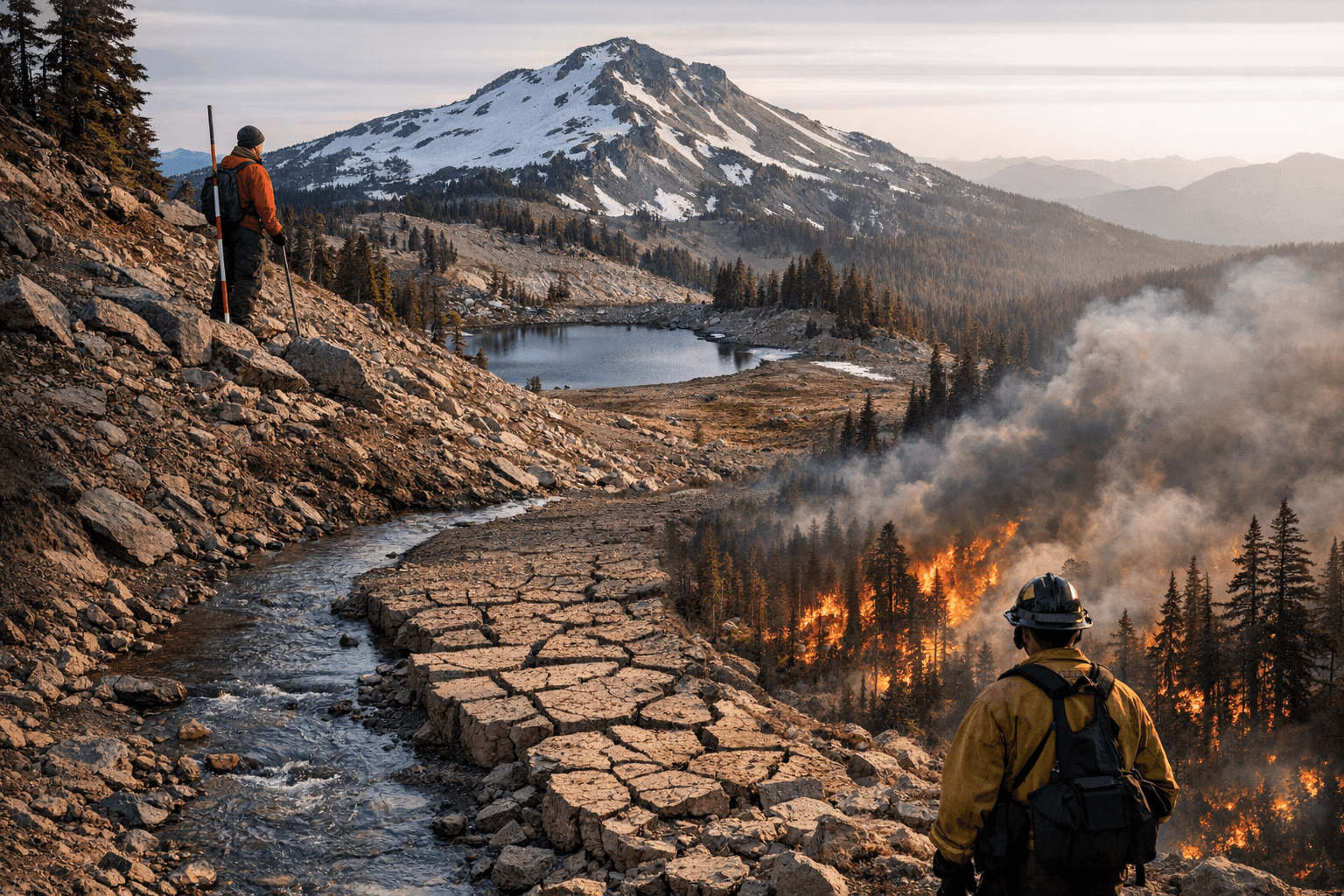
Mountain snowpack across much of Oregon fell well below normal this winter, including the western and central basins that supply water to Lane County, according to federal and state monitoring. Many measuring sites were at less than 50 percent of their typical snowpack for mid-January, with some reporting levels in the 30s, a shortfall analysts linked to unusually warm temperatures that have shifted precipitation from snow to rain and hastened melt.
Data released Jan. 13 by the U.S. Department of Agriculture and the Oregon Water Resources Department underscored the scale of the deficit. The shortfall matters locally because mountain snowpack functions as a natural reservoir: it releases water steadily through spring and summer months to sustain river flows, refill reservoirs and support irrigation. Reduced snow storage increases the likelihood of lower streamflows and depressed reservoir levels later in the season, with consequences for farms, municipal supplies and ecosystems in the Willamette basin and tributaries affecting Lane County.
Parts of Lane County and neighboring counties were already flagged as abnormally dry, creating a compounding risk ahead of the typical late-spring runoff period. State and federal analysts cautioned that the warm winter pattern both reduced accumulation and accelerated melt, compressing the window in which snow becomes available for downstream uses. Officials also noted that some increase in snowpack remained possible before spring, but the overall deficit reduced the margin for drought relief.
Policy implications are immediate for water managers and elected leaders. Reservoir operations, irrigation scheduling and allotments may require adjustment if spring inflows do not materialize. County emergency management, state forest protection and local fire agencies will need to factor drier conditions into preparedness plans as fuel moisture trends respond to warm temperatures and limited snow cover. The gap in snow storage also sharpens questions about long-term investments in water infrastructure, conservation programs and landscape-level fuel reduction to reduce wildfire risk.
For residents, the shortfall signals a season in which conservation and early planning will matter. Local governments and water districts will monitor stream gauges and reservoir forecasts closely and may consider temporary measures to stretch supplies. Recreational economies that rely on sustained spring and summer flows should also prepare for variability.
Officials will continue updating forecasts as additional winter storms arrive; any late-season snow could mitigate impacts. Until then, the current readings leave Lane County facing a narrower margin for water security and an elevated need for coordinated local responses in the months ahead.
Know something we missed? Have a correction or additional information?
Submit a Tip