Rollover log truck closes key Eugene freeway ramp for hours
A rollover log truck shut the westbound I-105 ramp to southbound I-5 for about four hours, spilling logs and fuel at Eugene’s busiest interchange.

Drivers headed through Eugene’s I-105 to I-5 connection faced a major morning backup after a loaded log truck rolled on the southbound I-5 ramp and closed the route for about four hours. The crash happened around 6:05 a.m. on May 21 at the Pacific Highway interchange, blocking one of the city’s most heavily used freeway links and forcing commuters, freight haulers and nearby traffic to reroute.
Oregon State Police said the 2020 Peterbilt was traveling westbound on Interstate 105 and entered the southbound Interstate 5 ramp at at least 44 mph, above the ramp’s 35 mph advisory speed. The truck, which weighed about 80,000 pounds, rolled over in the curve, struck an Oregon Department of Transportation guardrail and spilled logs onto the ramp and onto Garden Way. Fuel also leaked from the truck, adding a hazmat cleanup to the response.
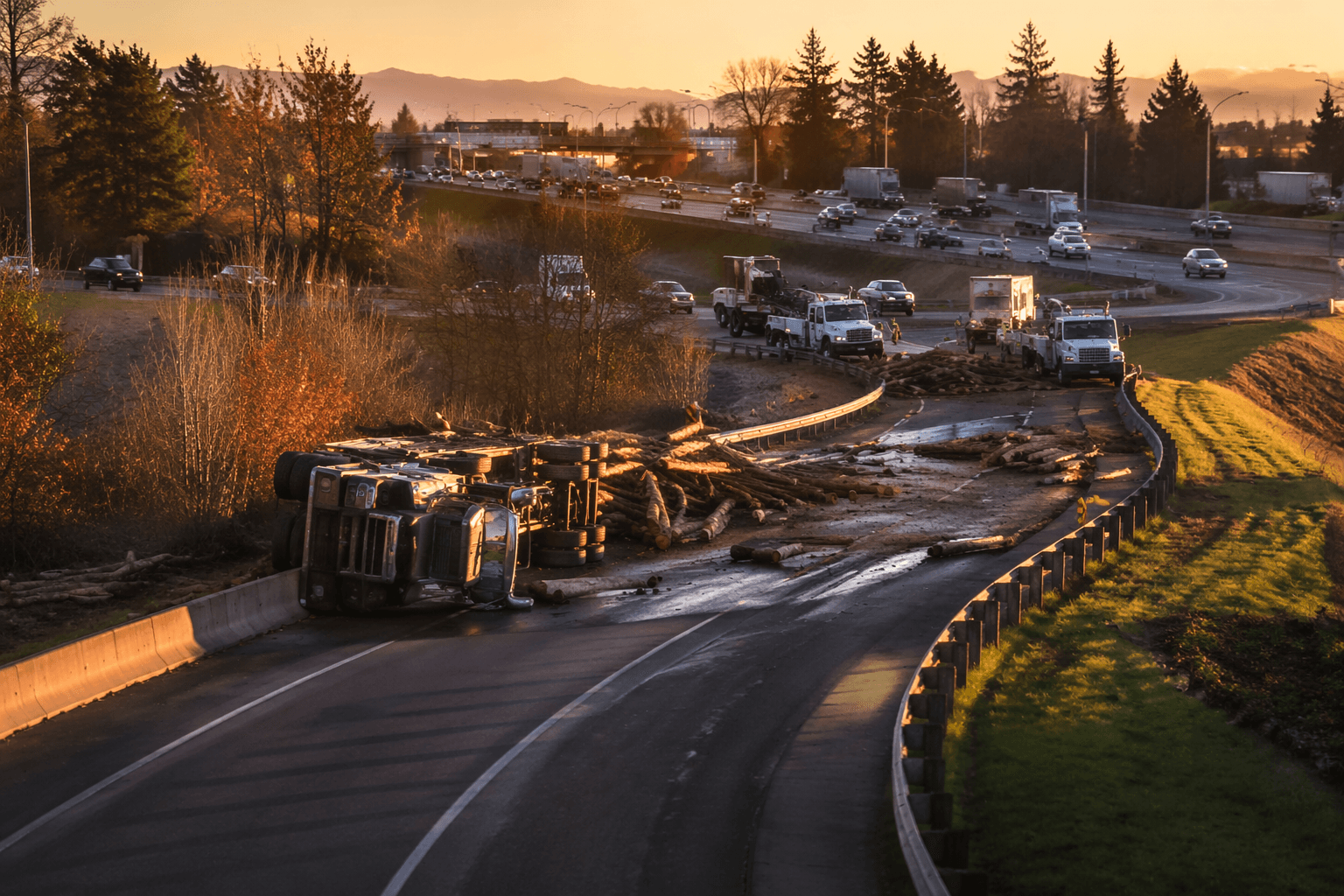
The shutdown hit more than just the ramp itself. Eugene police told motorists to avoid North Garden Way from Westward Ho Avenue to South Garden Way/Commons Drive while crews worked the wreck, and drivers on westbound I-105 at the interchange were warned to expect delays. The log truck’s size and the fuel spill slowed the cleanup, with hazmat crews handling the contamination before the scene could be cleared and A+ Towing recovered the vehicle.
No injuries were reported, but the crash underscored how quickly a single wreck can jam a critical connector in Lane County’s transportation network. I-105 is the Eugene-Springfield spur that ties into OR 126 and feeds Interstate 5, making the interchange a daily choke point for commuters, transit detours and regional freight traffic. Oregon Department of Transportation says its TripCheck system provides live information on congestion, closures, incidents and cameras, and it is the main tool drivers use when a crash like this forces a sudden reroute. ODOT also says advisory speed signs are based on traffic conditions and can change in real time, while the agency’s Traffic-Roadway Section establishes speed zones on Oregon highways. In this case, the numbers told the story: a heavy log truck, a sharp curve, a speed above the posted advisory and a four-hour closure at one of Eugene’s most important freeway connections.
This article was produced by Prism’s automated news system from verified source data, official records, and press releases, then run through automated quality and moderation checks before publishing. The system is built and supervised by the people who set the standards it runs under. Read our full AI policy.
Did this article answer your question?


