Analysts Warn Middle East Conflict May Spike Gas Prices in Southeastern Colorado
Gas prices in southeastern Colorado have surged since U.S.-Israeli strikes on Iran began Feb. 28, with analysts warning the conflict could push costs even higher at the pump.

Regional energy-market analysts warned last week that the ongoing U.S.-Israeli conflict with Iran poses a direct threat to gas prices in southeastern Colorado, a region already absorbing some of the sharpest fuel cost increases in the state.
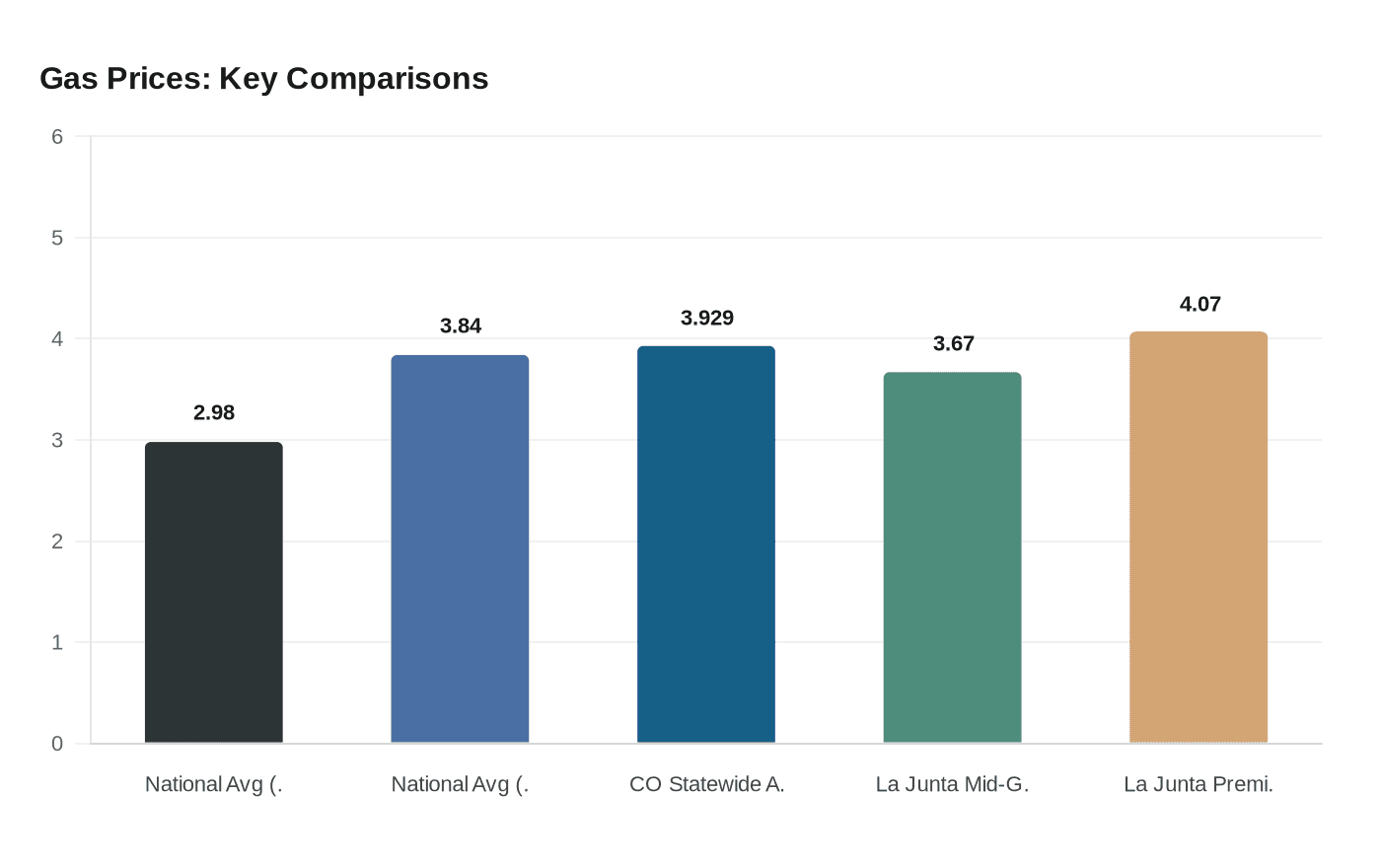
The national average for a gallon of regular gasoline jumped to over $3.84 by March 19, up from $2.98 before U.S. and Israeli strikes on Iran began on Feb. 28. Western states currently hold the highest fuel averages in the country, with Colorado among the most expensive markets. AAA's Colorado statewide average now stands at $3.929 per gallon. In La Junta, mid-grade gas has reached $3.67 per gallon, with premium averaging $4.07.
Matt McClain, an analyst with GasBuddy, said "markets hate volatility" and that the situation in the Middle East "has created a lot of jittery nerves," sending oil prices higher and pulling gasoline prices up with them. Al Salazar, an analyst with energy industry consultant Enverus, noted that "gasoline prices and oil prices generally follow each other; they are highly correlated."
The mechanism connecting conflict halfway around the world to pump prices in Trinidad or La Junta is the global structure of oil markets themselves. Even though the U.S. draws heavily on domestic, Canadian and Mexican oil, it still matters what happens in the Persian Gulf because oil is bought, sold and priced on an international market in dollars, with pricing decisions made on the margin. The Strait of Hormuz, which analysts call one of the most critical chokepoints in the global energy system, normally carries approximately one-fifth of the world's oil trade.
The initial jump in oil prices from $65 to $75 per barrel reflected traders pricing in risk at the outset of the conflict, while the subsequent rise from $75 to $85 reflects what analysts describe as real risk materializing. When markets closed recently, crude oil was trading at $90.90 per barrel.
Southeastern Colorado motorists are also contending with a seasonal factor that compounds the geopolitical pressure. Refineries typically go offline for maintenance ahead of summer production during this time of year, with the switch to summer-blend fuel expected to add roughly 15 cents per gallon on its own.
Economists have estimated that each sustained $10-per-barrel incremental increase in crude adds 0.2% to 0.3% to inflation, meaning the roughly $30-per-barrel run-up since the conflict began could add approximately half to a full percentage point to annual inflation. For Las Animas County residents, where long driving distances between Trinidad, Walsenburg and communities further east make fuel costs a significant household line item, those fractions of a percentage point translate into real dollars every week.
Analysts note that if the conflict does not keep the Strait of Hormuz materially closed for long, prices could ease, but a sustained disruption that fundamentally removes Gulf supply for an extended period would likely sustain elevated prices. For now, the trajectory at southeastern Colorado pumps points upward.
This article was produced by Prism’s automated news system from verified source data, official records, and press releases, then run through automated quality and moderation checks before publishing. The system is built and supervised by the people who set the standards it runs under. Read our full AI policy.
Did this article answer your question?